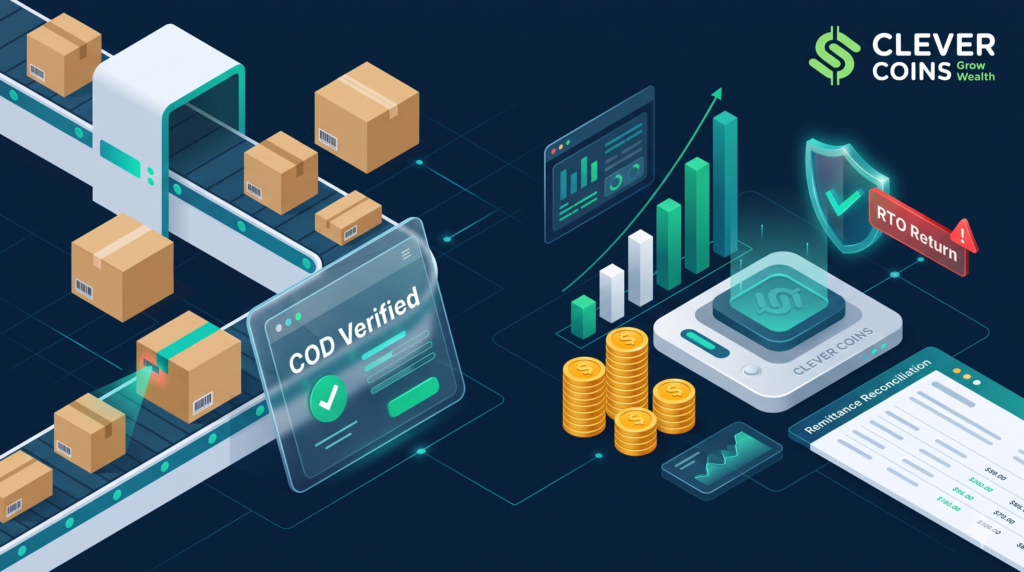
Common Mistakes in COD Management and How to Avoid Them
Cash on Delivery (COD) remains one of the most powerful growth engines in modern retail and eCommerce. Across emerging markets and high-growth consumer segments—from India, Southeast Asia, and the Middle East to Latin America—COD accounts for anywhere between 50% and 75% of total online orders. For first-time online shoppers, skeptical buyers, and consumers outside major banking hubs, paying cash at the doorstep removes friction, builds immediate trust, and unlocks massive top-line revenue that prepaid-only storefronts simply cannot capture.
Yet, behind the impressive gross merchandise value (GMV) figures that COD generates lies a harsh operational reality: Cash on Delivery is a double-edged sword.
When managed with precision, COD fuels rapid customer acquisition and market penetration. When managed carelessly, it becomes a silent profit killer. Unchecked Return-to-Origin (RTO) rates, weeks-long remittance bottlenecks, unverified fake orders, courier cash-handling discrepancies, and chaotic spreadsheet reconciliations can quietly erode 15% to 30% of a company’s net margins. Many fast-scaling eCommerce brands do not fail from a lack of sales; they fail because their working capital gets trapped in transit or evaporated by reverse logistics.
Understanding the common mistakes in COD management—and implementing systematic, technology-backed safeguards to eliminate them—is no longer optional for operations leaders, founders, and finance teams. In this exhaustive guide, we dissect the twelve most costly errors businesses make across the COD lifecycle, from checkout configuration to final bank reconciliation, along with actionable blueprints to protect your cash flow and maximize profitability.
Understanding the True Cost of Mismanaged COD Operations
Before diving into specific operational missteps, it is critical to recognize why COD mistakes compound faster than almost any other logistics failure. Unlike prepaid transactions—where funds settle predictably within 24 to 72 hours and buyer commitment is locked in before warehouse fulfillment begins—COD reverses the traditional risk model. The merchant absorbs 100% of the upfront inventory, packaging, picking, packing, and forward shipping expenses on the mere promise that the buyer will accept and pay for the parcel days later.
When a COD workflow breaks down, the financial impact hits four distinct areas simultaneously:
Direct Logistics Loss: You pay forward shipping fees plus reverse shipping (RTO) fees without generating a single unit of revenue.
Inventory Freeze and Degradation: Stock remains locked in transit for 10 to 21 days, missing peak selling windows and frequently returning with crushed packaging or damaged goods that require write-offs.
Working Capital Suffocation: Even successful deliveries suffer from delayed remittance cycles, forcing businesses to rely on expensive short-term credit lines to fund daily operations.
Accounting Blind Spots: Discrepancies between orders delivered, cash collected by third-party logistics (3PL) riders, and net payouts credited to your bank account create uncollected receivables that distort financial reporting.
1. Failing to Verify High-Risk COD Orders Before Dispatch
The Mistake
One of the most pervasive common mistakes in COD management is treating every incoming COD order as immediately ready for warehouse picking and dispatch. Because COD requires zero financial commitment at checkout, it attracts impulse buyers, accidental clicks, prank orders, competitor sabotage, and habitual returners. Shipping an unverified order to an incomplete address or an unresponsive buyer guarantees a wasted round-trip logistics expense.
Why It Hurts Your Bottom Line
Every unverified order that converts into an RTO costs your business twice in freight charges, consumes warehouse labor, and ties up sellable inventory. If 25% of your COD orders fail delivery due to invalid phone numbers, incomplete street addresses, or buyer remorse within two hours of ordering, your marketing customer acquisition cost (CAC) skyrockets while net contribution margin collapses.
How to Avoid It
Deploy Automated Multi-Channel Confirmation: Trigger instant order verification messages via WhatsApp, SMS, or automated Interactive Voice Response (IVR) calls immediately after checkout. Require a single-tap confirmation (“Reply YES to confirm your order”) before releasing the order to your Warehouse Management System (WMS).
Implement AI-Driven RTO Risk Scoring: Modern eCommerce tech stacks evaluate historical buyer behavior across networks—flagging phone numbers, PIN/ZIP codes, and device fingerprints associated with high historical return rates.
Flag Incomplete Addresses Automatically: Set validation rules at checkout that block submissions lacking house numbers, landmarks, or valid postal codes, and route borderline addresses to a dedicated customer support queue for a quick 30-second verification call before dispatch.
2. Offering Blanket Free COD Without Minimum Order Thresholds or Incentives
The Mistake
Many merchants offer unrestricted Cash on Delivery on every SKU—including low-ticket items—without charging a nominal COD handling fee or incentivizing prepaid checkout. Out of fear of cart abandonment, brands treat COD and prepaid payments as equally desirable checkout options.
Why It Hurts Your Bottom Line
On low-average-order-value (AOV) products—say, items priced under ₹500 or $15—the combined cost of forward shipping, COD collection fees charged by the courier, and a 20% RTO rate easily wipes out the entire gross profit of the order. Furthermore, when prepaid and COD options sit side-by-side with identical pricing, even customers who own credit cards or digital wallets often default to COD out of habit, needlessly inflating your cash-handling risk.
How to Avoid It
Introduce Strategic COD Convenience Fees: Charge a modest, transparent COD handling fee (e.g., ₹40–₹70 or $2–$5) to offset courier collection charges and deter non-serious buyers. Even a small fee dramatically filters out low-intent impulse orders.
Set Minimum and Maximum COD Caps: Disable COD for ultra-low-margin items where unit economics cannot survive an RTO, as well as ultra-high-value luxury items where rider cash theft or counterfeit currency risks are disproportionately high.
Nudge Prepaid Conversions at Checkout: Offer instant prepaid incentives—such as a 5% discount, free express shipping, loyalty points, or a complimentary gift—to convert high-intent shoppers into prepaid buyers. Even shifting 15% of your order volume from COD to prepaid creates an immediate surge in cash flow and margin stability.
3. Relying on Manual Spreadsheet Reconciliation for Courier Remittances
The Mistake
As order volumes scale from dozens to thousands of shipments per week, continuing to reconcile COD remittances using manual CSV downloads and VLOOKUP formulas in Excel is a recipe for financial disaster. Many finance teams simply trust that the lump-sum payout deposited by their courier partner every week matches the sum of delivered orders.
Why It Hurts Your Bottom Line
Courier companies handle millions of parcels daily, and billing or remittance errors happen constantly. Common discrepancies include:
Parcels marked “Delivered” in the courier portal that are omitted from the remittance batch.
Incorrect weight slab deductions inflating freight charges deducted from your COD payout.
Double-charged COD handling fees or RTO fees applied to forward-delivered shipments.
Remittances held back indefinitely due to “disputed status” flags that nobody on your team noticed.
Without automated line-item reconciliation, businesses routinely lose 1.5% to 4% of their gross COD revenue to uncollected courier payouts and erroneous deductions.
How to Avoid It
Adopt Automated COD Reconciliation Software: Integrate your Order Management System (OMS) directly with your courier aggregator or 3PL APIs and your accounting software. Automated platforms match every Air Waybill (AWB) number against order value, expected freight deduction, tax, and actual bank UTR (Unique Transaction Reference) settlement.
Audit Weight and Freight Deductions Weekly: Maintain a master SKU weight and volumetric dimension database. Automatically flag any shipment where the courier bills a higher weight slab than your verified product dimensions, and raise automated dispute tickets before the claim window expires.
Track Unremitted Delivered Orders by Aging Buckets: Generate weekly aging reports highlighting any order marked “Delivered” more than 7 days ago whose cash has not yet been settled into your bank account.
4. Ignoring NDR (Non-Delivery Report) Management and Delayed Re-Attempts
The Mistake
When a courier rider fails to deliver a COD parcel on the first attempt—citing reasons like “Customer Unavailable,” “Premises Closed,” “Cash Not Ready,” or “Phone Unreachable”—the shipment enters a Non-Delivery Report (NDR) queue. A massive mistake in COD management is leaving NDR resolution entirely up to the courier company.
Why It Hurts Your Bottom Line
Courier riders operate under tight daily delivery quotas. If a customer doesn’t answer the door within 60 seconds or doesn’t have exact cash ready, riders frequently mark a fake delivery attempt (“Customer Refused” or “Address Not Found”) to clear their daily manifest. If the merchant does not intervene within 12 to 24 hours, the courier automatically initiates RTO after two or three failed attempts—turning a recoverable sale into a guaranteed loss.
How to Avoid It
Build an Automated Real-Time NDR Workflow: The moment a courier updates a shipment status to NDR, trigger an automated WhatsApp message or SMS to the buyer asking them to confirm their availability, update their address, or reschedule delivery for the next day.
Enable Digital Payment Links at the Doorstep: Often, a COD buyer misses delivery because they ran out of physical cash at home. Send a dynamic UPI/QR or card payment link via SMS during the NDR window so the buyer can pay digitally and have the parcel dropped off safely.
Escalate Fake Attempt Reports Immediately: Allow customers to click “Rider Never Visited” on your automated NDR notification. Feed this proof directly to your 3PL account manager to force a genuine re-attempt and penalize SLA violations.
5. Poor Courier Partner Allocation and Single-Carrier Dependency
The Mistake
Relying on a single courier partner across all geographies—or assigning couriers solely based on the cheapest forward shipping rate—is a classic operational trap. Courier performance varies dramatically by region, pin code, product category, and cash-remittance reliability.
Why It Hurts Your Bottom Line
A carrier that offers the lowest base shipping rate might suffer from a 42% RTO rate in Tier-2 and Tier-3 towns due to poorly trained field riders, slow last-mile routing, or chronic cash remittance delays. Saving ₹10 on shipping while losing ₹1,200 on a failed delivery destroys overall unit economics.
How to Avoid It
Use Data-Driven Multi-Carrier Routing Rules: Allocate shipments dynamically based on historical lane performance rather than flat pricing. Prioritize carriers with the highest First-Attempt Delivery Rate (FADR), lowest RTO percentage, and fastest COD remittance turnaround for each destination PIN code.
Negotiate Contractual Remittance SLAs: Never sign a 3PL agreement without explicit Service Level Agreements (SLAs) governing COD remittance frequency (e.g., D+2 or bi-weekly cycles), penalty clauses for delayed payouts, and clear liability caps for cash lost or stolen in transit.
Score Couriers Monthly on Net Realization: Evaluate logistics partners on a composite scorecard combining delivery speed, RTO rate, NDR conversion rate, weight dispute frequency, and remittance accuracy.