CGST vs SGST vs IGST vs UTGST Complete Differences Guide
What is GST? A Quick Overview
Goods and Services Tax (GST), introduced in India on July 1, 2017, replaced a complex web of indirect taxes — VAT, service tax, central excise duty — with a single unified structure. The core principle is
destination-based taxation
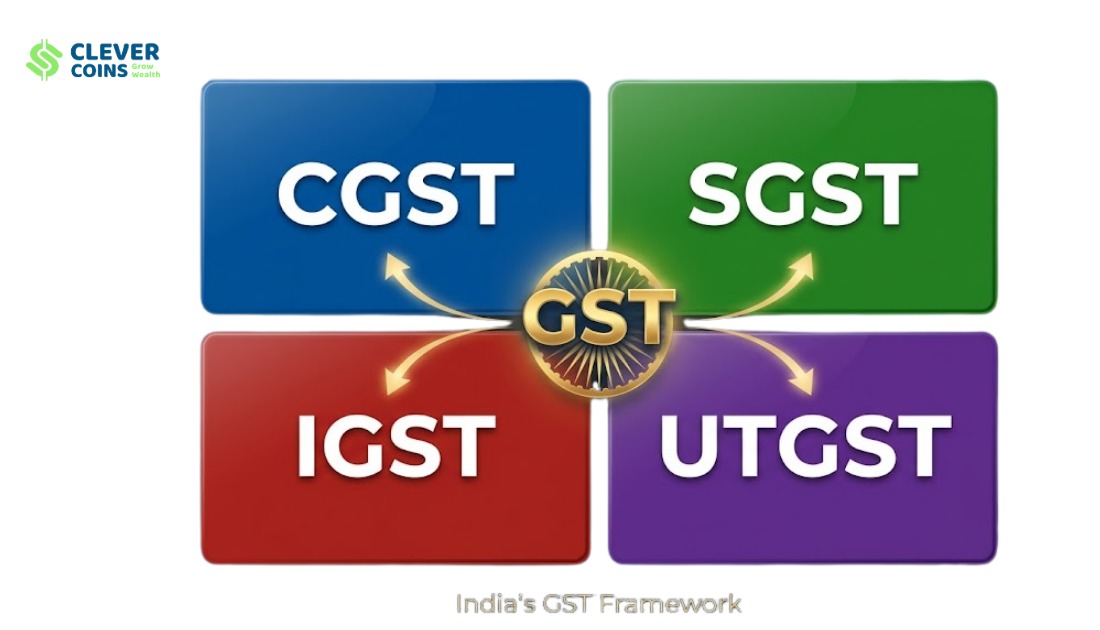
: tax is collected at the point of consumption, not production. GST is a dual-structure tax, meaning both Central and State Governments levy it simultaneously on the same transaction — which is where CGST, SGST, IGST, and UTGST come into the picture.
The Four Components of GST at a Glance
|
CGST |
SGST |
IGST |
UTGST |
|
Central GST |
State GST |
Integrated GST |
Union Territory GST |
|
Levied by Central Govt on intra-state supply |
Levied by State Govt on intra-state supply, alongside CGST |
Levied by Central Govt on inter-state supply and all imports |
Levied by UTs without legislature, in place of SGST |
CGST — Central Goods and Services Tax
Definition & Legal Basis
CGST is governed by the Central Goods and Services Tax Act, 2017. It applies on intra-state supply — where buyer and seller are in the same state. Revenue goes entirely to the Central Government’s consolidated fund.
Key Features
- Charged on all intra-state transactions alongside SGST
- Rate is always equal to SGST rate (they split total GST 50:50)
- ITC of CGST can only offset CGST or IGST liability — not SGST
- Administered by Central Tax Officers
|
Example: Delhi manufacturer sells goods worth Rs.1,00,000 to Delhi retailer (GST 18%) CGST @ 9% = Rs.9,000 (Central Govt) | SGST @ 9% = Rs.9,000 (Delhi State Govt) | Total GST = Rs.18,000 |
SGST — State Goods and Services Tax
Definition & Legal Basis
SGST is governed by the respective State Goods and Services Tax Acts. Every Indian state has its own SGST Act, though rates are standardized. Revenue flows exclusively to the respective state government.
Key Features
- Applicable only within the same state as the seller
- ITC of SGST can only be used against SGST or IGST — not CGST
- Collected simultaneously with CGST on a single invoice
- Alcohol, petroleum, and natural gas still attract separate VAT/excise
IGST — Integrated Goods and Services Tax
Definition & Legal Basis
IGST is governed by the Integrated Goods and Services Tax Act, 2017. It applies on inter-state transactions and all imports into India. The Central Government collects IGST and distributes the state’s share to the destination state.
Key Features
- IGST rate = CGST rate + SGST rate (the full combined rate)
- Applied on imports; exports are typically zero-rated
- ITC of IGST can offset IGST, then CGST, then SGST — in that order
- Prevents cascading effect of taxes at state borders
|
Example: Mumbai (MH) supplier sells Rs.1,00,000 to Bengaluru (KA) buyer (GST 18%) IGST @ 18% = Rs.18,000 collected by Centre. Karnataka’s share automatically distributed. |
UTGST — Union Territory Goods and Services Tax
Definition & Legal Basis
UTGST is governed by the Union Territory Goods and Services Tax Act, 2017. It applies in UTs without their own legislature: Andaman & Nicobar, Dadra & NH, Daman & Diu, Lakshadweep, and Chandigarh. Puducherry, Delhi, and J&K have legislatures so they levy SGST.
Key Features
- Functionally identical to SGST but applicable in UTs without legislature
- Levied alongside CGST on intra-UT supply
- Rate always mirrors the SGST rate for the same goods/services
-
Revenue goes to the Union Territory administration
Master Comparison Table: CGST vs SGST vs IGST vs UTGST
-
-
Parameter
CGST
SGST
IGST
UTGST
Full Form
Central GST
State GST
Integrated GST
Union Territory GST
Governing Act
CGST Act, 2017
Respective State GST Acts
IGST Act, 2017
UTGST Act, 2017
Levied By
Central Govt
State Govt
Central Govt
UT Administration
Applicable On
Intra-state supply
Intra-state supply
Inter-state & Imports
Intra-UT supply
Revenue Goes To
Centre
State
Centre (+ state share)
UT Govt
Used Alongside
SGST or UTGST
CGST
Alone
CGST
ITC Utilization
CGST → IGST
SGST → IGST
IGST → CGST → SGST
UTGST → IGST
Applies in Delhi?
Yes
Yes (Delhi SGST)
Inter-state only
No
Applies in Chandigarh?
Yes
No
Inter-state only
Yes
-
GST Rate Slabs
|
Rate |
Items |
|
0% |
Essential items — milk, eggs, fresh vegetables, books, contraceptives |
|
5% |
Household necessities — edible oils, sugar, tea, coal, economy hotels |
|
12% |
Processed foods, computers, business class air tickets, butter |
|
18% |
Most services, hair dryers, capital goods, IT services, restaurants |
|
28% |
Luxury goods — automobiles, tobacco, aerated drinks, casinos |
ITC (Input Tax Credit) Rules
Under Section 49 of the CGST Act, the order of ITC utilization is strictly defined and cannot be overridden:
|
Tax Credit |
Utilization Order |
Cannot Be Used For |
|
IGST ITC |
IGST → CGST → SGST/UTGST |
— |
|
CGST ITC |
CGST → IGST |
SGST or UTGST |
|
SGST ITC |
SGST → IGST |
CGST |
|
UTGST ITC |
UTGST → IGST |
CGST |
Common Mistakes Taxpayers Make
- tax type Wrong on invoice: Charging CGST+SGST on an inter-state supply instead of IGST — leads to penalties and ITC mismatch.
- Confusion: SGST vs UTGST: Applying SGST instead of UTGST for supplies within Union Territories without a legislature.
- Incorrect ITC cross-utilization: Trying to use CGST credit to pay SGST — which is not permitted under GST law.
- Wrong place of supply: Incorrect determination is a frequent audit trigger. Place of supply decides CGST+SGST vs IGST.
Key Takeaways
|
Intra-state transaction? |
CGST + SGST (or CGST + UTGST in UTs without legislature) |
|
Inter-state or import? |
IGST only |
|
UT without legislature? |
CGST + UTGST |
|
Exporting goods? |
Zero-rated — claim ITC refund or use LUT |
|
ITC cross-streams? |
CGST ≠ SGST, SGST ≠ CGST — only IGST has cross-credit flexibility |