OLD TAX REGIME vs NEW TAX REGIME
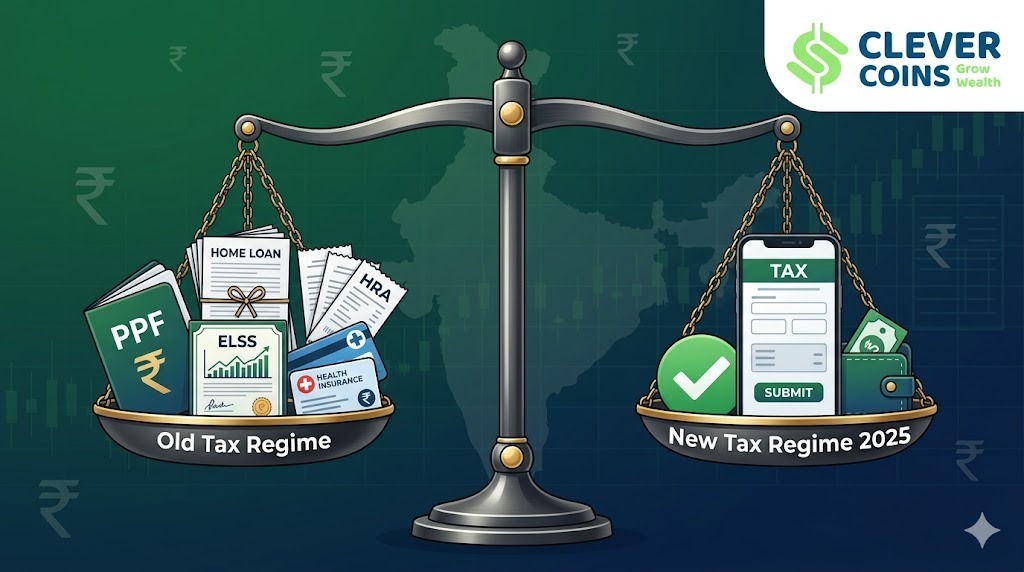
India’s Dual Tax Regime in 2026
Every year when the Union Budget is announced, millions of Indian taxpayers face the same critical question: Should I opt for the Old Tax Regime or stick with the New Tax Regime? With the Union Budget 2025-26 introducing further refinements to India’s income tax structure, this question has become more important — and more complex — than ever before.
The Indian government introduced the New Tax Regime in Union Budget 2020 as an optional, simplified alternative to the existing Old Tax Regime. Since then, through successive budgets (2022, 2023, 2024, and now 2025), the new regime has been made progressively more attractive — with revised slabs, enhanced rebates, and a higher standard deduction — nudging more taxpayers towards it.
However, the Old Tax Regime continues to be the preferred choice for taxpayers who have made substantial tax-saving investments in instruments like PPF, ELSS, NPS, home loans, and insurance policies. The question of which regime is better is not a one-size-fits-all answer — it depends entirely on your income level, investments, lifestyle, and financial goals.
💡 From FY 2023-24 onwards, the New Tax Regime became the default regime. If you wish to continue with the Old Regime, you must explicitly opt for it while filing your Income Tax Return.
This comprehensive guide compares every aspect of the Old and New Tax Regimes for FY 2025-26 (AY 2026-27) — tax slabs, deductions, exemptions, surcharges, rebates, and practical decision-making frameworks — so you can make an informed choice that saves you maximum tax.
2. Quick Snapshot – Old vs New Tax Regime at a Glance
Feature | Old Tax Regime | New Tax Regime (2025) |
Introduced | Pre-2020 (Traditional) | Budget 2020 (Revised 2023, 2025) |
Default Regime | No (must opt-in) | Yes (auto-applicable) |
Tax Slabs | 5 slabs (5%–30%) | 6 slabs (5%–30%) |
Standard Deduction | ₹50,000 | ₹75,000 (enhanced 2024) |
80C Deduction | Yes (up to ₹1.5 lakh) | Not Available |
HRA Exemption | Available | Not Available |
Home Loan Interest (Sec 24) | Up to ₹2 lakh | Not Available (self-occ.) |
NPS Employer (80CCD(2)) | Available | Available ✓ |
Tax-free Income Limit | Up to ₹5 lakh (rebate) | Up to ₹12 lakh (rebate 2025) |
Complexity | Higher (many forms/docs) | Lower (simpler filing) |
Best For | High deductions/investments | Fewer deductions / young earners |
3. Tax Slabs – FY 2025-26 (AY 2026-27)
3.1 Old Tax Regime – Income Tax Slabs
The Old Tax Regime retains the traditional progressive slab structure that has existed for over two decades. These slabs apply after all eligible deductions and exemptions have been subtracted from your gross income.
Income Slab (After Deductions) | Tax Rate |
Up to ₹2,50,000 | Nil |
₹2,50,001 – ₹5,00,000 | 5% |
₹5,00,001 – ₹10,00,000 | 20% |
Above ₹10,00,000 | 30% |
Note: Senior Citizens (60-80 yrs): Basic exemption ₹3 lakh. Super Senior Citizens (80+ yrs): Basic exemption ₹5 lakh.
3.2 New Tax Regime – Income Tax Slabs (FY 2025-26)
Budget 2025 introduced a landmark change — the income tax rebate under Section 87A was enhanced, making income up to ₹12 lakh effectively tax-free for individuals under the New Tax Regime. This is one of the most significant middle-class tax reliefs in recent Indian Budget history.
Income Slab | Tax Rate |
Up to ₹4,00,000 | Nil |
₹4,00,001 – ₹8,00,000 | 5% |
₹8,00,001 – ₹12,00,000 | 10% |
₹12,00,001 – ₹16,00,000 | 15% |
₹16,00,001 – ₹20,00,000 | 20% |
₹20,00,001 – ₹24,00,000 | 25% |
Above ₹24,00,000 | 30% |
📌 Budget 2025 Key Highlight: Section 87A rebate under New Regime raised to ₹60,000, making annual income up to ₹12 lakh completely tax-free. With standard deduction of ₹75,000, salaried individuals with CTC up to ₹12.75 lakh pay ZERO income tax.
4. Deductions & Exemptions – Detailed Comparison
4.1 Deductions Available ONLY in Old Tax Regime
The Old Tax Regime allows a comprehensive range of deductions and exemptions under the Income Tax Act. These are the instruments that typically make the Old Regime more beneficial for taxpayers with substantial investments:
Chapter VI-A Deductions
- Section 80C (up to ₹1.5 lakh): PPF, ELSS Mutual Funds, NSC, 5-Year FD, Life Insurance Premium, EPF (own contribution), Sukanya Samriddhi, ULIP, Principal repayment on Home Loan, Tuition Fees (2 children).
- Section 80CCC: Contribution to pension plans of LIC/other insurers.
- Section 80CCD(1B): Additional NPS contribution up to ₹50,000 (over and above 80C).
- Section 80D: Health insurance premium: ₹25,000 self/family; ₹50,000 for senior citizens.
- Section 80DD: Deduction for disabled dependent: ₹75,000 (normal), ₹1.25 lakh (severe).
- Section 80E: Interest on education loan (unlimited, for 8 years).
- Section 80EEA: Additional ₹1.5 lakh deduction on home loan interest (affordable housing).
- Section 80G: Donations to approved charitable funds (50% or 100% based on organization).
- Section 80GG: Rent paid when HRA not received (lower of ₹5,000/month, 25% of income, or actual rent minus 10% income).
- Section 80TTA / 80TTB: Interest on savings account up to ₹10,000 (₹50,000 for senior citizens).
- Section 80U: Deduction for self being a person with disability.
Allowances & Exemptions
- HRA (House Rent Allowance): Exemption on actual HRA received, subject to rent paid and city of residence.
- LTA (Leave Travel Allowance): Exemption on actual travel expenses (twice in a block of 4 years).
- Standard Deduction: ₹50,000 flat for all salaried employees and pensioners.
- Professional Tax: Actual amount paid (usually ₹2,400 per year).
- Children’s Education Allowance: ₹100 per child per month (max 2 children).
- Hostel Allowance: ₹300 per child per month (max 2 children).
- Food Allowance / Meal Coupons: Up to ₹50 per meal (26 working days = ₹1,300/month tax-free).
- Section 24(b) Home Loan Interest: Up to ₹2 lakh for self-occupied property; unlimited for let-out property.
- Set-off of House Property Loss: Loss from let-out property can be set off against other heads (up to ₹2 lakh).
4.2 Deductions Available in BOTH Regimes
- Section 80CCD(2): Employer’s NPS contribution (up to 10% of basic salary; 14% for Central Govt employees) — allowed in both regimes.
- Standard Deduction: ₹75,000 now available in New Regime also (from FY 2024-25).
- Agniveer Corpus Fund (80CCH): Contributions to Agniveer Corpus Fund deductible in both regimes.
- Family Pension Deduction: One-third of family pension or ₹25,000 (whichever is lower) is deductible in both regimes.
- Conveyance for Disability: Transport allowance for orthopedically disabled employees.
- Tax-free Perquisites: Gratuity (up to ₹20 lakh), Leave encashment on retirement (up to ₹25 lakh), VRS proceeds (up to ₹5 lakh) — exempt in both.
4.3 What You GIVE UP in New Tax Regime
⚠️ Switching to the New Tax Regime means forgoing ALL deductions listed in 4.1 above. If your total deductions exceed ₹3.75 lakh in the Old Regime, you likely save more tax there.
5. Who Should Choose Which Regime? – Decision Framework
5.1 Choose Old Tax Regime If:
- You have significant investments in 80C instruments (PPF, ELSS, LIC) consistently maxing the ₹1.5 lakh limit.
- You are paying rent and claiming substantial HRA exemption.
- You have a home loan and claiming up to ₹2 lakh deduction on interest under Section 24(b).
- You are paying health insurance premiums for self, family, and/or parents, claiming 80D.
- You have an additional NPS contribution under 80CCD(1B) of ₹50,000.
- You have education loan interest deductions under Section 80E.
- Your total deductions (including standard deduction) exceed ₹3.75 lakh in the Old Regime.
- You are a senior citizen with high medical expenses, saving bank interest, or fixed deposit interest.
5.2 Choose New Tax Regime If:
- Your annual income is up to ₹12 lakh — you pay zero tax under the New Regime due to the enhanced 87A rebate.
- You are a young salaried professional with minimal tax-saving investments.
- You prefer a simplified, hassle-free tax filing process.
- Your total deductions in the Old Regime are less than the break-even threshold.
- You are a freelancer or self-employed with no access to HRA or home loan benefits.
- Your employer’s NPS contribution (80CCD(2)) is the only major deduction — available in both regimes anyway.
- You value liquidity and prefer not locking money in tax-saving instruments.
5.3 Break-Even Analysis – The ₹3.75 Lakh Rule
For FY 2025-26, the ‘break-even’ deduction amount — the threshold beyond which the Old Regime becomes more tax-efficient — is approximately ₹3.75 lakh (for most income levels). This figure accounts for the ₹25,000 higher standard deduction in the New Regime.
If your total eligible deductions and exemptions in the Old Regime exceed ₹3.75 lakh, you will typically pay less tax under the Old Regime. If your deductions are below this threshold, the New Regime is more beneficial.
💡 Break-even Rule: Old Regime wins when (Total Deductions) > (New Regime Standard Deduction + ₹25,000 difference + other regime benefits). Always run a numerical comparison on both options before deciding.
6. Income-Level Wise Comparison & Examples
6.1 Income: ₹7 Lakh per Annum
Under the New Tax Regime, with the ₹75,000 standard deduction, taxable income = ₹6.25 lakh. Tax on this = ₹25,000 (5% on ₹2.25 lakh above ₹4 lakh). Section 87A rebate fully covers this. Effective Tax = ₹0.
Under the Old Tax Regime, with standard deduction of ₹50,000, taxable income = ₹6.5 lakh. If no 80C investments: Tax = ₹32,500 + cess. If 80C maxed (₹1.5L) + 80D (₹25K): taxable = ₹4.75L, tax = ₹11,250 — but Section 87A applies, tax = ₹0.
📌 Verdict at ₹7 LPA: Both regimes can yield zero tax. New Regime is simpler. Old Regime requires effort and investments to match.
6.2 Income: ₹12 Lakh per Annum
New Tax Regime: Taxable income = ₹11.25 lakh (after ₹75K standard deduction). Tax = ₹60,000 (slab calculation). Section 87A rebate = ₹60,000. Effective Tax = ₹0.
Old Tax Regime: Taxable income after standard deduction = ₹11.5 lakh. Without investments: Tax = ₹1,62,500 + cess. With max 80C (₹1.5L) + 80CCD(1B) (₹50K) + 80D (₹25K) + HRA (₹1 lakh assumed): Taxable = ~₹8.25 lakh. Tax = ₹82,500 + cess.
📌 Verdict at ₹12 LPA: New Tax Regime clearly wins — zero tax vs ₹82,500+ in Old Regime unless deductions are very large.
6.3 Income: ₹15 Lakh per Annum
New Tax Regime: Tax = ₹1,05,000 (as per new slabs on ₹14.25 lakh taxable). No rebate applies beyond ₹12 lakh.
Old Tax Regime: With aggressive deductions — Standard (₹50K) + 80C (₹1.5L) + 80D (₹50K) + HRA (₹1.5L) + Home Loan Interest (₹2L) + 80CCD(1B) (₹50K) + Professional Tax (₹2.4K) = Total deductions ~₹7.52 lakh. Taxable income = ₹7.48 lakh. Tax = ~₹49,200 + cess.
📌 Verdict at ₹15 LPA: Old Tax Regime wins if you have a home loan + HRA + max 80C + 80D. Saves approx ₹55,000+ over New Regime.
6.4 Income: ₹20 Lakh per Annum
New Tax Regime: Tax = ₹2,10,000 on ₹19.25L taxable. Old Tax Regime: With all major deductions (~₹7.5-8L), taxable ~ ₹12L. Tax = ~₹1,65,000 + cess.
📌 Verdict at ₹20 LPA: Old Tax Regime wins by a significant margin if you have a home loan, HRA, and are maximizing all deductions.
6.5 Income: ₹50 Lakh and Above
At very high income levels, both surcharge and effective tax rate analysis become critical. The new regime’s simplified slabs without deductions often result in higher absolute tax. However, individuals with complex income structures (capital gains, business income) must carefully compute both before deciding.
⚠️ For income above ₹50 lakh, engage a Chartered Accountant (CA) to run detailed computations under both regimes, including surcharge implications.
7. Special Categories of Taxpayers
7.1 Salaried Employees
Salaried employees can switch between Old and New Tax Regime every financial year. The choice must be communicated to the employer at the beginning of the year for TDS purposes (Form 12B/Declaration). However, at the time of filing the ITR, you can still switch if the employer deducted TDS under the other regime.
- Budget 2025: Standard deduction increased to ₹75,000 in New Regime — a direct benefit for all salaried employees.
- Those with home loans in Tier-1 cities (Mumbai, Delhi, Bangalore) paying high rents often benefit from Old Regime.
- First-time jobbers in the ₹6-12 lakh range almost universally benefit from New Regime.
7.2 Business Owners & Self-Employed
Individuals with business or professional income who opt for the Old Regime cannot switch back and forth as freely as salaried individuals. They can switch only once from Old to New Regime, and if they switch back, they cannot avail the New Regime again (with some exceptions).
- Business owners with substantial expenses and depreciation claims often find Old Regime more beneficial.
- Freelancers with Section 44ADA presumptive taxation should carefully evaluate both options.
⚠️ Business taxpayers: Once you opt for the New Regime and then switch back to Old Regime, you cannot return to the New Regime in subsequent years (except if business income ceases).
7.3 Senior Citizens (60-80 years)
- Basic exemption limit in Old Regime: ₹3 lakh (vs ₹4 lakh in New Regime for all).
- Section 80TTB: Interest income up to ₹50,000 exempt in Old Regime — a major benefit for retirees living on FD income.
- Section 80D: Higher deduction of ₹50,000 for health insurance premiums.
- Senior citizens with pension income + significant FD interest + medical expenses often find Old Regime more beneficial.
7.4 Super Senior Citizens (80+ years)
- Basic exemption: ₹5 lakh in Old Regime.
- E-filing of ITR is not mandatory for super senior citizens who file ITR-1 or ITR-2 with only pension/interest income.
- Tax-free income threshold under Old Regime can be very high after 80TTB and 80D deductions.
7.5 NRIs (Non-Resident Indians)
NRIs are taxed only on income earned or received in India. They cannot claim certain deductions under 80C (like PPF), but they can invest in ELSS and NPS. The New Regime is simpler and often preferred by NRIs with straightforward India-sourced income.
8. Surcharge, Cess & Marginal Relief
8.1 Surcharge Rates
Total Income | Old Regime Surcharge | New Regime Surcharge |
Up to ₹50 lakh | Nil | Nil |
₹50L – ₹1 crore | 10% | 10% |
₹1 crore – ₹2 crore | 15% | 15% |
₹2 crore – ₹5 crore | 25% | 25% |
Above ₹5 crore | 37% (Old) / 25% (New)* | 25% (capped from 2023) |
* Budget 2023 reduced the maximum surcharge in the New Regime from 37% to 25% for income above ₹5 crore — making the New Regime particularly attractive for ultra-high-net-worth individuals (HNWIs).
8.2 Health & Education Cess
A Health & Education Cess of 4% is levied on the total tax (including surcharge) under both regimes. This is non-negotiable and applies universally.
8.3 Marginal Relief
Marginal relief is available at the surcharge threshold points to ensure that the additional tax paid due to crossing a threshold is not more than the additional income earned. This applies in both regimes.
9. Filing Income Tax Return – Key Considerations
9.1 How to Switch or Opt for a Regime
- Salaried individuals: Inform your employer at the start of FY. TDS will be deducted accordingly. You can still choose a different regime at ITR filing.
- Business/Professional income: File Form 10-IEA before the ITR filing deadline to opt out of the New Regime (i.e., to choose Old Regime).
- New Regime is the default from FY 2023-24. No action needed to stay in New Regime. Action needed to opt for Old Regime.
9.2 Important Deadlines – FY 2025-26
- July 31, 2026: ITR filing deadline for individuals not subject to tax audit.
- October 31, 2026: Deadline for taxpayers subject to tax audit.
- Form 10-IEA: Must be filed on or before ITR filing deadline to opt for Old Regime (business income).
- March 31, 2026: Deadline for tax-saving investments (for Old Regime claims in FY 2025-26).
9.3 Documents Required
- Form 16 (from employer) — summarizes salary, TDS, and deductions claimed.
- Form 26AS / AIS (Annual Information Statement) — cross-verify all income and TDS.
- Investment proofs: ELSS statements, LIC premium receipts, PPF passbook, home loan certificate.
- Rent receipts and landlord PAN (for HRA claims above ₹1 lakh/year).
- Health insurance premium receipts (80D).
10. Common Mistakes Taxpayers Make
- Mistake 1: Assuming New Regime is always better without running calculations — this is a costly oversight for those with home loans and heavy 80C investments.
- Mistake 2: Not informing employer about regime preference — results in incorrect TDS and refund hassles.
- Mistake 3: Missing the Form 10-IEA deadline for business income taxpayers who want Old Regime.
- Mistake 4: Forgetting that income from previous employer also counts — your total income for the year, not just from one employer.
- Mistake 5: Assuming NPS under 80CCD(1B) is available in the New Regime — only employer NPS (80CCD(2)) is allowed.
- Mistake 6: Not considering the surcharge advantage of New Regime for ultra-high income (above ₹5 crore).
- Mistake 7: Claiming HRA and simultaneously claiming Section 24(b) home loan interest on the same property without proper documentation.
⚠️ Always use the official Income Tax Department calculator at incometax.gov.in or consult a CA before making your final regime decision.
11. Union Budget 2025 – Key Changes Affecting Both Regimes
- Section 87A rebate under New Regime enhanced to ₹60,000 — making income up to ₹12 lakh tax-free.
- New Tax Regime remains the default; no change in Old Regime’s opt-in requirement.
- No new deductions introduced in the Old Tax Regime.
- TDS on salary to be recalculated considering the enhanced rebate — employers to update TDS projections.
- Tax on long-term capital gains from equity (LTCG) remains 12.5% over ₹1.25 lakh threshold.
- Updated Return (ITR-U) window: Now available for 4 years from end of relevant assessment year (extended from 2 years).
- TDS on rent threshold increased to ₹6 lakh/year (from ₹2.4 lakh) — fewer landlords will face TDS deductions.
💡 The Budget 2025 changes heavily favour the New Tax Regime for the ₹8-12 lakh income bracket. The government’s stated objective is to simplify the tax system and gradually phase out the complex deduction-based Old Regime over time.