
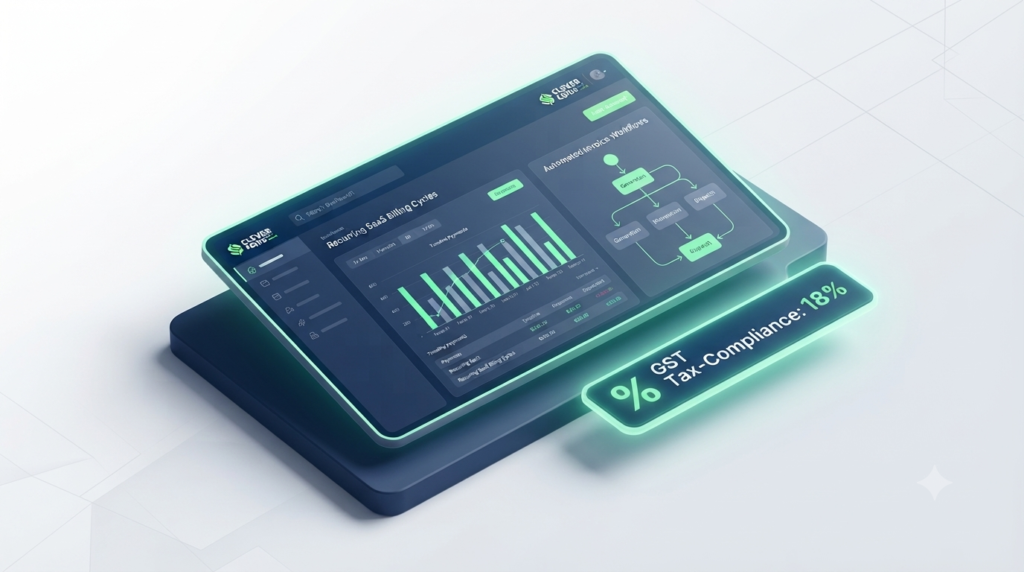
Complete Guide to GST on Subscription Services: Compliance, SaaS, and Tax Strategies
The modern digital economy runs on recurring revenue. From cloud-based software (SaaS) and streaming entertainment to specialized newsletters, fitness apps, and B2B cloud infrastructure, subscription business models have transformed how consumers buy and enterprises operate. However, with the rapid acceleration of the subscription economy comes a labyrinth of regulatory and indirect tax complexities.
In India, Goods and Services Tax (GST) laws govern these recurring transactions. Whether you are a bootstrapped startup launching a software product, an established enterprise scaling cross-border sales, or a consumer navigating invoices, understanding how GST applies to subscription models is vital.
Brought to you by the tax and government scheme experts at CleverCoins, this comprehensive guide cuts through the red tape to explain everything you need to know about GST on subscription services.
Table of Contents
-
The Evolution of the Subscription Economy & Tax Intersections
-
Classification of Subscription Services Under GST
-
Standard GST Rates for Subscriptions and Digital Products
-
Determining the Place of Supply for Subscription Services
-
Domestic (B2B vs. B2C) Subscription Compliance
-
Cross-Border Subscriptions: OIDAR and Import of Services
-
Input Tax Credit (ITC) for Subscription Models
-
Invoicing, Billing Cycles, and Automated Compliance
-
Common Pitfalls and Audits in Subscription Taxation
-
Strategic Tax Planning with CleverCoins
1. The Evolution of the Subscription Economy & Tax Intersections
Subscription models replace traditional one-off product purchases with recurring billing arrangements—weekly, monthly, or annually. While customers enjoy flexibility and continuous service delivery, businesses benefit from predictable cash flow and long-term customer relationships.
From a tax standpoint, however, recurring billing creates unique compliance challenges:
-
Continuous Supply vs. Milestone Billing: Under GST, tax liability is generally triggered upon the issuance of an invoice or receipt of payment, whichever is earlier. For subscriptions, automated recurring charges require real-time tax calculation and invoicing.
-
Geographically Distributed Users: Digital subscriptions are often consumed across state lines or international borders, complicating the rules for determining tax jurisdictions.
-
Dynamic Alterations: Mid-cycle upgrades, downgrades, cancellations, and pro-rated refunds require precise credit and debit note issuance to avoid tax mismatches.
2. Classification of Subscription Services Under GST
Under the GST regime, services are classified using the Service Accounting Code (SAC) system. Subscription services do not fall under a single blanket code; instead, their classification depends entirely on the nature of the underlying service being delivered:
-
Information Technology Software Services (SAC 9983): Covers SaaS platforms, cloud storage, enterprise resource planning (ERP) tools, and cloud computing subscriptions.
-
Telecommunication, Broadcasting, and Information Delivery Services (SAC 9984): Applies to digital media streaming, online databases, and web-hosting packages.
-
Professional, Technical, and Business Services (SAC 9983/9982): Encompasses legal advice memberships, financial market research subscriptions, and automated consulting tools.
Proper SAC classification is the foundational step because it dictates the applicable tax rate, exemption availability, and reporting requirements in GSTR returns.
3. Standard GST Rates for Subscriptions and Digital Products
In the Indian GST framework, most digital and subscription-based services—particularly SaaS, cloud applications, and general digital platforms—attract a standard rate of 18% GST (split evenly as 9% CGST and 9% SGST for intra-state supplies, or 18% IGST for inter-state supplies).
Is there any variation?
-
Educational Content / E-Learning: Certain online educational programs or content that qualify under vocational training or recognized curriculums may enjoy exemptions or lower rates, provided they meet strict institutional criteria. However, automated software platforms featuring pre-recorded modules with zero human intervention are generally treated as standard electronic services taxable at 18%.
-
Print Publications vs. Digital News: Traditional physical newspaper subscriptions may attract lower or nil rates, whereas digital-only news portals and paywalled articles fall under electronic information services taxable at standard rates.
4. Determining the Place of Supply for Subscription Services
The core principle of GST is that it is a destination-based consumption tax. This means revenue goes to the state where the service is consumed, not necessarily where the vendor is headquartered. For subscriptions, determining the Place of Supply (PoS) is governed by Section 12 and Section 13 of the Integrated Goods and Services Tax (IGST) Act.
For Domestic B2B Transactions:
If the recipient is registered under GST and provides their GSTIN, the location of the recipient registered in records is deemed the place of supply.
For Domestic B2C Transactions:
If the recipient is an unregistered consumer, the place of supply is determined by:
-
The address of the recipient existing in the supplier’s records.
-
If no address is available, the location of the supplier. However, for digital subscriptions, modern electronic invoicing systems require capturing precise billing geography.
For Cross-Border Transactions (Export/Import):
When an Indian business subscribes to a foreign software tool (e.g., global project management or hosting platforms), it constitutes an import of services. Conversely, when an Indian SaaS provider sells subscriptions to global clients, it may qualify as an export of services, provided foreign exchange remittance rules and zero-rating conditions under the IGST Act are meticulously fulfilled.
5. Domestic (B2B vs. B2C) Subscription Compliance
Handling recurring billings for domestic customers requires setting up robust billing workflows that distinguish between Business-to-Business (B2B) and Business-to-Consumer (B2C) structures:
B2B Subscriptions
-
Mandatory Requirements: The supplier must capture the customer’s legal trade name, address, and valid GSTIN.
-
Tax Mechanics: The invoice must explicitly break down CGST/SGST or IGST.
-
Filing Value: The supplier reports these invoices in GSTR-1, which auto-populates into the buyer’s GSTR-2B, enabling the buyer to claim Input Tax Credit (ITC).
B2C Subscriptions
-
Consolidated Reporting: For high-volume, low-value B2C subscriptions, individual customer GSTINs are absent. Suppliers report these aggregated supplies under Table 7 of GSTR-1.
-
E-Invoicing Thresholds: If the aggregate turnover of the supplier crosses government-mandated e-invoicing thresholds, B2B subscription invoices must be registered on the Invoice Registration Portal (IRP) to generate a valid Invoice Reference Number (IRN) and QR code.
6. Cross-Border Subscriptions: OIDAR and Import of Services
The borderless nature of digital subscriptions creates unique tax dynamics concerning cross-border flows.
Online Information Database Access and Retrieval (OIDAR) Services
Services delivered over the internet with minimal human intervention—such as SaaS, cloud gaming, web hosting, e-books, and digital streaming—are classified as OIDAR services.
-
Foreign Suppliers to Indian Consumers: When non-resident entities supply OIDAR services to unregistered individuals in India, the foreign vendor is typically required to register in India under a simplified OIDAR GST framework or utilize designated intermediaries to collect and remit the 18% tax.
-
Indian Businesses Importing Software: When an Indian enterprise purchases subscriptions from overseas vendors (e.g., AWS, Microsoft Azure, Zoom, GitHub), the transaction is subject to the Reverse Charge Mechanism (RCM).
Understanding Reverse Charge Mechanism (RCM) on Subscriptions
Under RCM, the recipient of the service (the Indian enterprise) is directly liable to pay the 18% IGST to the government rather than the foreign supplier.
-
The Process: The Indian company self-voices the transaction, pays the IGST through its electronic cash/credit ledger, and can simultaneously claim it back as Input Tax Credit (subject to eligibility), resulting in a tax-neutral cash flow impact for regular corporate taxpayers.
7. Input Tax Credit (ITC) for Subscription Models
For businesses, subscriptions to software, cloud infrastructure, marketing automation tools, and professional databases are operational lifelines. Fortunately, the GST paid on these subscriptions is generally eligible for Input Tax Credit (ITC).
Conditions to Claim ITC on Subscriptions:
-
Possession of Tax Invoice: The subscription invoice must be issued in the legal name of the business and contain all mandatory fields, including the correct GSTIN.
-
Receipt of Service: The subscription must be actively utilized for business purposes.
-
Filing Compliance: The supplier must have filed their GSTR-1, ensuring the invoice reflects in the recipient’s GSTR-2B statement.
-
Timely Payment: The recipient must pay the supplier the full invoice value (exclusive of tax, or inclusive if terms dictate) within 180 days from the invoice date.
Restrictions and Blocked Credits (Section 17(5)):
While most SaaS and tech subscriptions qualify for ITC, care must be taken if a subscription relates to personal use or exempt supplies. If a business deals exclusively in exempt goods or services, the ITC on subscriptions cannot be claimed and becomes a permanent business cost.
8. Invoicing, Billing Cycles, and Automated Compliance
Subscription platforms operate on automated recurring billing engines (such as Stripe, Chargebee, Razorpay Subscriptions, or custom billing scripts). Integrating tax compliance into these engines is critical.
Key Technical & Accounting Checkpoints:
-
Tax Calculation Engines: Ensure your payment gateway or billing software calculates accurate tax rates dynamically based on the customer’s billing zip code, state code, and tax registration status at the exact moment of renewal.
-
Pro-Rata Adjustments and Refunds: If a subscriber upgrades mid-month, the system generates a supplementary invoice or debit note for the differential tax. If a refund is issued due to cancellation, a Credit Note with cross-referenced original invoice details must be filed in GSTR-1 to adjust output tax liability legally.
-
Audit Trails: Maintain digital logs of all transaction timestamps, IP addresses, billing addresses, and digital receipts to withstand tax authority scrutiny during audits.
9. Common Pitfalls and Audits in Subscription Taxation
Tax authorities are increasingly scrutinizing digital businesses and subscription platforms. Avoiding common compliance traps saves companies from steep penalties, interest charges, and legal litigation.
-
Incorrect Place of Supply Determinations: Misclassifying an inter-state B2B subscription as intra-state (or vice versa) leads to erroneous tax payments. Correcting this requires filing amendments and managing refund or adjustment claims.
-
Ignoring RCM on Foreign SaaS Tools: Many startups fail to self-assess and pay GST under RCM for overseas software subscriptions, triggering penalty notices during routine tax audits.
-
Failing to Reconcile GSTR-2B: Claiming ITC on subscription invoices that have not been duly filed by vendors in their GSTR-1 leads to mismatch notices and subsequent demand orders. Regular monthly reconciliation is mandatory.
-
Inadequate Documentation for Exports: Treating software subscriptions sold to international clients as ‘exports of services’ without maintaining valid Bank Realization Certificates (BRC) or Foreign Inward Remittance Certificates (FIRC) can lead authorities to treat the transaction as a domestic supply subject to local GST.
10. Strategic Tax Planning with CleverCoins
Navigating the complexities of GST on subscription services requires more than just basic compliance—it demands a strategic approach that protects your bottom line and optimizes cash flow.
At CleverCoins, our dedicated team of tax and government scheme consultants works across India to help startups and scaling enterprises navigate regulatory mazes with confidence. Whether you need assistance with automated tax gateway integrations, complex cross-border RCM structures, GSTR reconciliations, or comprehensive litigation support, we ensure your business remains optimized for tax savings and fully compliant for growth.
Stop reacting to tax season—partner with CleverCoins and turn compliance into your strategic advantage!
Disclaimer: This guide is for educational and informational purposes only and does not constitute formal legal or tax advice. For customized advice tailored to your specific business model, consult the experts at CleverCoins.
Follow-up Question
Are you currently operating a domestic subscription business within India, or do you handle cross-border/international SaaS subscribers that require OIDAR and RCM structuring?
- Phone: +91 77389 59862
- Email: client@clevercoins.org
- Address: Ideal Market, Mumbra, Thane-400612





