LinkedIn Marketing for B2B: The Ultimate Strategy, Tools & Software Comparison Guide
In the modern B2B landscape, buyer journeys have fundamentally shifted away from cold interruptions and toward self-directed, trust-driven digital research. Decision-makers, enterprise procurement teams, and startup founders no longer wait for a sales representative to explain a product’s value proposition. Instead, they evaluate vendors through peer discussions, executive thought leadership, and transparent software comparisons long before ever filling out a demo request form. At the center of this ecosystem sits LinkedIn—the undisputed command center for B2B demand generation, account-based marketing (ABM), and executive brand building.
However, executing a high-converting LinkedIn marketing for B2B strategy requires far more than publishing occasional company updates or boosting generic blog links. As organic reach grows increasingly competitive and paid customer acquisition costs (CAC) climb across digital channels, high-growth B2B organizations rely on specialized software stacks to automate research, scale authentic employee advocacy, personalize outreach, and prove multi-touch revenue attribution.
This comprehensive guide breaks down the strategic architecture of B2B LinkedIn marketing, evaluates the leading software categories powering modern revenue teams, provides an in-depth comparison of top-performing B2B LinkedIn tools, and outlines a step-by-step framework for selecting and deploying your ideal martech stack.
Why LinkedIn Dominates B2B Marketing and Revenue Generation
Unlike consumer-oriented social platforms engineered around passive entertainment, LinkedIn operates on explicit professional intent. Users log onto the platform with their real identities, verified job titles, company affiliations, industry verticals, and seniority levels. For B2B marketers, this creates an unmatched combination of deterministic targeting and high-trust social proof.
1. Unrivaled Decision-Maker Concentration
Four out of five LinkedIn members drive business decisions within their organizations. Whether your ideal customer profile (ICP) consists of Chief Financial Officers at mid-market logistics firms, DevOps Directors at Series B SaaS companies, or HR Managers in manufacturing, LinkedIn provides direct access to both the economic buyers and the internal champions who influence purchasing committees.
2. The Rise of Dark Social and Demand Creation
Modern B2B buying happens predominantly in “dark social”—private Slack channels, executive WhatsApp groups, boardroom conversations, and unattributed LinkedIn feed consumption. When founders, subject-matter experts, and product leaders consistently publish deep educational insights on LinkedIn, they build mental availability. By the time a prospect experiences an acute operational pain point, your brand is already positioned as the category authority.
3. Precision Account-Based Marketing (ABM)
LinkedIn allows revenue teams to synchronize CRM target account lists directly with advertising and social selling workflows. Rather than wasting ad spend on broad demographic guesses, marketers can serve tailored case studies exclusively to specific job functions inside named enterprise accounts—accelerating deal velocity and increasing win rates.
Core Pillars of a High-Converting B2B LinkedIn Marketing Strategy
Before investing in software subscriptions, B2B organizations must establish a cohesive operational framework. Tools amplify strategy; they cannot rescue an unfocused message. A complete B2B LinkedIn engine rests on four interconnected pillars:
Pillar 1: Executive Thought Leadership & Founder-Led Content
In B2B markets, people trust people significantly more than faceless corporate logos. Company pages routinely suffer from suppressed organic distribution unless supported by paid amplification. Conversely, personal profiles belonging to founders, C-suite executives, and department heads generate dramatically higher engagement rates.
Effective executive content follows an 80/20 value-to-promotion ratio:
Contrarian Industry Perspectives: Challenging outdated industry assumptions with real operational data.
Tactical How-To Frameworks: Step-by-step breakdowns of how your team solves complex problems.
Transparent Build-in-Public Narratives: Sharing lessons from product launches, customer wins, compliance hurdles, or financial milestones.
Native Document Carousels & Short-Form Video: Multi-slide PDF carousels and 45-to-90-second native vertical videos capture dwell time, signaling to the LinkedIn algorithm that your content merits broader feed distribution.
Pillar 2: Structured Employee Advocacy
While founder-led content anchors brand authority, employee advocacy multiplies surface area. When 20 to 100 employees across sales, engineering, customer success, and leadership share authentic perspectives and amplify flagship company announcements, organic reach compounds exponentially. Modern B2B teams avoid rigid “copy-paste” corporate scripts, instead providing employees with narrative prompts, visual templates, and AI-assisted tone-matching tools so each post sounds genuinely human.
Pillar 3: Signal-Based Social Selling & Ethical Outreach
Traditional “spray-and-pray” LinkedIn automation—sending generic connection requests followed immediately by a three-paragraph sales pitch—destroys brand equity and risks account restrictions. High-performing B2B teams practice signal-based social selling:
Monitoring target prospects who engage with competitor posts, comment on industry threads, change roles, or visit your company profile.
Engaging meaningfully in comment sections for 1–2 weeks before initiating a direct message.
Keeping initial outreach under 400–500 characters, anchored in a specific observation and a low-friction conversation starter rather than a premature calendar link.
Pillar 4: Full-Funnel Paid LinkedIn Advertising & Retargeting
Organic content builds trust, while LinkedIn Campaign Manager provides predictable scale and precision targeting. High-ROI B2B paid architectures segment budgets across three layers:
Top-of-Funnel (ToFu) Thought Leader Ads: Boosting high-performing organic posts from your executives directly to your ICP feed—combining personal authenticity with paid precision.
Middle-of-Funnel (MoFu) Educational Assets: Serving ungated benchmark reports, interactive calculators, or software comparison guides to engaged video viewers and website visitors.
Bottom-of-Funnel (BoFu) Conversion Campaigns: Retargeting high-intent visitors (such as pricing page viewers) with customer ROI proof, comparison battlecards, and native Lead Gen Forms.
Understanding the B2B LinkedIn Software Ecosystem: 6 Essential Categories
Because LinkedIn’s native interface is designed primarily for individual networking rather than enterprise marketing operations, an entire ecosystem of specialized B2B SaaS tools has emerged. To make an informed software comparison, buyers must first distinguish between six distinct functional categories:
Native Intelligence & Advertising Platforms: LinkedIn’s proprietary tools—specifically LinkedIn Sales Navigator for deep buyer intelligence and LinkedIn Campaign Manager for paid media execution.
Content Creation, Scheduling & Personal Branding Suites: Tools engineered to streamline post ideation, formatting, carousel creation, optimal-time scheduling, and personal profile analytics (e.g., Taplio, AuthoredUp, Buffer).
Employee Advocacy & Team Collaboration Platforms: Enterprise-ready systems enabling distributed teams to draft, approve, schedule, and measure content across dozens or hundreds of employee profiles (e.g., Vulse, Hootsuite Amplify, Oktopost).
Cloud-Based Outbound & Multi-Channel Automation Tools: Dedicated prospect engagement platforms that automate profile visits, connection sequences, and follow-up messages using dedicated cloud IPs for account safety (e.g., Expandi, Dripify, Meet Alfred, La Growth Machine).
LinkedIn Analytics & Creator Intelligence Tools: Specialized reporting layers that overcome native LinkedIn analytics limitations by tracking post-level engagement trends, audience demographics, and historical growth (e.g., Shield Analytics).
B2B Ad Attribution & Revenue Intelligence Platforms: Software bridging the notorious gap between LinkedIn ad impressions/clicks and actual CRM pipeline/closed-won revenue (e.g., Fibbler, Dreamdata, Factors.ai).
Comprehensive Comparison of Top LinkedIn Marketing Tools for B2B
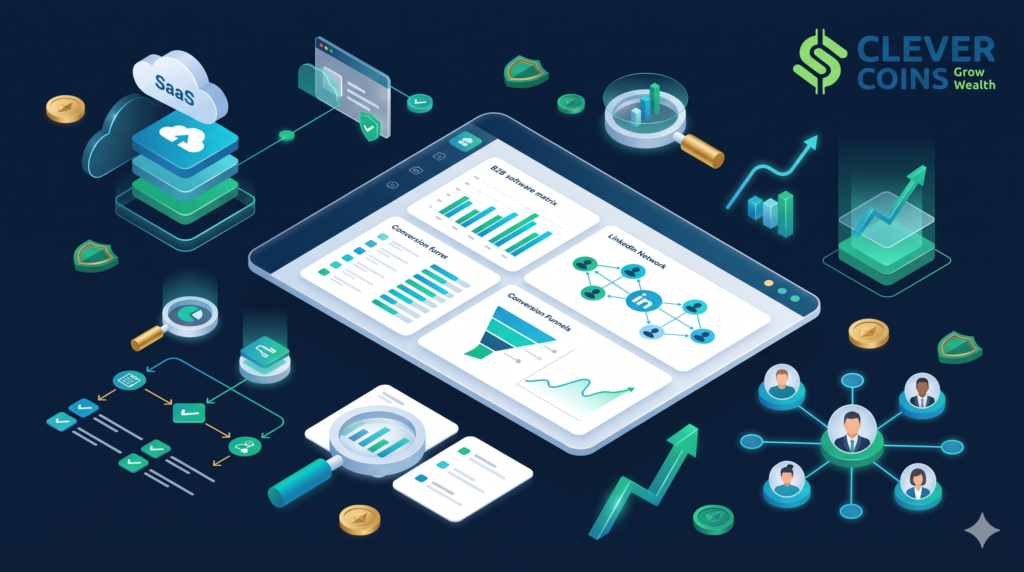
To help marketing leaders, founders, and RevOps teams evaluate their options objectively, the matrix below compares the top-performing LinkedIn marketing software platforms across core use cases, standout capabilities, pricing tiers, and ideal organizational fit.
| Tool / Platform | Primary Category | Standout B2B Features | Starting Pricing (Approx.) | Best Fit For |
| LinkedIn Sales Navigator | Native Prospecting & ABM Intelligence | Advanced boolean lead/account filters, buyer intent alerts, CRM sync, TeamLink warm intros, InMail credits | ~$99.99/user/mo (Core) to ~$179/mo (Advanced) | B2B sales teams, SDRs, and ABM marketers needing accurate buyer data |
| Taplio | AI Content Creation & Personal Branding | AI post generator trained on 500M+ posts, 3M+ viral post library, carousel builder, engagement CRM | ~$39–$65/mo (Standard) to ~$149/mo (Pro) | Founders, executives, and solo consultants building personal brands |
| Vulse | Employee Advocacy & Team Analytics | AI tone-of-voice matching per employee, official API team analytics, content approval workflows | Custom / Team tiers (scales by seat count) | Mid-market & enterprise B2B teams scaling employee advocacy |
| Expandi | Cloud-Based LinkedIn & Email Outreach | Dedicated country-specific cloud IP, smart automated sequences, dynamic image/GIF personalization | ~$99/seat/mo | Growth teams & lead-gen agencies prioritizing account safety |
| Dripify | Visual Drip Campaign Automation | Drag-and-drop sequence builder, smart unified inbox, team performance analytics, safety limits | ~$59/user/mo (Basic) to ~$99/user/mo (Advanced) | B2B sales pods seeking intuitive multi-step outreach funnels |
| Meet Alfred | Multi-Channel Social Selling | LinkedIn + Email + X (Twitter) sequences, built-in CRM, team management dashboard | ~$59/user/mo (Basic) to ~$99/user/mo (Pro) | SMBs wanting unified multi-channel outbound in one dashboard |
| Shield Analytics | Dedicated LinkedIn Personal Analytics | Complete historical post metrics, audience demographic breakdowns, content tagging & benchmarking | ~$25/mo (Starter) to ~$59/mo (Team) | Content marketers & executives tracking organic content ROI |
| Fibbler | LinkedIn Ads Revenue Attribution | Maps company-level LinkedIn ad impressions & clicks directly to HubSpot, Salesforce, and Pipedrive deals | ~$89/mo (Growth) to ~$159/mo (Agency) | B2B demand-gen teams proving LinkedIn Ads pipeline influence |
| Hootsuite | Enterprise Multi-Network Social Suite | Official LinkedIn partner, unified social inbox, employee advocacy add-on, cross-channel compliance | ~$99/mo (Professional) to Enterprise custom | Large enterprises managing multiple social channels under strict governance |
| Buffer | Lightweight Social Scheduling | Clean content calendar, AI assistant, straightforward multi-channel scheduling and basic analytics | Free tier; Paid from ~$6/channel/mo | Early-stage startups & lean marketing teams needing simple scheduling |
Deep-Dive Software Reviews: Strengths, Limitations & Strategic Use Cases
Selecting software based solely on feature checklists often leads to shelfware. Below is a candid operational evaluation of the major platforms shaping B2B LinkedIn execution.
1. LinkedIn Sales Navigator (The Non-Negotiable Data Foundation)
No third-party outreach or ABM tool can outperform the underlying data quality of LinkedIn Sales Navigator. Because it sits directly on LinkedIn’s proprietary database, it provides real-time job change alerts, company headcount growth trends, departmental hiring surges, and technology stack signals.
Where It Excels: Building hyper-granular lead lists (e.g., “VPs of Finance at 50–250 employee SaaS companies in North America who changed jobs in the past 90 days”) and syncing account insights directly into Salesforce or HubSpot.
Key Limitation: It is strictly an intelligence and manual social selling platform; it does not schedule organic content or automate multi-step sequences.
Verdict: Essential for any B2B organization with an average contract value (ACV) above $3,000.
2. Taplio vs. AuthoredUp (Executive Content & Personal Branding)
For founders and B2B marketers focused on inbound demand creation, Taplio and AuthoredUp represent two distinct philosophies:
Taplio acts as an all-in-one AI growth suite. It combines AI-assisted post drafting, a searchable library of millions of high-performing viral posts for structural inspiration, automated carousel generation, and lead-engagement lists that let you comment on target prospects’ posts from a single feed.
AuthoredUp focuses intensely on native text formatting, hook/ending templates, realistic desktop/mobile post previews, and granular personal analytics without relying on aggressive automation.
Verdict: Choose Taplio if you want AI ideation, viral post research, and integrated lead engagement; choose AuthoredUp if you already have strong subject-matter writers who want distraction-free drafting, clean formatting, and zero API compliance risk.
3. Vulse vs. Hootsuite (Scaling Team Content & Employee Advocacy)
When B2B marketing moves from one founder posting to twenty subject-matter experts publishing simultaneously, coordination bottlenecks emerge.
Vulse is purpose-built specifically for LinkedIn employee advocacy and team content operations. Its standout differentiator is individual tone-of-voice matching—analyzing each employee’s historical posts so AI-assisted drafts preserve their authentic cadence rather than sounding like corporate boilerplate. Managers gain unified team analytics via LinkedIn’s official API.
Hootsuite offers broad multi-network governance, compliance archiving, and scheduling across LinkedIn, X, Instagram, and Facebook.
Verdict: Choose Vulse if LinkedIn is your primary B2B growth channel and authentic employee voice is paramount; choose Hootsuite if your compliance department requires multi-network archival and enterprise-wide social governance.
4. Expandi vs. Dripify vs. Meet Alfred (Outbound Automation & Safety)
Automated LinkedIn outreach carries inherent risks if executed with browser-based Chrome extensions that trigger LinkedIn’s anti-scraping detection. Modern B2B teams exclusively evaluate cloud-based automation platforms:
Expandi leads the market in safety architecture by assigning each user a dedicated, country-matched residential IP address, mimicking human typing delays, and enforcing smart daily warm-up limits. Its dynamic image personalization (inserting a prospect’s profile photo or company logo onto a whiteboard or coffee cup graphic) consistently boosts reply rates.
Dripify offers an exceptionally intuitive visual workflow builder, allowing RevOps teams to design conditional branches (“If prospect views profile -> wait 2 days -> endorse skill -> send connection request”) alongside a clean unified inbox.
Meet Alfred shines for teams wanting built-in multi-channel sequences combining LinkedIn actions with automated email follow-ups and X (Twitter) touchpoints in one subscription.
Verdict: Choose Expandi for maximum account safety and creative visual personalization; choose Dripify for fast team onboarding and visual funnel clarity; choose Meet Alfred for unified LinkedIn + Email sequences.
5. Fibbler (Solving the B2B LinkedIn Ad Attribution Blind Spot)
One of the biggest frustrations for B2B CMOs running LinkedIn Ads is that decision-makers rarely click an ad and immediately book a demo. Instead, a VP of Engineering sees your Sponsored Content five times over three weeks, never clicks, and later types your brand URL directly into Google—causing Google Analytics to credit “Direct” or “Organic Search” for a deal generated by LinkedIn.
Fibbler solves this attribution blind spot by pulling company-level impression, engagement, and click data directly from LinkedIn Campaign Manager and syncing it into your CRM (HubSpot, Salesforce, Pipedrive). Revenue teams can immediately see which open pipeline opportunities were influenced by specific LinkedIn ad campaigns, even without direct ad clicks.
Verdict: An indispensable addition for B2B companies spending $3,000+ per month on LinkedIn Ads who need defensible pipeline attribution.
How to Choose the Right LinkedIn Software Stack by Company Stage
Buying every tool in the market creates overlapping subscriptions, messy CRM data, and team fatigue. Instead, build a modular stack aligned with your current revenue stage and team structure:
Stage 1: Early-Stage Startups & Solo Founders ($0 – $1M ARR)
Strategic Focus: Founder-led thought leadership, customer discovery, and high-touch manual networking.
Recommended Stack:
LinkedIn Sales Navigator Core (for ICP list building and buyer research)
AuthoredUp or Buffer (for consistent post scheduling and clean formatting)
Canva (for clean PDF carousel slides and branded graphics)
Estimated Monthly Budget: ~$115 – $140/month.
Stage 2: Growth-Stage B2B Companies ($1M – $10M ARR)
Strategic Focus: Repeatable inbound content engine, targeted outbound social selling, and initial paid retargeting.
Recommended Stack:
LinkedIn Sales Navigator Advanced (for CRM sync and account-level alerts)
Taplio or Shield Analytics (for executive content scaling and deep performance analytics)
Expandi or Dripify (for signal-based outbound sequences targeting event attendees and post engagers)
LinkedIn Campaign Manager (running Thought Leader Ads and website retargeting)
Estimated Monthly Budget: ~$300 – $500/month (excluding ad spend).
Stage 3: Scaling Mid-Market & Enterprise B2B ($10M+ ARR)
Strategic Focus: Multi-executive brand presence, organization-wide employee advocacy, ABM ad orchestration, and multi-touch revenue attribution.
Recommended Stack:
LinkedIn Sales Navigator Advanced Plus (enterprise CRM integration)
Vulse (for scalable, tone-matched employee advocacy across departments)
Fibbler (for CRM pipeline attribution and LinkedIn Ads optimization)
LinkedIn Campaign Manager (full-funnel ABM campaigns integrated with CRM target lists)
Estimated Monthly Budget: ~$800 – $2,000+/month (excluding ad spend).
Step-by-Step Implementation Blueprint: 90 Days to LinkedIn Pipeline
Deploying a new software stack fails without disciplined execution. Follow this 90-day rollout roadmap to turn LinkedIn into a measurable B2B revenue channel:
Days 1–30: Foundation, Positioning & Signal Setup
Audit Executive & Company Profiles: Rewrite founder and sales leader headlines to state clear customer outcomes rather than vague job titles. Optimize featured sections with case studies, ROI calculators, or high-value comparison guides.
Define Three Core Content Pillars: Establish three repeatable themes aligned with buyer pain points (e.g., Industry Benchmarks, Implementation Playbooks, and Customer Transformation Stories).
Configure Sales Navigator Saved Searches: Build dynamic lead and account lists filtered by ICP firmographics, recent funding, leadership changes, and technology adoption.
Install Tracking & Attribution Infrastructure: Deploy the LinkedIn Insight Tag on your website, configure conversion events, and connect your CRM attribution tool (such as Fibbler) so historical baseline data begins syncing immediately.
Days 31–60: Content Cadence, Advocacy & Warm Engagement
Launch a 4x/Week Executive Publishing Cadence: Publish two text-and-visual insight posts, one tactical PDF carousel, and one short-form native video per week from primary leadership accounts.
Execute the Daily 20-Minute Engagement Routine: Before publishing, spend 10 minutes leaving substantive, multi-sentence comments on posts by 10 target ICP accounts and 5 industry peers; spend 10 minutes replying to every comment on your own posts within the first hour.
Onboard 5–10 Internal Champions into Advocacy: Use an advocacy platform like Vulse to equip product leaders and senior account executives with tailored content prompts twice a week.
Days 61–90: Paid Amplification, Outbound Triggers & Pipeline Optimization
Amplify Winning Organic Posts via Thought Leader Ads: Identify your top 10% highest-engaging organic posts from Days 31–60 and promote them to your exact Sales Navigator target account list via Campaign Manager.
Activate Signal-Based Outreach: Trigger personalized, low-friction connection requests and value-first messages to prospects who repeatedly engage with your content or download ungated resources—strictly avoiding aggressive automated pitches.
Conduct a 90-Day Pipeline Review: Analyze CRM influence reports rather than vanity likes. Double down on content formats and ad segments generating qualified sales conversations and influenced pipeline.
Critical Compliance, Account Safety & ROI Mistakes to Avoid
Even sophisticated B2B marketing teams sabotage their LinkedIn performance by falling into predictable traps:
Over-Automating Cold Outreach: LinkedIn actively restricts accounts exhibiting robotic behavior—such as sending 80+ connection requests daily, using browser-injected extensions, or experiencing high “I don’t know this person” rejection rates. Cap daily connection requests at 15–25 highly targeted prospects and prioritize cloud-based tools with official API compliance or dedicated residential IPs.
Putting External Links in Organic Post Bodies: LinkedIn’s feed algorithm penalizes posts that immediately drive users off-platform. Place blog or landing page links in your profile’s Featured section, or share deep native summaries in the post body while reserving external URLs for strategic retargeting ads and direct conversations.
Measuring Vanity Metrics Instead of Pipeline Influence: Viral impressions from irrelevant audiences do not pay payroll. Track ICP engagement rate, profile views from target accounts, inbound DMs, self-reported attribution (“How did you hear about us?”), and influenced CRM pipeline.
Neglecting Software Integration Hygiene: Ensure your LinkedIn scheduling, advocacy, and attribution tools sync cleanly with your CRM so marketing and sales teams share a unified view of account engagement.