Advanced Strategies for Export Pricing: Mastering Global Margins, Landed Costs, and International Market Penetration
Expanding into international markets is one of the highest-leverage growth engines available to modern manufacturers, wholesalers, and B2B brands. Yet, for every company that unlocks exponential revenue overseas, another watches its profit margins evaporate through hidden logistics fees, unfavorable currency swings, miscalculated tariffs, and rigid domestic pricing habits.
Developing an export pricing strategy is fundamentally different from setting domestic prices. When you sell within your home borders, you operate under a single currency, a predictable tax regime, familiar distribution tiers, and uniform legal liabilities. The moment your goods cross an international border, those constants turn into variables. Simply taking your domestic wholesale price and tacking on international shipping is a recipe for either pricing yourself entirely out of foreign markets or unintentionally subsidizing your overseas buyers out of your own net margin.
This comprehensive guide breaks down the advanced frameworks, financial models, Incoterms® 2020 mechanics, foreign exchange protections, and psychological pricing architectures required to build a resilient, scalable, and highly profitable global pricing engine.
1. Why Domestic Pricing Models Fail in International Trade
The most common error among emerging and mid-market exporters is domestic cost-plus myopia—treating export orders as opportunistic add-ons to domestic production runs rather than distinct commercial ecosystems.
In a domestic market, your price structure relies on relatively flat overhead absorption and standardized freight zones. In international trade, four structural friction points immediately distort that baseline:
The Price Escalation Effect: Every intermediary added to an international supply chain—freight forwarders, customs brokers, foreign importers, regional distributors, and local retailers—applies their own markup. Because tariffs and value-added taxes (VAT/GST) are frequently calculated on the Cost, Insurance, and Freight (CIF) value rather than the factory gate price, taxes compound on top of logistics costs. A $50 product leaving a factory in Ohio can easily retail for $145 in Munich without any single party earning an excessive margin.
Asymmetric Competitive Landscapes: Your primary competitor in Germany, Brazil, or South Korea is rarely another exporter from your home country. You are competing against local domestic producers who pay zero import duties and minimal last-mile freight, alongside low-cost regional exporters benefiting from preferential Free Trade Agreements (FTAs).
Regulatory and Compliance Overhead: Export documentation, Certificates of Origin, sanitary/phytosanitary inspections, product localization, bilingual packaging, and foreign product liability insurance introduce fixed and variable costs that do not exist in domestic fulfillment.
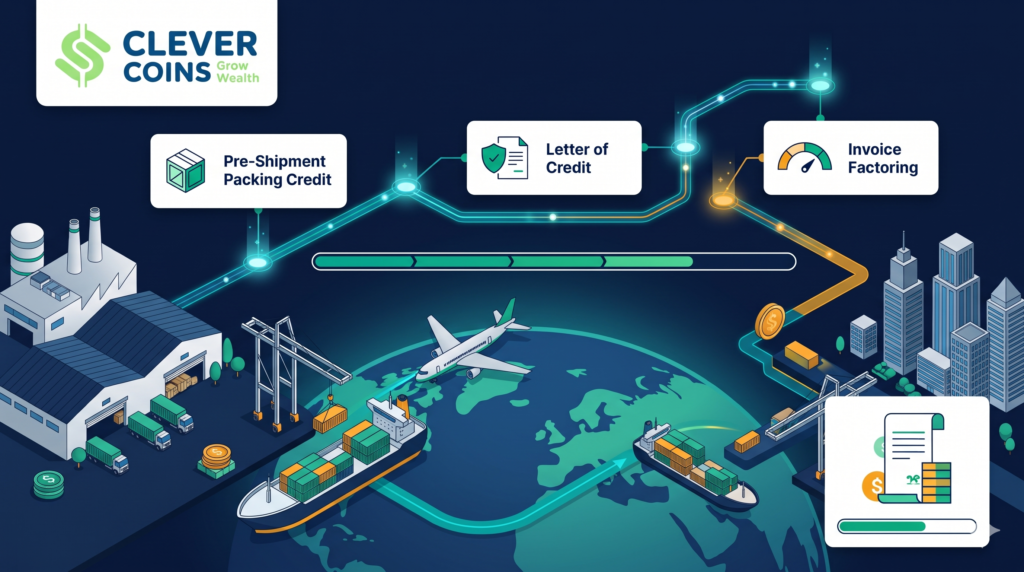
Working Capital Lockup: International transit times, port congestion, and extended payment terms (such as 60- to 90-day Letters of Credit or Open Account terms) tie up cash far longer than domestic net-30 invoices, creating an implicit financing cost that must be baked into your pricing architecture.
2. Core Pricing Methodologies: Moving Beyond Basic Cost-Plus
To build an adaptive export pricing strategy, commercial leaders must select the right baseline methodology for each target market, product lifecycle stage, and buyer profile.
Full-Cost vs. Marginal-Cost (Incremental) Pricing
Full-Cost Export Pricing
Under full-cost pricing, every exported unit absorbs its exact proportional share of fixed domestic overhead (R&D, factory depreciation, executive administration), direct manufacturing costs, and all export-specific expenses.
Best for: Core product lines, capacity-constrained factories, and long-term sustainable market entry where export volume represents a substantial share of total revenue.
Risk: Can produce uncompetitive prices in price-sensitive emerging markets where local competitors do not bear equivalent overhead structures.
Marginal-Cost (Incremental) Pricing
Marginal-cost pricing treats domestic sales as the primary vehicle for covering fixed overhead. Export prices are calculated based strictly on the variable cost of producing additional units plus direct export logistics, tariffs, and compliance expenses. Any revenue above that variable floor contributes directly to net operating profit.
Best for: Entering hyper-competitive foreign markets, utilizing excess manufacturing capacity during domestic off-seasons, or winning strategic anchor accounts to establish brand presence.
Risk: If export volume grows to replace domestic capacity, fixed overhead becomes under-recovered. Furthermore, pricing below full domestic cost carries severe regulatory risk under international anti-dumping laws, which penalize exporters selling goods abroad below “normal value.”
Dynamic Market-Based and Value-Based Pricing
Advanced exporters decouple their pricing from internal cost structures entirely once they establish a floor, anchoring instead to local market willingness-to-pay.
Market-Backward (Target) Pricing: You begin with the prevailing retail or B2B street price in the destination country, then work backward—subtracting local retail margins, distributor markups, import duties, VAT, international freight, and insurance—to determine the maximum allowable Ex-Works (EXW) or Free on Board (FOB) factory price. If your factory cost sits comfortably below that derived ceiling, the market is viable; if not, you must re-engineer packaging, volume tiers, or tariff classifications before entering.
Value-Based Export Pricing: When your product delivers superior reliability, lower total cost of ownership (TCO), regulatory prestige (e.g., “Made in USA,” “Made in Germany,” or “Swiss Engineered”), or proprietary technology, pricing should reflect the economic value created for the foreign buyer. For example, an industrial pump priced 25% higher than a local alternative commands a premium if its energy efficiency saves a foreign factory $40,000 annually in electricity costs.
Strategic Comparison of Export Pricing Methodologies
| Pricing Methodology | Primary Calculation Anchor | Ideal Market Condition | Key Strategic Advantage | Primary Risk to Manage |
| Full-Cost Plus | Direct COGS + Allocated Fixed Overhead + Export Costs + Target Margin | High-demand, low-competition niches; proprietary industrial goods | Guarantees complete overhead recovery and predictable unit margins | Price escalation can render products uncompetitive overseas |
| Marginal / Incremental | Variable Production Cost + Direct Export Expenses + Contribution Margin | Excess factory capacity; aggressive penetration into price-sensitive regions | Enables highly competitive market entry without lowering domestic prices | Anti-dumping penalties; margin erosion if fixed costs are ignored long-term |
| Market-Backward | Destination Market Street Price minus Downstream Margins, Taxes, and Freight | Mature foreign markets with established local price benchmarks | Ensures end-market competitiveness and distributor buy-in from day one | Compresses exporter margins if destination tariffs or freight spike |
| Value-Based | Quantified Economic Value / TCO Savings Delivered to the Foreign Buyer | Differentiated technology, luxury goods, high-reliability B2B equipment | Maximizes profit capture independent of manufacturing cost | Requires localized sales engineering and credible ROI proof points |
3. Mastering Landed Cost Modeling and Incoterms® 2020
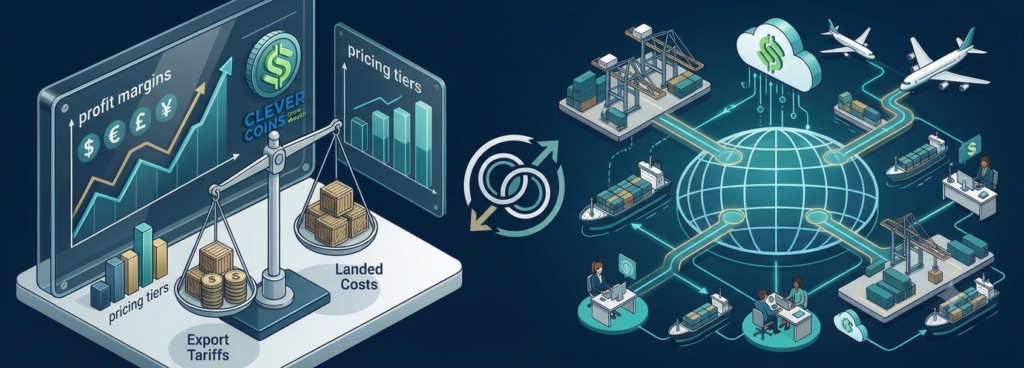
You cannot price an export transaction accurately without mastering Total Landed Cost—the complete sum of expenses required to deliver a product from your factory floor to the buyer’s designated warehouse, cleared through customs with all duties paid.
The Complete Landed Cost Formula
How Incoterms® 2020 Dictate Your Pricing Structure
The International Chamber of Commerce (ICC) Incoterms® 2020 rules define the exact point at which cost, risk, and logistical responsibility transfer from seller to buyer. Offering quotes across multiple Incoterms is a powerful competitive lever—many foreign buyers prefer paying a higher unit price under CIF or DDP because they lack the logistics infrastructure to manage international freight or foreign customs clearance.
EXW (Ex Works): The buyer assumes nearly all cost and risk from your loading dock onward. While simplest for the exporter, quoting EXW exclusively often loses deals to competitors willing to handle export logistics, and it gives you zero visibility into final end-market pricing.
FCA (Free Carrier) & FOB (Free on Board): You cover inland transport to the port/terminal and export customs clearance. Risk transfers once goods are loaded onto the vessel (FOB, sea/inland waterway only) or handed to the carrier (FCA, any transport mode). FOB/FCA is the global benchmark for experienced B2B importers.
CIF (Cost, Insurance, and Freight) & CIP (Carriage and Insurance Paid To): You pay for main international transport and cargo insurance to the destination port/place, though risk transfers earlier upon loading/handover. Quoting CIF/CIP allows you to leverage your own corporate freight contracts—turning logistics procurement into a subtle margin enhancer while simplifying the buyer’s purchasing process.
DAP (Delivered at Place) & DDP (Delivered Duty Paid): Under DDP, you assume maximum obligation—delivering goods cleared for import to the buyer’s door with all duties and local taxes paid. While DDP commands the highest price premium and removes friction for foreign buyers, you must confirm you are legally registered to act as the Importer of Record in the destination country and accurately account for non-recoverable local VAT/GST.
4. Tariff Engineering, HS Codes, and Free Trade Agreements
Tariffs are not fixed natural laws; they are statutory classifications that reward meticulous commercial engineering. Small adjustments in how you classify, assemble, or source your goods can reduce import duties from 15% down to 0%, instantly unlocking massive pricing flexibility.
Strategic HS Code Classification
Every physical product traded internationally is classified under the World Customs Organization’s Harmonized System (HS) using a 6-digit global code extended to 8–12 digits by importing nations.
Audit Ambiguous Classifications: Many multi-functional products sit on the border between two HS headings with vastly different duty rates. Obtaining a formal Binding Tariff Information (BTI) or Advance Ruling from the destination customs authority eliminates unexpected duty assessments at the border.
Complete Knock-Down (CKD) vs. Semi Knock-Down (SKD) Exports: Shipping fully assembled machinery or furniture often incurs high finished-goods tariffs and wastes container volume (“shipping air”). Exporting components in CKD or SKD kits for final assembly in the destination country frequently qualifies for substantially lower component tariff rates while slashing ocean freight costs per unit.
Leveraging Free Trade Agreements (FTAs) and Rules of Origin
If your country maintains bilateral or multilateral trade agreements (such as USMCA, EU FTAs, CPTPP, or RCEP) with the destination market, your goods may qualify for preferential zero-tariff treatment—provided they meet strict Rules of Origin (RoO).
Regional Value Content (RVC): Track your bill of materials (BOM) carefully. If an item sits at 52% regional content and the FTA threshold is 55%, shifting a single sub-component supplier can drop your buyer’s import duty to zero, allowing you to split that tariff savings with the buyer to boost your gross margin.
Documentation Discipline: Preferential tariffs only apply if you issue compliant Certificates of Origin. Failing to include valid origin declarations forces the buyer to pay standard Most-Favored-Nation (MFN) tariffs, eroding your price competitiveness overnight.