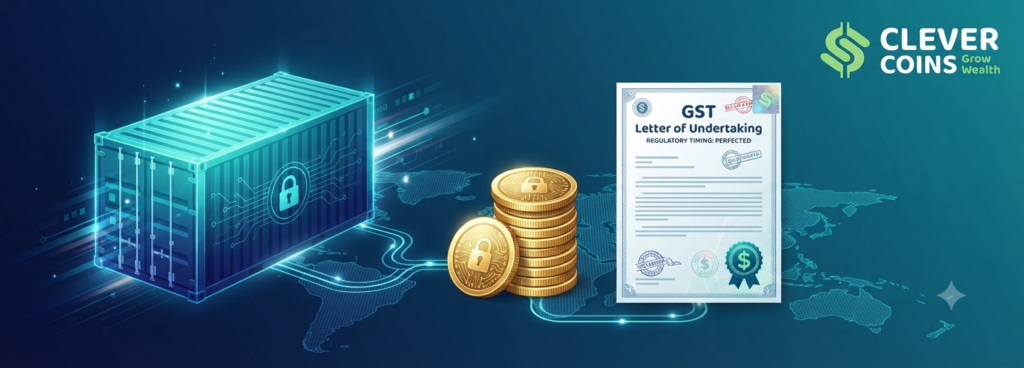
Letter of Undertaking (LUT) under GST: The Definitive Guide for Exporters (2026)
Key Takeaways
- Zero-Rating Powerhouse: Exporting goods or services from India without paying Integrated GST (IGST) is possible through a Letter of Undertaking (LUT) filed via Form GST RFD-11.
- Annual Renewal Mandate: An LUT submitted for a financial year remains valid for the entire period, but it must be renewed every financial year (before April 1st) to prevent export blocks.
- No Bank Guarantee Needed: Thanks to streamlined 2026 tax provisions, compliant exporters are generally exempt from furnishing a bank guarantee unless penal actions apply.
- Real-Time Portal Tracking: The GST portal’s 2026 digital infrastructure cross-references your shipping bills with your active LUT status instantly, eliminating manual custom delays.
- Proactive Cash Flow Protection: Utilizing an LUT saves your working capital from getting trapped in long-drawn tax refund processes.
Introduction: The Lifeline of Indian Exporters
Expanding your business beyond national borders is an exhilarating milestone. Whether you are an IT service provider exporting software code from Bengaluru or a manufacturer shipping engineering goods from Mumbai, global trade opens doors to massive growth. However, navigating cross-border taxation without a solid strategy can quickly choke your liquidity.
Under the Goods and Services Tax (GST) regime, all exports are classified as “zero-rated supplies.” This means the government does not want to export taxes out of the country. Exporters are given two primary routes to handle IGST on exports:
- Pay IGST and claim a refund later (a path notorious for locking up working capital during departmental verification).
- Export under a Letter of Undertaking (LUT) in Form GST RFD-11 without paying IGST upfront.
For modern exporters aiming to protect cash flow and optimize working capital, mastering the LUT process is non-negotiable. This comprehensive 2026 guide breaks down everything you need to know about filing, maintaining, and leveraging your LUT for stress-free international trade.
What is a Letter of Undertaking (LUT) Under GST?
Legally governed by Section 16 of the Integrated Goods and Services Tax (IGST) Act, 2017 read with Rule 96A of the CGST Rules, 2017, a Letter of Undertaking is a formal declaration submitted by a registered taxpayer.
By filing an LUT via Form GST RFD-11 on the GST portal, the exporter undertakes that they will fulfill all statutory requirements specified under the GST law regarding exports within the stipulated time frames—without paying IGST upfront.
Why is an LUT Critical for Your Business?
- Zero Upfront Tax Burden: You do not have to pay 18% or applicable IGST rates on your outward export invoices and wait months for the government to process your refund.
- Instant Customs Clearance: Modern Indian Customs systems (integrated with ICEGATE) automatically validate your active LUT status against your shipping bills, ensuring seamless cargo dispatch.
- Preserved Working Capital: Every rupee saved from being locked in tax ledgers can be reinvested directly into your core business operations, inventory, and R&D.
Who is Eligible to File an LUT in 2026?
Gone are the days when a select few could file an LUT. Under current 2026 regulations, any registered taxpayer who intends to export goods or services (including supplies to Special Economic Zones or SEZs) can file an LUT, with one major exception.
The Disqualification Clause: Prosecution Records
An exporter cannot file an LUT if they have been prosecuted under the CGST Act, the IGST Act, or any existing indirect tax laws for an amount exceeding ₹250 Lakhs (₹2.5 Crores).
If an exporter falls into this penal category, they lose the privilege of the LUT and must export by paying IGST or by furnishing a Bond backed by a Bank Guarantee (BG) equal to 15% of the tax liability. For all clean, compliant businesses, however, the LUT route remains entirely open and free of bank guarantees.
Step-by-Step Procedure to File Form GST RFD-11 Online
Filing your LUT on the GST portal is completely digital. Follow these steps to complete your annual submission smoothly:
- Log in to the GST Portal: Access your dashboard using your credentials and authorized Digital Signature Certificate (DSC) or Electronic Verification Code (EVC).
- Navigate to LUT Form: Go to Services > User Services > Furnish Letter of Undertaking (LUT).
- Select Financial Year: Choose the relevant financial year for which you are filing the LUT (e.g., FY 2026-27).
- Fill in Basic Details: Verify your GSTIN, trade name, and jurisdictional officer details.
- Accept Self-Declarations: Carefully read and check the three mandatory declarations:
- Export of goods/services will be completed within statutory time limits (3 months for goods, 1 year for services from invoice date, or as permitted by RBI).
- Abidance by all provisions of the IGST and CGST Acts.
- Failure to export will result in immediate payment of applicable IGST alongside 18% mandatory interest.
- Enter Witness/Authorized Signatory Details: Provide the names, addresses, and occupation of two independent witnesses (required for paper-based declaration records, though digital submission authenticates via DSC/EVC).
- Submit and Sign: File the form using a Class 3 Digital Signature Certificate (DSC) or EVC. Upon successful submission, an Acknowledgment Reference Number (ARN) is generated instantly, and your LUT is marked as active.
Critical Deadlines & Validity Rules
- Annual Requirement: An LUT is strictly valid for one financial year (from April 1st to March 31st). You must file a fresh Form GST RFD-11 before April 1st of every new fiscal year.
- The Danger of Lapsing: If you fail to renew your LUT before executing an export shipment in the new financial year, the customs portal may block your shipping bill processing, or you may be forced to pay IGST on that transaction, triggering complex compliance loops.
Essential Compliance Checklist for LUT Holders
Filing an LUT is only half the battle. To maintain your clean compliance record under 2026 AI-driven tax scrutiny, ensure you meet these operational requirements:
- Include LUT Details on Invoices: Every export invoice must explicitly state: “Supply meant for export on Letter of Undertaking without payment of Integrated Tax (IGST).”
- Track Foreign Inward Remittances (FIRC/e-BRC): For service exporters, ensure that foreign exchange earnings are received within the timelines prescribed by the Reserve Bank of India (RBI).
- Reconcile GSTR-1 and GSTR-3B: Your zero-rated export turnover declared in Table 6A/6B of GSTR-1 must perfectly mirror your GSTR-3B filings to prevent automated anomaly notices from the tax department.
Frequently Asked Questions (FAQs)
Q1: Can I file an LUT after making an export shipment? A: No. The LUT must be filed and approved before you dispatch your goods or raise your export invoice for services. Exporting without an active LUT forces you into the IGST payment and refund route for that specific transaction.
Q2: Do I need to submit physical copies of the LUT to my jurisdictional tax officer? A: No. Under the automated 2026 GST framework, Form GST RFD-11 is completely online. Once filed with a DSC or EVC, it is instantly registered without requiring physical document submission to tax authorities.
Q3: What happens if I fail to export goods within 3 months of the invoice date? A: If you fail to export the goods within the statutory period (or within extended RBI timelines for services), the transaction ceases to be a zero-rated supply. You will be legally required to pay the applicable IGST along with mandatory 18% interest calculated from the date of the invoice.
Q4: Is a bank guarantee required when filing an LUT? A: For 99% of compliant businesses, no bank guarantee is required. A bank guarantee is only mandated by the jurisdictional commissioner if the taxpayer has a severe history of tax evasion or prosecution exceeding ₹2.5 Crores.
Conclusion
Exporting is a powerful engine for business growth, but letting poor tax compliance drain your liquidity is a risk no modern enterprise should take. The Letter of Undertaking (LUT) is your legal shield to keep working capital flowing freely while trading globally.
However, navigating portal updates, annual renewals, and matching export strings requires absolute precision. Stop letting administrative oversight slow down your international expansion.
Need Expert Guidance? At CleverCoins, we transform complex indirect tax frameworks into streamlined, risk-free compliance strategies for modern exporters and startups. Reach out to our dedicated tax advisory team today:
- Phone: +91 77389 59862
- Email: client@clevercoins.org
- Address: Ideal Market, Mumbra, Thane-400612