GST on Del-Credere Agent: The Definitive Compliance Guide (2026)
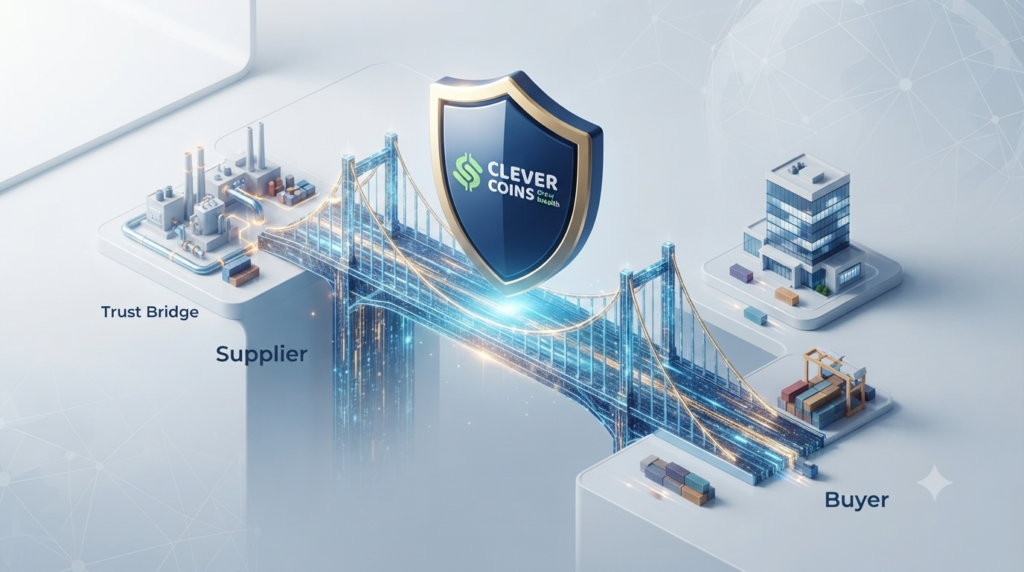
In modern commercial distribution and supply chains, businesses often rely on intermediaries to expand their market reach, manage customer relationships, and secure payments. Among these, the Del-Credere Agent (DCA) plays a unique and vital role. By acting as both a sales agent and a financial guarantor against buyer default, a DCA bridges the gap between suppliers and end customers.
However, under the Goods and Services Tax (GST) regime, the multi-layered financial arrangement between a principal, a DCA, and a buyer introduces complex tax classification, valuation, and Input Tax Credit (ITC) challenges.
This comprehensive guide unpacks the statutory framework, recent clarifications, and compliance best practices for Del-Credere Agents and principals under Indian tax law for 2026.
1. What is a Del-Credere Agent (DCA)?
A Del-Credere Agent is a commercial agent who guarantees to the principal (the supplier of goods) that the third-party buyer will pay for the goods supplied.
-
The Guarantee: If the buyer defaults on payment or becomes insolvent, the DCA steps in and pays the principal out of their own pocket.
-
The Compensation: In return for taking on this financial risk and facilitating the sale, the DCA receives an overriding commission or a specific del-credere commission (DCC) over and above their regular brokerage or commission fee.
2. Are Del-Credere Agents Treated as “Agents” Under GST?
Under Schedule I of the CGST Act, 2017, supplies made between a principal and their agent—where the agent undertakes to supply goods on behalf of the principal—are treated as taxable supplies even without consideration. However, whether a DCA falls under this strict definition depends on how transactions are structured:
-
Pure Commission Agent: If the DCA merely negotiates or procures orders, and the actual invoices are issued directly by the principal to the buyer (with the DCA only guaranteeing payment), the DCA is treated as providing a taxable service (brokerage/commission).
-
The “Holding Stock” Distinction: If the DCA takes physical possession of goods, issues invoices in their own name, or acts as a primary distributor handling billing and collections, they may be classified as an agent under Schedule I, triggering specific valuation rules.
3. GST Treatment on Del-Credere Commission (DCC)
The additional commission charged by a DCA for bearing the risk of buyer default is considered part of the composite supply of services provided to the principal.
-
Tax Rate: The del-credere commission attracts the standard GST rate applicable to intermediary or business support services—typically 18%.
-
Time of Supply: GST on the DCC is payable when the DCA issues the invoice for commission or when the principal pays/credits the commission, whichever is earlier.
4. The Financial Guarantee Trap: Is DCA Commission a Loan/Financing Service?
A frequent point of litigation arises when principals argue that the del-credere guarantee is essentially an extension of credit or a financial service (which can sometimes enjoy exemptions, such as loans or advances).
-
The Revenue Stance: Tax authorities maintain that a DCA’s guarantee is inextricably linked to the sale of goods and commercial facilitation. It cannot be dissected and classified as a standalone exempt financial service.
-
Compliance Verdict: The commission paid for the guarantee is a taxable supply of service under SAC 9971 or SAC 9985, attracting 18% GST with full Input Tax Credit eligibility for the principal.
5. Valuation and Working Capital Complexities
When a DCA guarantees payment and settles dues on behalf of a defaulting buyer, how is the transaction treated?
-
No Double Taxation: When the principal issues a tax invoice to the buyer, GST is paid on the transaction value of the goods. When the DCA later pays the principal on behalf of a defaulting buyer, that payment is an inter-se financial settlement, not a fresh supply of goods, and does not attract a second layer of GST.
-
ITC Eligibility: The principal can claim full Input Tax Credit on the GST charged by the DCA via their commission invoice, provided the invoice is duly reflected in GSTR-2B under the strict dynamic matching framework of 2026.
6. Key Compliance Checklist for Principals and DCAs
To survive automated AI-driven tax scrutiny and prevent working capital blocks, businesses utilizing DCAs must enforce the following practices:
-
Robust Agreements: Clearly delineate the scope of services, commission structures, and specific del-credere terms in written agency agreements.
-
Accurate Invoicing: DCAs must issue separate tax invoices for commission and del-credere charges reflecting the correct GSTIN and SAC codes.
-
GSTR-2B Reconciliation: Principals must ensure monthly synchronization between their books and DCA commission invoices to avoid automatic mismatch flags (such as Form DRC-01C).
-
E-Way Bill Compliance: Ensure correct movement documentation when goods transit through DCA-managed warehouses or depots.
Navigate Complex Supply Chain Taxation with Confidence
Managing intermediary networks, commission structures, and multi-party financial guarantees requires absolute precision to avoid unexpected tax demands, interest penalties, and litigation.
At CleverCoins, we transform complex indirect tax regulations into streamlined, risk-free compliance strategies for modern enterprises. Whether you are restructuring your distribution network or resolving audit notices, our expert tax advisory team is here to help.
-
Phone: +91 77389 59862
-
Email: client@clevercoins.org
-
Address: Ideal Market, Mumbra, Thane-400612