Job Work Provisions Under GST Section 143: A Complete Guide for Businesses
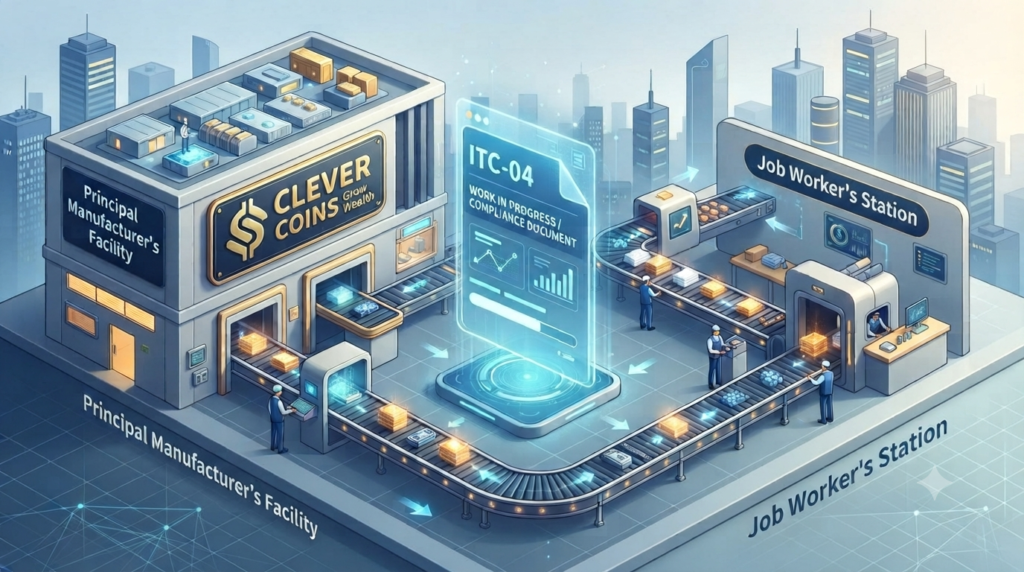
Outsourcing production stages, processing, assembly, or treatment of goods is a foundational operational model for modern manufacturers, MSMEs, and enterprises. Under the Goods and Services Tax (GST) regime, Section 143 of the Central Goods and Services Tax (CGST) Act, 2017 provides a structured, tax-neutral framework that allows businesses to dispatch inputs, semi-finished goods, and capital goods to job workers without triggering immediate tax liabilities while fully protecting their Input Tax Credit (ITC).
1. What is Job Work Under GST?
Job work is legally defined under Section 2(68) of the CGST Act as any treatment or process undertaken by a person on goods belonging to another registered taxable person (referred to as the “principal”).
Ownership Retained: The physical possession of the goods moves to the job worker, but ownership, risk, and compliance accountability remain entirely with the principal.
Tax-Neutral Movement: Dispatched goods do not trigger an immediate taxable supply, provided statutory conditions, timeframes, and documentation rules are meticulously met.
2. Core Provisions Under Section 143(1): Movement Without Tax
Section 143 empowers a registered principal to send inputs, semi-finished goods, or capital goods to a job worker without paying tax. Key operational pathways include:
Direct Dispatch from Supplier: The principal can direct a raw material supplier to deliver goods directly to the job worker’s premises without first routing them through the principal’s factory.
Sequential Job Work: Goods can be moved from one job worker to another downstream processor across India under proper delivery challan trails.
Supply Directly from Job Worker’s Premises: Finished goods can be supplied directly from the job worker’s location, provided the principal is registered at that location as an additional place of business (or if the job worker is registered).
3. Statutory Timeframes for the Return of Goods
To maintain the tax-neutral status of a job work transaction, goods cannot stay indefinitely at a job worker’s facility. Section 143 mandates strict time windows starting from the date of dispatch:
| Type of Goods | Maximum Permissible Timeframe for Return |
|---|---|
| Inputs / Semi-Finished Goods | Within 1 year from the date of dispatch by the principal |
| Capital Goods | Within 3 years from the date of dispatch by the principal |
Note: The 3-year limit for capital goods excludes moulds, dies, jigs, tools, and fixtures sent to a job worker, which can remain indefinitely without triggering tax consequences.
4. Consequences of Non-Compliance: The “Deemed Supply” Trap
If inputs or capital goods are not returned within the statutory 1-year or 3-year windows—and are not supplied outward from the job worker’s premises in accordance with the law—Section 143(3) and (4) trigger severe legal consequences:
Deemed Supply Classification: The original movement to the job worker is legally reclassified as a taxable supply made by the principal on the original date of dispatch.
Retroactive Tax & 18% Interest: The principal becomes immediately liable to pay the applicable GST retroactively, alongside a mandatory 18% interest charge calculated from the original dispatch date, plus applicable statutory penalties.
ITC Jeopardy: Failure to account for capital goods or inputs within the statutory window can also invite mandatory ITC reversals and audit demands.
5. Mandatory Documentation & Reporting: Form GST ITC-04
Compliance under Section 143 relies heavily on flawless documentation and periodic reporting:
Delivery Challan: Every movement of goods to and from a job worker must be accompanied by a serially numbered delivery challan issued under Rule 45 read with Rule 55.
Form GST ITC-04 Filing: Principals must report all job work transactions via Form GST ITC-04, detailing inputs/capital goods sent, received back, or supplied from job workers’ premises:
Large Enterprises: Aggregate turnover exceeding ₹5 crore requires half-yearly filing (due dates: April 25th for the October–March period and October 25th for the April–September period).
MSMEs & Smaller Businesses: Aggregate turnover up to ₹5 crore requires annual filing (due by April 25th following the financial year).
Frequently Asked Questions (FAQs)
Q1: Can an unregistered person act as a job worker under GST? Answer: Yes. A job worker is not mandatorily required to register for GST unless their aggregate turnover exceeds the statutory threshold (₹20 lakh or ₹10 lakh/₹40 lakh depending on the state/supply type).
Q2: Is the principal required to reverse ITC when sending goods for job work? Answer: No. Sending inputs or capital goods to a job worker under Section 143 does not require an ITC reversal, provided the goods are returned or duly accounted for within the statutory timeframes.
Q3: Can capital goods like machinery be sent to a job worker without paying tax? Answer: Yes. Section 143(1) explicitly permits the movement of capital goods to a job worker without payment of tax, provided they are brought back within 3 years.
Q4: What happens if a job worker consumes or damages the inputs during processing? Answer: Process loss and waste generated during job work can be cleared from the job worker’s premises by the principal or by the job worker on payment of tax depending on their registration status.
Q5: Are moulds and dies sent to a job worker subject to the 3-year return rule? Answer: No. Moulds, dies, jigs, fixtures, and tools sent to a job worker are explicitly exempted from the 3-year return restriction.
Q6: How does the GST portal track job work compliance? Answer: The GST network cross-references the details declared in outward challans, GSTR-1, and Form GST ITC-04, automatically flagging overdue returns or unreturned goods.
Q7: Can a job worker send goods directly to another job worker? Answer: Yes, sequential movement of goods from one job worker to another is fully permitted under the law, provided each transfer is backed by a valid delivery challan.
Q8: Who bears the responsibility for transit insurance during job work movement? Answer: While GST law governs movement documents and tax compliance, commercial risk and transit insurance responsibilities are governed by the contract between the principal and the job worker.
Q9: Is an e-way bill mandatory for sending goods to a job worker? Answer: Yes, if the movement value exceeds the statutory monetary threshold (typically ₹50,000) or as mandated by specific state rules for inter-state/intra-state transfers, an e-way bill specifying “Job Work” must be generated.
Q10: What is the penalty for failing to file Form GST ITC-04 on time? Answer: Non-compliance or delayed filing of Form GST ITC-04 can attract general penalties under Section 125 of the CGST Act up to ₹25,000, alongside potential ITC disallowance risks.
Q11: Can finished goods be sold directly from the job worker’s warehouse? Answer: Yes, provided the principal has declared the job worker’s premises as an additional place of business or if the job worker is duly registered.
Q12: What should a business do if goods cannot be returned within the 1-year window due to production delays? Answer: Before the expiry of the 1-year period, the principal can apply to the jurisdictional commissioner for an extension of the timeframe (up to 1 additional year for inputs and 2 additional years for capital goods).
Q13: Does the job worker need to maintain separate books of accounts for principal’s goods? Answer: Yes, the responsibility for maintaining proper accounts for inputs and capital goods rests with the principal, while job workers must keep clear operational records.
Q14: How does AI-driven tax scrutiny impact job work compliance? Answer: Modern AI tools automatically match ITC-04 filings with GSTR-3B and e-way bill data, instantly raising automated flags for discrepancies or expired challan periods.
Q15: Can a composite dealer send goods for job work? Answer: Yes, composition taxpayers can send goods for job work, provided they adhere strictly to applicable composition rules and restrictions.
Q16: Are job work services themselves taxable under GST? Answer: Yes. The service provided by the job worker (the processing or treatment) is a taxable supply of services, attracting GST at standard statutory rates.
Q17: Who is liable if goods are stolen or lost while in transit to a job worker? Answer: Since ownership rests with the principal, loss of goods impacts the principal’s inventory records, necessitating proper transit insurance and documentation.
Q18: What is the difference between job work and a regular B2B sale? Answer: In a B2B sale, title transfers permanently, triggering an immediate taxable supply. In job work, physical possession transfers temporarily for processing while ownership remains with the principal without immediate tax realization.
Q19: How can automated software help manage job work challans? Answer: Integrated tax technology tracks challan aging, alerts teams before the 1-year/3-year limits expire, and auto-populates Form GST ITC-04 to prevent manual tracking errors.
Q20: How can CleverCoins assist my enterprise with job work compliance? Answer: CleverCoins conducts comprehensive supply chain audits, manages precise ITC-04 filings, and establishes robust internal challan-tracking controls to safeguard your working capital from unexpected deemed-supply liabilities.
Secure Your Supply Chain with CleverCoins
Navigating complex supply chain movements, managing challan audit trails, and safeguarding your working capital from unexpected deemed-supply liabilities requires precise operational oversight. At CleverCoins, we transform complex indirect tax frameworks into streamlined, risk-free compliance strategies for modern enterprises.
Reach out to our dedicated corporate tax advisory team today:
Phone: +91 77389 59862
Email: client@clevercoins.org
Address: Ideal Market, Mumbra, Thane-400612