Comprehensive Guide to GST on Leasing and Renting of Equipment
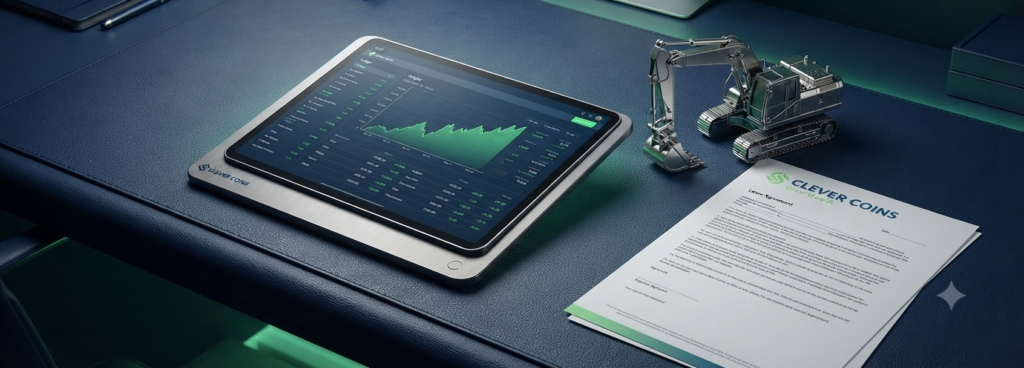
Leasing and renting equipment have become foundational financial strategies for businesses across industries, from construction and healthcare to IT and manufacturing. Instead of committing massive capital expenditures (CapEx) to purchase machinery outright, companies leverage operational and financial leases to preserve cash flow and scale dynamically.
However, with flexibility comes regulatory complexity. In the realm of indirect taxation, the Goods and Services Tax (GST) framework treats leasing and renting with specific nuances. For businesses, understanding how GST applies to equipment rentals, input tax credits (ITC), and cross-border transactions is critical to preventing compliance traps and optimizing cash flow.
Brought to you by the tax specialists at Clever Coins, this exhaustive guide breaks down every facet of GST on the leasing and renting of equipment.
1. Legal Definition: Is Leasing a Supply of Goods or Services Under GST?
To understand GST implications, one must first understand how the law classifies a lease. Under standard tax jurisprudence, the transfer of property in goods versus the right to use goods creates distinct classifications.
According to Schedule II of the Central Goods and Services Tax (CGST) Act:
Transfer of the Right to Use Goods: Any transfer of the right to use any goods for any purpose (whether or not for a specified period) for cash, deferred payment, or other valuable consideration is treated as a supply of services.
Therefore, renting or leasing equipment is not treated as a sale of goods; it falls under the service accounting code (SAC), specifically under SAC 9973 (Leasing or rental services with or without operator).
2. Classification and GST Rates on Different Types of Equipment
The GST rate applicable to a lease depends primarily on the nature of the equipment being rented. While the default rate for general business support and equipment rental services sits at 18% (9% CGST + 9% SGST, or 18% IGST), specific asset classes carry distinct exemptions or modified structures.
A. General Machinery and Industrial Equipment
SAC Code: 9973
Standard GST Rate: 18%
Inclusions: Construction machinery, earthmoving equipment, printing presses, office furniture, and diesel generators.
B. Information Technology (IT) and Office Equipment
SAC Code: 9973
Standard GST Rate: 18%
Inclusions: Laptops, servers, networking gear, and multi-function printers. Many tech companies rely on “Hardware-as-a-Service” (HaaS) models, which are billed monthly and attract 18% GST.
C. Transport and Commercial Vehicles
SAC Code: 9966 or 9973
GST Rate: Varies between 12% to 18% depending on whether fuel is included in the contract and whether the vehicle is meant for passenger or commercial goods transportation.
Note: Renting commercial vehicles with an operator often attracts 12% with limited ITC, or 18% with full ITC, subject to specific notification updates.
3. Operating Lease vs. Financial Lease: Tax Treatment
The accounting and tax treatment of leases can diverge based on the structure of the agreement (Operating Lease vs. Finance/Capital Lease).
+----------------------------+-----------------------------------+-----------------------------------+
| Feature                    | Operating Lease                   | Financial / Capital Lease         |
+----------------------------+-----------------------------------+-----------------------------------+
| Risk & Reward Retention    | Retained by the Lessor            | Transferred largely to the Lessee |
| GST Trigger Point          | Billed periodically (monthly/qtr) | At the time of agreement/invoice  |
| Ownership Transfer         | Usually does not transfer         | Typically transfers at term end   |
+----------------------------+-----------------------------------+-----------------------------------+
Operating Leases: The lessor remains the owner of the equipment. GST is charged progressively on each periodic rental invoice raised. The lessee claims ITC on these periodic rental invoices.
Financial Leases: Because financial leases function closely to asset financing or hire-purchase agreements, the tax authorities look closely at the transfer of risks and rewards. If the lease is deemed a financial supply of goods or a financing arrangement, the entire value or structured principal-plus-interest components are evaluated under composite supply rules. Typically, the interest component charged separately in a financial lease may be exempt from GST if it qualifies as an interest/discount on a loan, provided it is explicitly distinguished from the asset rental charges on the invoice.
4. Input Tax Credit (ITC) Mechanics for Lessees
One of the greatest strategic advantages of proper GST compliance in leasing is the unlocking of Input Tax Credit (ITC). Under Section 16 of the CGST Act, a registered lessee can claim ITC on the GST paid for equipment rent, provided:
They possess a valid tax invoice or debit note.
They have received the goods or services.
The supplier has filed their return and reflected the invoice in GSTR-1, making it visible in the lessee’s GSTR-2B.
The tax has been paid to the government by the supplier.
Restrictions and Blocked Credits (Section 17(5))
Businesses must exercise caution. ITC on equipment rental can be restricted if:
Personal Use: The equipment is used exclusively for personal, non-business purposes.
Exempt Supplies: The equipment is used exclusively to manufacture or provide goods or services that are exempt from GST.
Motor Vehicles: If the equipment leased consists of motor vehicles for passenger transportation (with a seating capacity of <= 13 persons), ITC is generally blocked unless the company is in the business of transporting passengers, driving schools, or leasing out those vehicles.
5. Valuation Rules and Complexities
Determining the taxable value under a lease involves more than just the base rent. According to Section 15 of the CGST Act, the value of supply includes:
Any incidental charges demanded by the lessor (such as maintenance fees, insurance handled by the lessor, or administrative overheads).
Reimbursements claimed by the lessor from the lessee.
Late Fees and Penalties: If a lessee delays rental payments and incurs a late penalty, this penalty is treated as a consideration for tolerating an act, attracting a flat 18% GST under service classification.
6. Cross-Border Equipment Leasing (Imports and Exports)
With global supply chains, companies frequently import specialized machinery or IT infrastructure from overseas lessors.
Import of Equipment (Operating Lease): Treated as an import of services. The Indian lessee is required to pay GST under Reverse Charge Mechanism (RCM) at 18%. The IGST paid via RCM can subsequently be claimed as an ITC by the lessee, subject to eligibility.
Place of Supply Rules: For movable equipment, the place of supply is generally where the equipment is actually located or delivered to the recipient.
7. Common Compliance Pitfalls and How to Avoid Them
Even seasoned business owners make errors when handling rental compliance. Watch out for these traps:
Ignoring RCM on Unregistered Lessors: If you rent equipment from an unregistered local vendor, check if reverse charge provisions apply based on notifications targeting specific entity types.
Delayed ITC Reversal on Non-Payment: If a business fails to pay the lessor the invoice value (inclusive of GST) within 180 days from the date of invoice issue, proportional ITC claimed must be reversed along with interest.
Incorrect SAC Code Application: Using an arbitrary SAC code instead of 9973 can trigger automated tax department scrutiny and mismatched electronic filings.
8. Strategic Tax Planning with Clever Coins
Navigating equipment leasing structures requires aligning your operational goals with ironclad tax compliance. Structuring contracts incorrectly can lead to trapped cash, blocked credits, or heavy litigation penalties.
At Clever Coins, we specialize in transforming intricate tax laws into a strategic growth lever for your bottom line. Whether you are setting up a massive industrial plant lease or scaling a tech startup’s hardware inventory, our team ensures your compliance is airtight, your deductions are maximized, and your working capital is fully protected.
Pro Tip: Never treat lease contracts as mere administrative paperwork. Review your master lease agreements quarterly with qualified tax consultants to safeguard your ITC claims and optimize your cash flow.
Ready to streamline your tax strategy? Consult with the experts at Clever Coins today and let us make every coin count!
- Phone: +91 77389 59862
- Email: client@clevercoins.org
- Address: Ideal Market, Mumbra, Thane-400612