Input Tax Credit (ITC)
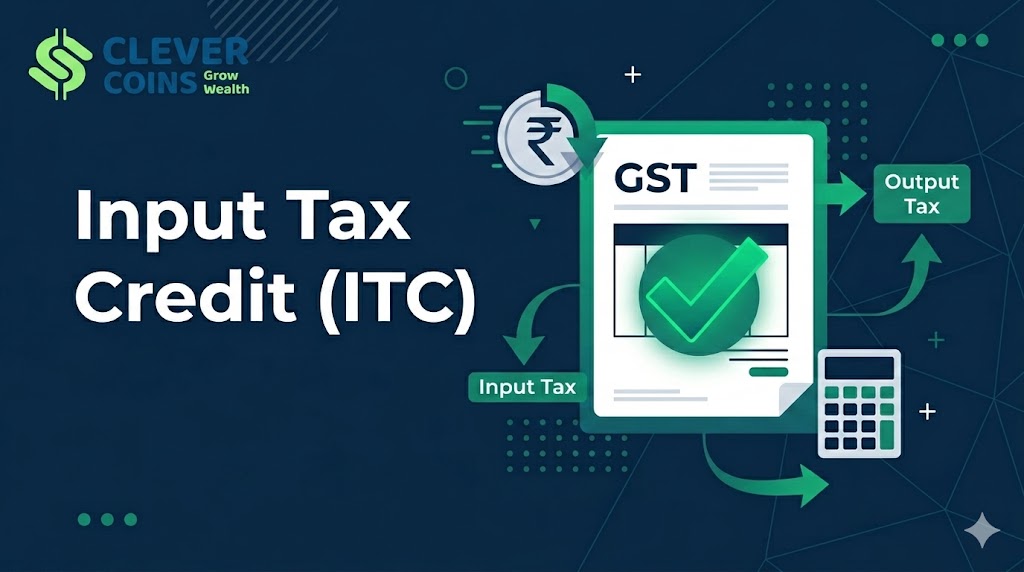
Input Tax Credit (ITC) Complete Guide
Input Tax Credit (ITC) is one of the most powerful provisions under the Goods and Services Tax (GST) regime in India. It allows registered businesses to reduce their GST liability by claiming credit for the GST paid on purchases used for their business operations. Understanding ITC is critical for every GST-registered taxpayer — from small traders to large corporations.
In this complete guide, we’ll walk you through everything you need to know about ITC — what it is, who can claim it, what the conditions are, what is blocked, and how to claim it correctly to avoid penalties.
What Is Input Tax Credit (ITC)?
Input Tax Credit is the credit a business receives for the GST (tax) paid on its purchases (inputs), which can be set off against the GST payable on its sales (output). In simple terms, you don’t pay GST on the same value twice.
Types of Input Tax Credit
-
- IGST Credit – Can be used to pay IGST, CGST, or SGST
- CGST Credit – Can be used to pay CGST and IGST
- SGST/UTGST Credit – Can be used to pay SGST/UTGST and IGST
Who Can Claim ITC?
Any person registered under GST can claim ITC, provided they satisfy the following basic conditions:
- They must be registered under GST
- They must have a valid tax invoice or debit note
- They must have received the goods or services
- The supplier must have filed their GST returns (GSTR-1)
- The tax must have been paid to the government by the supplier
- They must have filed their own GST return (GSTR-3B)
Conditions for Availing ITC (Section 16 of CGST Act)
Section 16 of the CGST Act, 2017 lays down mandatory conditions for ITC eligibility:
|
Condition |
Detail |
|
Valid Tax Invoice |
Invoice must comply with GST rules (Rule 46) |
|
Goods/Services Received |
Physical or constructive receipt required |
|
Tax Paid by Supplier |
Supplier must have paid tax to government |
|
GSTR-3B Filed |
Recipient must have filed their GST return |
|
Time Limit |
Before due date of September return of next FY |
What Is Blocked ITC? (Section 17(5))
-
Not all GST paid qualifies for ITC. Section 17(5) specifically lists items where ITC cannot be claimed:
- Motor vehicles (with exceptions for taxis, driving schools, etc.)
- Food and beverages, outdoor catering services
- Club memberships, health & fitness centers
- Beauty treatments and cosmetic surgery
- Works contract services for immovable property construction
- Goods or services for personal consumption
- Goods lost, stolen, destroyed, or given as free samples
WARN
Warning: Claiming blocked ITC is a serious GST compliance error and can result in demand notices, interest, and significant penalties from the GST department.
ITC on Capital Goods
ITC is also available on capital goods such as machinery and equipment. However, if capital goods are used for both taxable and exempt supplies, ITC must be proportionately reversed based on usage. Depreciation cannot be claimed on the tax component if ITC is availed.
ITC Reversal – When Must You Give It Back?
ITC once claimed may need to be reversed in certain situations:
- If supplier’s invoice is not reflected in GSTR-2B
- If payment to the supplier is not made within 180 days of invoice date
- If goods or services are used for personal or exempt purposes
- In case of cancellation of GST registration
- If credit notes are issued by the supplier
Rule 42 & Rule 43 – Proportionate ITC
When a business makes both taxable and exempt supplies, ITC must be reversed proportionately under Rule 42 (for inputs and input services) and Rule 43 (for capital goods). The formula used is:
|
FRM |
Formula: ITC to Reverse = (Exempt Turnover divided by Total Turnover) multiplied by Total ITC Claimed. This calculation must be done every month and finalized at the end of the financial year. |
How to Claim ITC – Step by Step Process
- Collect all purchase invoices with valid GST details from suppliers
- Reconcile invoices with auto-populated GSTR-2B on the GST portal
- Identify blocked or ineligible credits under Section 17(5)
- Report eligible ITC in GSTR-3B (Table 4) before the due date
- Adjust ITC against output tax liability and remit the balance in cash
GSTR-2B and ITC Matching
GSTR-2B is an auto-drafted statement available on the GST portal showing ITC available based on invoices filed by your suppliers in GSTR-1. Since the CGST Amendment Act 2021, ITC can only be claimed if it appears in GSTR-2B. This makes regular supplier follow-up crucial for businesses to ensure credit availability.
ITC Under Composition Scheme
ITC on Imports
IGST paid on import of goods is available as ITC. The Bill of Entry is the valid document for claiming this credit. It is important to match the Bill of Entry details with GSTR-2B entries for accuracy.
ITC on Job Work Businesses registered under the Composition Scheme are NOT eligible to claim ITC. They pay GST at a flat rate on their turnover and cannot offset any input taxes against their liability.
Principal manufacturers can claim ITC on inputs sent to job workers, subject to conditions under Section 19 of the CGST Act. Inputs must be returned or goods must be supplied directly from job worker premises within prescribed time limits.
ITC in Case of Transfer/Merger
Unutilized ITC can be transferred in case of merger, demerger, or amalgamation, subject to prescribed conditions and filing requirements under Form GST ITC-02.
Common Mistakes to Avoid in ITC Claims
- Claiming ITC on invoices not reflected in GSTR-2B
- Not reversing ITC when supplier payment exceeds 180 days
- Claiming full ITC on partly exempt or personal-use supplies
- Availing blocked credit under Section 17(5)
- Missing the annual time limit for ITC claims
- Not reconciling GSTR-2A and GSTR-2B on a regular basis
- Claiming ITC on composition scheme purchases
Recent Updates & Amendments (2025-2026)
- Mandatory linking of ITC claims with GSTR-2B is strictly enforced
- New provisions for ITC on e-invoicing compliance for eligible taxpayers
- Stricter scrutiny of high ITC claims through AI-based GST department tools
- Circular 183/2022 provides clarifications on ITC eligibility for CSR expenses
- CGST Rule 36(4) limits provisional ITC to amounts reflected in GSTR-2B
Key Takeaways
- ITC reduces your effective GST outflow — leverage it strategically
- Always reconcile GSTR-2B before filing your GSTR-3B return
- Blocked ITC under Section 17(5) must never be claimed
- Reverse ITC promptly when required to avoid interest under Section 50
- Stay updated with GST Council notifications and department circulars
- Maintain proper documentation for all purchases to support ITC claims