Senior Citizen Savings Scheme (SCSS) 2026 – The Complete Guide to India's Safest High-Return Retirement Investment
A Scheme Built Exclusively for India’s Retirees
Retirement is a milestone that every working Indian looks forward to — decades of hard work finally giving way to rest, family time, and personal pursuits. But retirement also brings a critical financial challenge: how do you ensure your life savings continue to generate regular, reliable income without putting those savings at risk?
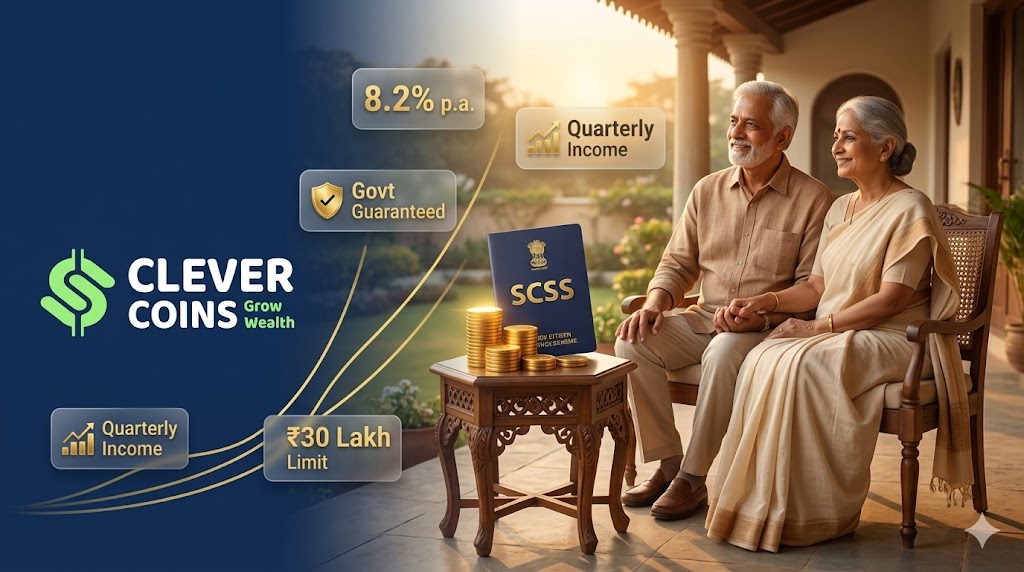
For millions of Indian senior citizens, the answer has been the Senior Citizen Savings Scheme, or SCSS. Launched by the Government of India in 2004 and managed through post offices and authorised banks across the country, SCSS has emerged as the single most trusted retirement savings instrument for people aged 60 and above. It offers the highest government-guaranteed interest rate among all small savings schemes, pays interest quarterly so retirees receive regular cash flow, and provides tax deduction benefits under Section 80C.
In 2026, SCSS continues to evolve. The deposit limit was revised upward in 2023 to ₹30 lakh, reflecting the government’s commitment to strengthening senior citizen financial security. This comprehensive guide covers every aspect of SCSS — from eligibility and interest rates to opening procedures, withdrawal rules, tax implications, and smart strategies — so you can make the most informed decision for your retirement finances.
What is the Senior Citizen Savings Scheme (SCSS)?
The Senior Citizen Savings Scheme is a government-sponsored fixed-income investment programme designed exclusively for Indian citizens who have reached retirement age. It is one of the ‘small savings schemes’ managed by the National Savings Institute under the Ministry of Finance, Government of India.
The scheme operates on a simple principle: you deposit a lump sum (from your retirement gratuity, provident fund, or other accumulated savings), and the government pays you interest every quarter. The principal is returned at maturity after 5 years, with the option to extend for another 3 years.
SCSS is the only government scheme that offers all of the following simultaneously:
- Highest interest rate among all post office savings schemes
- Quarterly interest payout providing regular income
- Government of India sovereign guarantee — zero default risk
- 80C tax deduction on deposits
- Available through 25,000+ post offices and all major nationalised and private banks
|
🏛️ SCSS — Government Backing Explained SCSS is backed by the full faith and credit of the Government of India. Unlike corporate bonds, company FDs, or cooperative bank deposits — where your money carries some default risk — SCSS deposits are as safe as government treasury securities. No matter what happens in the financial system, your SCSS principal and interest are fully guaranteed by the sovereign Government of India. |
SCSS 2026 — Complete Parameters at a Glance
|
Parameter |
Details |
|
Full Name |
Senior Citizen Savings Scheme (SCSS) |
|
Launched By |
Government of India — Ministry of Finance |
|
Administered Through |
Post Offices (all India) + Authorised Banks |
|
Eligibility Age |
60 years and above (standard); 55–60 for VRS/superannuation; 50+ for retired defence personnel |
|
Tenure |
5 years (mandatory); extendable by 3 years once |
|
Current Interest Rate |
8.2% per annum (Q1 FY 2025-26) — highest among all govt. small savings schemes |
|
Interest Payment |
Quarterly — 1st of April, July, October, January |
|
Minimum Deposit |
₹1,000 |
|
Maximum Deposit |
₹30,00,000 (₹30 lakh) per individual across all SCSS accounts combined |
|
Number of Accounts |
Multiple accounts allowed; combined total capped at ₹30 lakh |
|
Joint Account |
Allowed — only with spouse; spouse need not be 60+ |
|
Investment Source |
Cheque/DD only; for retirement benefits, deposit within 1 month of receipt |
|
Tax on Deposit |
80C deduction — up to ₹1.5 lakh per year |
|
TDS on Interest |
TDS deducted if annual interest exceeds ₹50,000 (for senior citizens) |
|
Tax on Maturity Principal |
Fully taxable (the principal was already tax-deducted at deposit stage) |
|
Premature Closure |
Allowed after 1 year with penalty; penalty varies by year of closure |
|
Nomination |
Allowed — one or more nominees with percentage share |
|
Account Transfer |
Free transfer between post offices/banks anywhere in India |
|
NRI Eligibility |
Not allowed — Indian residents only (returning NRIs with valid age criteria can invest) |
|
Online Account Opening |
Available through SBI YONO, select banks’ net banking |
|
Where to Open |
Post Offices (all 25,000+), SBI, Bank of Baroda, PNB, Canara, HDFC, ICICI, Axis |
SCSS Interest Rate 2026 — Why 8.2% is Exceptionally Powerful
Current Rate & Historical Context
The SCSS interest rate for Q1 FY 2025-26 (April–June 2025) stands at 8.2% per annum. The rate is declared quarterly by the Government of India and applies to the entire investment tenure once locked in — meaning if you invest today at 8.2%, you will earn 8.2% for the full 5-year tenure regardless of future rate changes.
This rate lock-in feature makes SCSS extraordinarily valuable in a falling interest rate environment. When the RBI reduces repo rates and banks slash FD rates, your SCSS continues earning the original rate.
|
Financial Year |
SCSS Interest Rate |
SBI 5-Year Senior Citizen FD |
PPF Rate |
Advantage Over FD |
|
2020-21 |
7.4% |
6.5% |
7.1% |
+0.9% |
|
2021-22 |
7.4% |
6.25% |
7.1% |
+1.15% |
|
2022-23 |
7.4%–7.6% |
6.7% |
7.1% |
+0.9% |
|
2023-24 |
8.2% |
7.50% |
7.1% |
+0.7% |
|
2024-25 |
8.2% |
7.75% |
7.1% |
+0.45% |
|
2025-26 (Q1) |
8.2% |
7.75% |
7.1% |
+0.45% |
Quarterly Interest Payout — What This Means in Real Money
SCSS pays interest every quarter on the 1st of April, July, October, and January. This is not reinvested — it is directly credited to your linked savings bank account. For a retiree living on a fixed income, this quarterly cash flow is the equivalent of a reliable pension.
|
SCSS Investment |
Annual Interest (8.2%) |
Quarterly Payout |
Monthly Equivalent |
|
₹5,00,000 |
₹41,000 |
₹10,250 |
₹3,417 |
|
₹10,00,000 |
₹82,000 |
₹20,500 |
₹6,833 |
|
₹15,00,000 |
₹1,23,000 |
₹30,750 |
₹10,250 |
|
₹20,00,000 |
₹1,64,000 |
₹41,000 |
₹13,667 |
|
₹25,00,000 |
₹2,05,000 |
₹51,250 |
₹17,083 |
|
₹30,00,000 |
₹2,46,000 |
₹61,500 |
₹20,500 |
|
💡 Maximum SCSS Income A couple (husband and wife) each investing ₹30 lakh in separate SCSS accounts can earn a combined ₹4,92,000 per year (₹41,000/month) in interest income at 8.2%. This provides a significant supplementary income stream in retirement, completely backed by the Government of India. |
SCSS Eligibility — Who Can Invest in 2026?
SCSS eligibility rules have specific provisions for different categories of retirees:
Category 1 — Regular Senior Citizens (Age 60+)
Any Indian resident aged 60 years or above is eligible to open an SCSS account. There is no upper age limit. The account can be opened individually or jointly with a spouse. The age is calculated as of the date of opening the SCSS account.
Category 2 — Voluntary Retirement / Early Retirees (Age 55–60)
Individuals who have retired on Voluntary Retirement Scheme (VRS) or superannuation between the ages of 55 and 60 are eligible, subject to the following conditions:
- The SCSS account must be opened within 1 month of receiving the retirement benefits.
- The deposit amount must not exceed the retirement benefits received (gratuity, provident fund, leave encashment, etc.).
- If this age group does not open the account within 1 month of retirement, they lose the special eligibility and must wait until they turn 60.
Category 3 — Retired Defence Personnel (Age 50+)
Retired personnel from the Indian defence services (Army, Navy, Air Force, paramilitary forces) are eligible to open SCSS accounts at age 50 or above, without the VRS/superannuation condition. The 1-month deposit rule applies here as well — the investment must be made from retirement benefits within one month of receipt.
Who is NOT Eligible?
- Non-Resident Indians (NRIs) — SCSS is restricted to Indian residents. However, if an NRI later returns to India and meets the age criteria, they can open an account as a resident.
- Hindu Undivided Families (HUFs) — HUFs are not permitted to invest in SCSS.
- Individuals below 55 years who have not taken VRS or early retirement.
|
⚠️ Important Age Verification Rule The age of the depositor is verified at the time of account opening based on official documents (Aadhaar, PAN, passport, etc.). If there is any discrepancy, the account opening can be rejected. Always ensure your date of birth is correctly reflected in your KYC documents before visiting the branch. |
How to Open an SCSS Account in 2026 — Step-by-Step
Documents Required
- SCSS Application Form (Form A) — available at all post offices and authorised bank branches, or downloadable from the India Post / bank website
- Age proof: Aadhaar card, PAN card, passport, voter ID, or birth certificate
- Identity proof and address proof (Aadhaar serves both purposes)
- PAN card — mandatory for deposits above ₹50,000
- Two recent passport-size photographs
- Cheque or Demand Draft for the deposit amount (cash not accepted for deposits above ₹1 lakh as per RBI guidelines)
- Retirement benefit proof (for 55–60 age group or defence personnel) — retirement order, PPO, gratuity certificate
- Nominee details — name, date of birth, relationship, Aadhaar of nominee
Authorised Banks Where SCSS Can Be Opened
|
Category |
Institutions |
|
Public Sector Banks |
State Bank of India, Bank of Baroda, Punjab National Bank, Canara Bank, Union Bank, Bank of India, Central Bank, Indian Bank, UCO Bank, Bank of Maharashtra, Indian Overseas Bank |
|
Private Sector Banks |
HDFC Bank, ICICI Bank, Axis Bank, IDBI Bank |
|
Post Offices |
All 25,000+ post offices across India — ideal for rural and semi-urban senior citizens |
Online SCSS Account Opening — SBI YONO Process
- Log in to the SBI YONO mobile application or SBI net banking portal.
- Navigate to ‘e-Fixed Deposit’ → ‘Senior Citizen Savings Scheme’ or search ‘SCSS’ in the app.
- Enter deposit amount, tenure choice, and nominee details.
- Complete the KYC verification (Aadhaar OTP / pre-seeded KYC).
- Select the linked savings account for quarterly interest credit.
- Confirm and submit — SCSS account number and passbook generated digitally.
- Physical passbook can be collected from the nearest SBI branch.
|
✅ CleverCoins Pro Tip — Open at Post Office for Widest Coverage India Post’s network of 25,000+ post offices reaches every corner of the country, including villages and tribal areas. For senior citizens in semi-urban or rural areas, the post office is often the most accessible and convenient SCSS option. Interest is still credited digitally to your savings account each quarter. |
SCSS Deposit Rules — How Much Can You Invest?
Minimum and Maximum Limits
The minimum investment in SCSS is ₹1,000. Deposits must be in multiples of ₹1,000. The maximum lifetime investment per individual across all SCSS accounts combined is ₹30 lakh (revised upward from ₹15 lakh in Budget 2023 — a highly beneficial change for retirees with larger retirement corpuses).
Multiple SCSS Accounts
An individual can open more than one SCSS account — either individually or jointly with their spouse. However, the total deposits across all SCSS accounts cannot exceed ₹30 lakh for a single individual. For example, a person can open one SCSS account with ₹15 lakh and another with ₹15 lakh — but not a third.
Joint Account Rules
- SCSS joint accounts can only be opened with the account holder’s spouse — no other family member qualifies.
- The first account holder (primary depositor) must meet the eligibility criteria. The second account holder (spouse) need not be 60+.
- In a joint account, the full deposit amount is counted against the primary account holder’s ₹30 lakh limit — not split.
- Interest is paid to the primary account holder’s linked savings account.
- In case of death of the primary account holder, the surviving spouse can continue the account if they are eligible (60+ or meet other criteria) or claim the balance.
Retirement Benefit Deposit Rule — The 1-Month Window
If you are aged 55–60 or a retired defence person aged 50+, you must deposit your retirement benefits into SCSS within 1 calendar month of receiving them. The deposit amount must not exceed the total retirement benefit received. This includes gratuity, commuted pension, leave encashment, PF balance, and other terminal benefits paid at retirement.
After this 1-month window closes, you lose the special early-age eligibility and will have to wait until you turn 60 to invest in SCSS. This is a critical deadline that many early retirees miss — leading to significant opportunity cost.
SCSS Maturity & Extension Rules
At the End of 5 Years
SCSS has a fixed tenure of 5 years from the date of account opening. At maturity, you have two choices:
- Close the Account and Withdraw Everything — Submit your SCSS passbook and a closure application to your bank or post office. The entire principal is returned along with the final quarter’s interest. The maturity amount is fully returned to your linked bank account within 7 working days.
- Extend the Account for 3 More Years — Submit an extension application within 1 year of the maturity date. The extended account earns the interest rate prevailing at the time of extension (not the original rate). During the extension period, you can close the account at any time after 1 year of the extension, without any penalty.
|
📌 Extension Strategy for 2026 If the SCSS rate remains at 8.2% in 2026 and beyond, extending your account is almost always the right decision — especially if alternative deposits (FDs, bonds) offer lower rates. An 8-year tenure (5+3) with guaranteed 8.2% compounding quarterly is exceptionally rare in today’s financial market. |
SCSS Withdrawal Rules — Premature Closure Penalties
SCSS is designed as a 5-year fixed-term investment. While premature closure is allowed, it comes with interest penalties that vary based on how early you withdraw:
|
Period of Premature Closure |
Penalty / Deduction |
Effective Impact |
|
Before 1 year |
Entire interest earned is forfeited; only principal is returned |
Severe — lose all interest |
|
After 1 year but before 2 years |
1.5% of the deposit amount is deducted from principal |
e.g., on ₹10L: penalty of ₹15,000 |
|
After 2 years but before 5 years |
1% of the deposit amount is deducted from principal |
e.g., on ₹10L: penalty of ₹10,000 |
|
During Extension (after 1 year of extension) |
No penalty — account can be freely closed |
Fully penalty-free closure |
|
🚨 Avoid Premature Closure in Year 1 Closing your SCSS account within the first year results in the complete forfeiture of all interest earned — you receive back only the principal. This makes Year 1 premature closure the worst financial decision possible with SCSS. If you foresee the need for liquidity within 12 months, do not invest that amount in SCSS; keep it in a liquid fund or savings account instead. |
SCSS Tax Implications — Everything You Need to Know
Section 80C Deduction on Deposits
Deposits made into SCSS qualify for deduction under Section 80C of the Income Tax Act, up to a maximum of ₹1.5 lakh per financial year. This means if you open an SCSS account with ₹15 lakh, only ₹1.5 lakh is deductible under 80C in that financial year. The remaining ₹13.5 lakh does not qualify for 80C — this is an important planning point.
TDS on SCSS Interest
Interest earned on SCSS is fully taxable in the hands of the investor as ‘income from other sources’ at the applicable income tax slab rate. However, the threshold for TDS (Tax Deducted at Source) has been raised specifically for senior citizens:
- TDS is applicable only if the total interest income from SCSS in a financial year exceeds ₹50,000.
- Below ₹50,000 per year — no TDS is deducted at source.
- If your total taxable income (including SCSS interest) is below the basic exemption limit (₹3 lakh for senior citizens; ₹5 lakh for super senior citizens aged 80+), you can submit Form 15H to the bank or post office to prevent TDS deduction.
Tax Computation Example — Rajesh (Age 65, Retired Government Officer)
|
Income Head |
Amount |
Tax Treatment |
|
Pension Income |
₹3,60,000/year |
Taxable as salary income |
|
SCSS Interest (on ₹15 lakh @ 8.2%) |
₹1,23,000/year |
Taxable as other income |
|
PPF Interest |
₹45,000/year |
Fully Tax-Free |
|
Section 80C Deduction (SCSS ₹1.5L) |
-₹1,50,000 |
Reduces taxable income |
|
Senior Citizen Standard Deduction |
-₹50,000 |
Standard deduction for pension income |
|
Net Taxable Income |
₹3,28,000 |
|
|
Tax Liability (Post New Regime) |
NIL (below ₹3L exemption + rebate) |
Effective tax = ₹0 |
|
💡 CleverCoins Tax Planning Insight With smart structuring — combining SCSS interest income with PPF (tax-free), standard deduction, and 80C/80D benefits — most senior citizens with SCSS investments of up to ₹20-25 lakh can legally reduce their tax liability to near zero. Our CleverCoins tax experts specialise in senior citizen tax planning. Reach out at clevercoins.org for a personalised tax review. |
SCSS vs Other Senior Citizen Investment Options — Full Comparison
|
Feature |
SCSS |
Senior FD (SBI 5Y) |
PPF |
PMVVY |
RBI Floating Rate Bond |
|
Interest Rate |
8.2% p.a. |
7.75% p.a. |
7.1% p.a. |
7.4% p.a.* |
8.05% (floating) |
|
Interest Payment |
Quarterly |
Monthly / Quarterly / Annual |
Annual (at maturity) |
Monthly |
Half-yearly |
|
Tenure |
5 + 3 years |
5 years (flexible) |
15 years |
10 years |
7 years |
|
Maximum Investment |
₹30 lakh |
No limit |
₹1.5 lakh/year |
₹15 lakh |
No limit |
|
Government Guarantee |
Yes |
No (DICGC up to ₹5L) |
Yes |
Yes (LIC) |
Yes |
|
80C Deduction |
Yes |
Yes (5-year lock-in FD) |
Yes |
No |
No |
|
TDS on Interest |
Yes (above ₹50K) |
Yes (above ₹50K) |
No (exempt) |
Yes |
Yes |
|
Premature Closure |
With penalty |
With penalty |
Limited (after 5Y) |
After 1 year |
After 4 years (60+) |
|
Joint Account |
Yes — spouse only |
Yes — any person |
No |
No |
No |
|
Best For |
Regular income + safety |
Higher corpus, flexible |
Long-term wealth |
Guaranteed monthly income |
Rate floating benefit |
* PMVVY (Pradhan Mantri Vaya Vandana Yojana) rate is fixed for the tenure at time of entry. Confirm current availability as scheme renewal status changes annually.
Real Example: How Sureshbhai Built a ₹2.5 Lakh/Month Retirement Income
Sureshbhai Patel, a retired SBI branch manager from Ahmedabad, retired at 60 in April 2021 with a retirement corpus of ₹72 lakh (gratuity + PF + VPF + leave encashment). Here is how he structured his retirement portfolio using SCSS as the anchor:
|
Instrument |
Amount Invested |
Annual Returns |
Purpose |
|
SCSS — Account 1 |
₹15,00,000 |
₹1,23,000 (8.2%) |
Quarterly income — regular expenses |
|
SCSS — Account 2 (wife) |
₹15,00,000 |
₹1,23,000 (8.2%) |
Quarterly income — medical & travel |
|
PPF (extended account) |
Existing ₹42 lakh corpus |
₹2,98,200 (7.1%) |
Long-term compounding, tax-free |
|
Senior Citizen FD |
₹12,00,000 |
₹93,000 (7.75%) |
Emergency liquidity buffer |
|
Liquid Mutual Fund |
₹8,00,000 |
₹56,000 (~7%) |
Immediate liquidity for medical needs |
|
Equity MF (SWP) |
₹10,00,000 |
₹1,20,000 (SWP) |
Inflation-beating growth allocation |
|
Total |
₹1,02,00,000 |
₹7,13,200/year |
₹59,433/month take-home income |
After CleverCoins tax planning (Form 15H filed, 80C deductions maximised, PPF interest tax-free), Sureshbhai’s net tax liability is NIL — he receives the entire ₹59,433/month with no deductions. His SCSS accounts alone provide ₹20,500/month in quarterly income, funding his day-to-day household expenses completely.
|
🌐 Get Your Retirement Portfolio Structured by CleverCoins CleverCoins offers personalised retirement portfolio structuring for senior citizens — combining SCSS, PPF, FD, and equity allocation with a tax-zero strategy. Visit clevercoins.org to book a consultation with our senior citizen financial planning team. |
7 Smart SCSS Strategies for Maximum Benefit in 2026
- Open in Both Spouses’ Names — Each spouse can invest up to ₹30 lakh individually. A couple maximising SCSS can deploy ₹60 lakh total, generating ₹4,92,000/year (₹41,000/month) in tax-managed income.
- Invest at 8.2% Before Any Rate Cut — Interest rates in India tend to be cyclical. Lock in 8.2% now. Even if the government reduces SCSS rates in future quarters, your existing investment continues at the rate at the time of deposit.
- Stagger Account Opening Dates for Liquidity — Instead of opening all SCSS accounts at the same time, open them at 6-month intervals. This creates a staggered maturity ladder, giving you access to lumps of principal every 6 months without any premature closure penalty.
- Use the Extension Period Strategically — At the end of Year 5, extend rather than withdraw if the rate is still favourable. The 3-year extension offers penalty-free closure after 1 year, giving you flexibility along with continued high-rate returns.
- File Form 15H Before Every Financial Year — If your total taxable income is below the exemption limit, always file Form 15H with your SCSS bank/post office at the start of each April. This prevents TDS deduction and avoids the hassle of claiming refunds during ITR filing.
- Combine SCSS with PPF for Tax Optimisation — SCSS interest is taxable but 80C deductible (up to ₹1.5 lakh). PPF interest is fully tax-free. Together, a retiree can earn substantial interest income while managing their taxable income efficiently.
- Keep 10–15% in a Liquid Fund for Emergencies — Never over-deploy into SCSS if you might need money within a year. The Year 1 premature closure penalty (complete loss of interest) is too severe. Maintain a separate liquid emergency fund alongside your SCSS.
6 Common SCSS Mistakes That Can Cost You Lakhs
- Missing the 1-Month Retirement Benefit Window (Age 55–60): Early retirees who delay opening their SCSS account beyond 1 month of receiving retirement benefits lose the special age eligibility entirely.
- Investing More than ₹30 Lakh in SCSS: Any amount deposited beyond the ₹30 lakh cap is returned with only post office savings account interest — not SCSS interest. Always verify your combined SCSS balance before making fresh deposits.
- Not Filing Form 15H: Many senior citizens pay unnecessary TDS on SCSS interest because they forget to file Form 15H. This creates a refund situation that could have been avoided entirely.
- Choosing Monthly Interest Credit Instead of Quarterly: SCSS mandates quarterly interest — there is no monthly option. Some investors confuse this with bank FDs that offer monthly interest payouts and are disappointed. Plan your cash flow around quarterly receipts.
- Not Extending at Maturity: Many investors close their SCSS at Year 5 simply because the account has ‘matured’ — without realising that extending for 3 more years at 8.2% (assuming the rate remains favourable) could generate lakhs more in interest.
- Premature Closure in Year 1 Due to Emergency: Closing SCSS in Year 1 forfeits all interest. This can be avoided by always maintaining a separate liquid emergency fund before investing in SCSS.
Frequently Asked Questions — SCSS 2026
Q1. Can I open an SCSS account if I am 62 years old but not yet retired?
Yes. For individuals aged 60 and above, there is no requirement to have retired. Simply being 60 or older qualifies you to open an SCSS account with your own savings.
Q2. Can I deposit a second time in the same SCSS account?
No. SCSS accounts accept only a single one-time deposit. If you want to invest more, you need to open a new SCSS account (subject to the ₹30 lakh combined limit).
Q3. What happens to my SCSS account if I pass away before maturity?
In case of death, the nominee or legal heir can either close the account and claim the balance with all accrued interest, or (if the nominee is the surviving spouse and eligible) continue the account until its original maturity. All accrued interest up to the date of death is paid without penalty.
Q4. Can I open an SCSS account online?
Yes — SBI allows online SCSS account opening through the YONO app and internet banking. Several other banks including HDFC and ICICI also offer online SCSS opening. Post office SCSS can be opened offline at any post office branch.
Q5. Is SCSS interest credited to my account automatically?
Yes. Quarterly interest is automatically credited to the linked savings bank account on the 1st of April, July, October, and January each year, without requiring any manual intervention.
Q6. What is the difference between SCSS and PMVVY?
SCSS is managed by post offices and banks and offers a 5-year tenure with a ₹30 lakh limit. PMVVY (Pradhan Mantri Vaya Vandana Yojana) is managed through LIC and offers a 10-year tenure with a ₹15 lakh limit and monthly pension option. SCSS currently offers a higher interest rate (8.2% vs 7.4%) and a higher investment cap, making it the preferred choice for most retirees.
Q7. Can I transfer my SCSS account from post office to bank?
Yes. SCSS accounts can be freely transferred between post offices and authorised banks anywhere in India at no charge. Submit a transfer request form with your SCSS passbook and KYC documents at the current branch.
Conclusion: SCSS is the Retirement Foundation Every Senior Citizen Deserves
In 2026, as financial markets remain volatile and bank fixed deposit rates fluctuate, the Senior Citizen Savings Scheme stands as an unshakeable pillar of retirement income for Indian senior citizens. Its combination of the highest government-guaranteed interest rate (8.2%), quarterly cash flow, sovereign safety, and 80C tax benefits is unmatched by any other comparable instrument in India.
Whether you have just retired with a gratuity corpus, are planning your retirement 5 years in advance, or are looking to restructure an existing retirement portfolio for maximum income and minimum tax — SCSS must be a core component of your financial strategy.
The key is to act strategically: invest at the right time, open accounts in both spouses’ names, file Form 15H proactively, plan for the 1-month retirement benefit window if you are under 60, and always maintain a liquidity buffer outside of SCSS.
At CleverCoins, we work with senior citizens and their families to build comprehensive retirement income strategies that combine SCSS, PPF, tax filing, and financial planning into a single seamless package. Our senior citizen tax and investment planning services are designed to help you maximise income, minimise tax, and achieve complete financial peace of mind in retirement.
Visit us at clevercoins.org — because after a lifetime of hard work, your money should work just as hard for you.
|
🌐 About CleverCoins CleverCoins (clevercoins.org) is a leading Indian tax consultancy and financial education platform helping senior citizens, MSMEs, startups, and service providers with GST registration, GST return filing, income tax planning, and retirement portfolio structuring. Our mission: simplify tax compliance and empower every Indian to achieve financial freedom. |