Decoding GST on Leasing & Renting of Equipment: A Comprehensive Guide for Businesses
The modern business environment thrives on agility. Rather than locking up massive capital in heavy machinery, IT infrastructure, or commercial fleets, growing enterprises across India increasingly rely on leasing and renting. However, navigating the tax mechanics behind these transactions can be complex. Under the Goods and Services Tax (GST) regime, understanding how tax applies to movable asset rentals is critical to maintaining healthy cash flows and avoiding costly compliance pitfalls.
Brought to you by the tax specialists at Clever Coins, this exhaustive guide explores every facet of GST on leasing and renting of equipment, breaking down legal definitions, classifications, tax rates, Input Tax Credit (ITC) availability, and strategic planning.
1. Fundamental Concepts: Supply of Services vs. Supply of Goods
Under pre-GST indirect tax laws (such as the legacy service tax and VAT regimes), asset leasing was a battleground of litigation. Authorities frequently sparred over whether a lease contract constituted a “sale of goods” (attracting VAT) or a “service” (attracting Service Tax) via the legal fiction of “transfer of the right to use goods.”
The GST Act neatly resolves this ambiguity by explicitly categorizing leasing, renting, or operating services of goods (without transferring ownership) as a supply of services under Heading 9973 (Leasing or rental services with or without operator).
However, the distinction depends heavily on the structure of the lease:
Operating Lease: The lessor retains ownership, and the risks and rewards remain with them. This is unequivocally classified as a supply of services attracting standard service taxation.
Financial Lease (Capital Lease): If the lease agreement transfers substantially all risks and rewards incidental to ownership to the lessee—and particularly if it includes an option to purchase the asset at a nominal price at the end of the term—it is treated as a supply of goods, drawing the tax rate applicable to the specific equipment itself.
2. Classification and SAC Codes for Equipment Leasing
Just as goods are classified under HSN codes, services under GST are classified using Service Accounting Codes (SAC). For equipment, machinery, and movable assets, the overarching code is SAC 9973.
Depending on the exact nature of the asset being deployed, sub-categories apply:
SAC 997311: Leasing or rental services concerning transport equipment.
SAC 997312: Leasing or rental services concerning agricultural machinery and equipment.
SAC 997313: Leasing or rental services concerning construction machinery and equipment (e.g., excavators, cranes).
SAC 997314 / 997315: Office machinery, equipment, and computers.
SAC 997319: Leasing or rental services concerning other general machinery and industrial equipment.
3. GST Rates Applicable to Equipment Leasing and Renting
As a general rule, the residual standard rate for most commercial machinery and equipment leasing falls under the 18% GST slab (9% CGST + 9% SGST, or 18% IGST).
However, exemptions and specific variations apply based on the sector:
Agricultural Machinery: The rental or leasing of agricultural equipment (SAC 997312) is generally exempt (0%) to protect the farming sector from heavy input cost burdens.
Industrial Equipment with Operators: Advance ruling authorities (such as the Telangana AAR) have evaluated complex arrangements where industrial machinery is leased alongside specialized operators. While pure machinery rentals attract standard rates, bundling operations can sometimes trigger classification adjustments matching the principal supply or specific equipment sales guidelines depending on contract framing.
IT and Office Equipment: Renting computers, servers, and office automation tools typically attracts an 18% GST rate, provided no transfer of absolute ownership occurs mid-tenure.
4. The Mechanics of Input Tax Credit (ITC) on Leased Assets
One of the greatest advantages of the GST framework for businesses taking equipment on lease is the seamless flow of Input Tax Credit.
For the Lessee (The User):
If a business takes equipment on rent for furtherance of business operations, the 18% GST paid on the rental invoice can generally be claimed as Input Tax Credit (ITC).
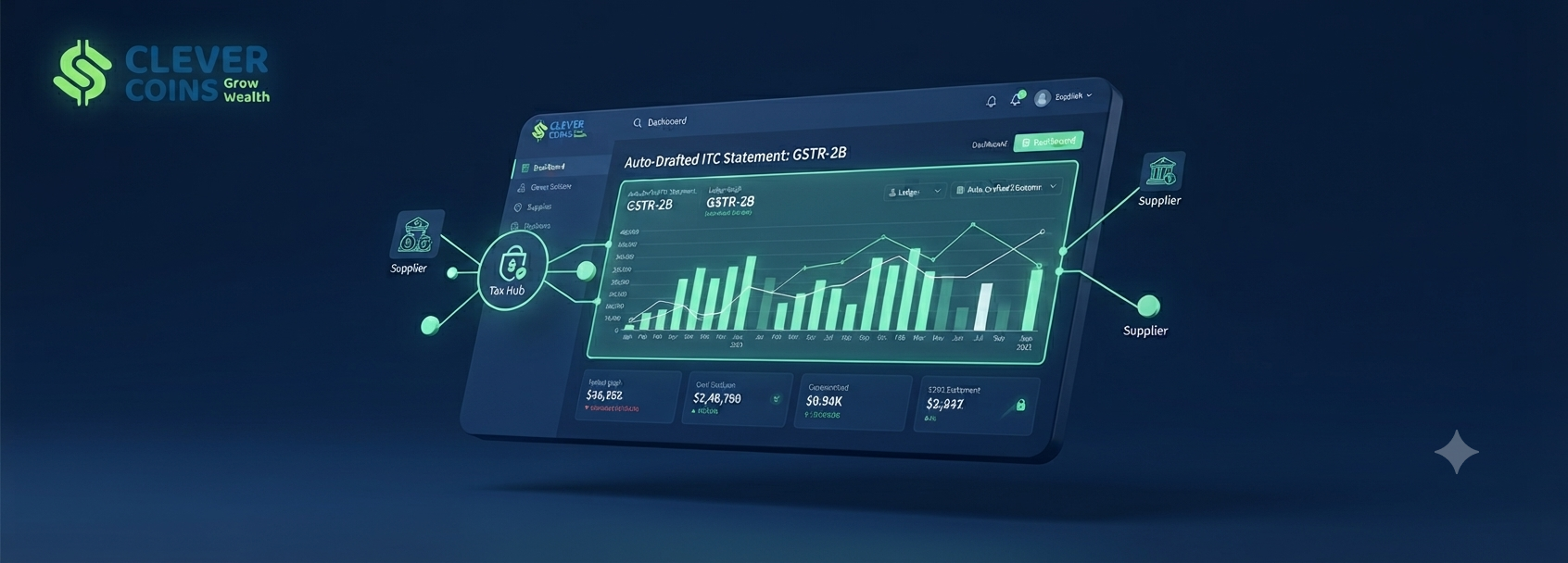
Condition: The lessee must possess a valid tax invoice, the supplier must have uploaded the invoice in their GSTR-1 (reflecting in the lessee’s GSTR-2B), and the equipment must be used strictly for business purposes.
Block Credit Exceptions: Under Section 17(5) of the CGST Act, ITC is generally blocked on motor vehicles unless used for specific purposes (like further transport of passengers/goods or driving training). Businesses leasing regular passenger vehicles for employee commuting must evaluate ITC eligibility carefully.
For the Lessor (The Provider):
The lessor can claim ITC on the goods purchased to build their inventory or fleet (subject to conditions) and offset it against the output GST liability collected through monthly or periodic rental billings.
5. Time of Supply for Rental Invoices
Managing cash flows requires a clear understanding of when tax liability arises. Under Section 13 of the CGST Act, the Time of Supply of Services is determined as follows:
Invoice Issued Within Due Time: If the lessor issues the tax invoice within 30 days of the supply of service (the rental period end-date), the time of supply is the earlier of the date of invoice or the date of receipt of payment.
Invoice Issued Late: If the invoice is not issued within the mandated timeframe, the time of supply becomes the earlier of the date of provision of service or the date of payment.
Continuous Supply of Services: Because equipment leasing typically constitutes a continuous supply of services with periodic payment obligations, invoices must be raised on or before the due date specified in the contract.
6. Valuation and Special Scenarios
Reimbursable Expenses: If the lease agreement dictates that the lessee must reimburse the lessor for insurance, maintenance, or transit costs, these add-ons form part of the transaction value under Section 15 and attract GST at the same rate as the primary leasing service.
Late Fees and Penalties: Penalty charges collected by the lessor for delayed rental payments represent a separate toleration of an act or an independent service component, which may also attract 18% GST under residual clauses.
Cross-Border Leasing (Imports/Exports): Leasing equipment from an overseas lessor involves Import of Services, which typically triggers tax liability under the Reverse Charge Mechanism (RCM), requiring the Indian entity to self-account and pay IGST.
7. Compliance Checklist for Businesses
To remain audit-ready and avoid notices from tax authorities, businesses on both sides of a lease agreement should follow this compliance checklist:
Accurate SAC Code Mapping: Ensure correct codes matching the asset class are explicitly referenced on all tax invoices.
Regular Reconciliation: Reconcile GSTR-3B with GSTR-2B monthly to ensure all ITCs on equipment rentals are locked in.
Clear Agreements: Draft master lease agreements (MLAs) that explicitly separate maintenance costs, operator charges, and core rental values to prevent ambiguous tax assessments.
Proactive Tax Planning: Consult professional tax advisors to structure high-value asset acquisitions versus operating lease models efficiently.
Conclusion
The application of GST on leasing and renting of equipment is designed to eliminate double taxation and ensure a streamlined credit chain. However, misclassifying assets, missing RCM obligations on international transactions, or failing to match ITC statements can invite severe penalties.
At Clever Coins, we turn complex tax regulations into strategic advantages. Whether you are a startup scaling up your capital infrastructure or an established enterprise optimizing your tax architecture, our experts provide end-to-end guidance on GST compliance, litigation management, and financial structuring.
- Phone: +91 77389 59862
- Email: client@clevercoins.org
- Address: Ideal Market, Mumbra, Thane-400612