Complete Guide to RBI FEMA Compliance for Businesses in India
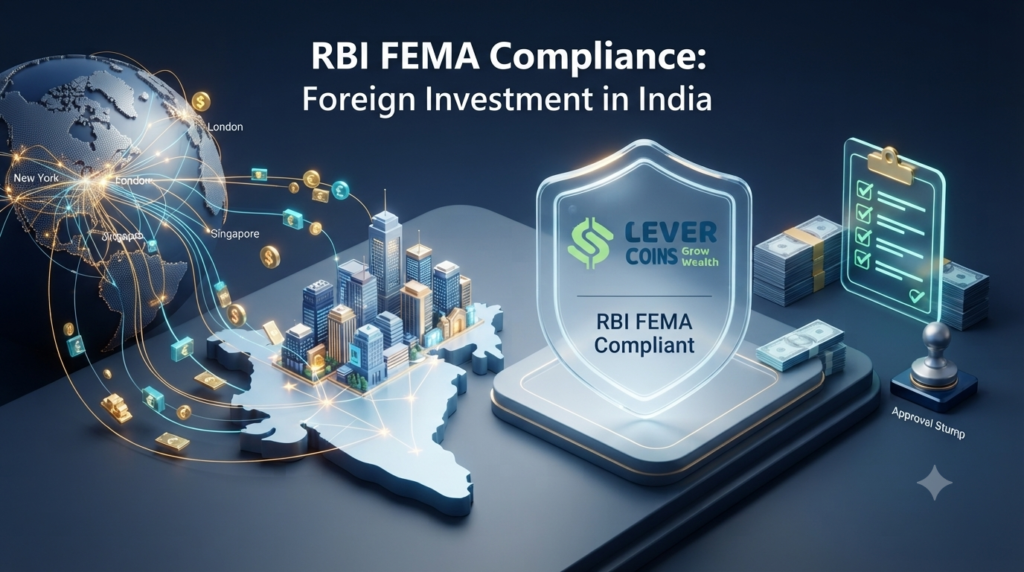
Cross-border trade, foreign direct investment (FDI), and overseas expansion are vital drivers of corporate growth. However, operating in a global economy requires navigating India’s complex foreign exchange regulatory framework. At the center of this ecosystem is the Foreign Exchange Management Act (FEMA), 1999, enforced by the Reserve Bank of India (RBI).
Whether you are a tech startup raising funds from foreign venture capitalists, an e-commerce firm exporting software or goods, an established enterprise acquiring foreign subsidiaries, or a business receiving inward remittances, FEMA compliance is mandatory. Non-compliance can lead to severe monetary penalties, compoundable contraventions, and freeze on banking channels.
This guide details everything you need to know about RBI FEMA compliance—from core classifications and reporting portals to step-by-step FDI/ODI workflows, export/import guidelines, compounding mechanisms, and practical checklists.
1. What is FEMA and Why Does It Matter for Your Business?
The Foreign Exchange Management Act (FEMA) was enacted in 1999 to replace the draconian Foreign Exchange Regulation Act (FERA) of 1973. While FERA treated foreign exchange violations as criminal offenses punishable by imprisonment, FEMA shifted the approach toward regulation and management, viewing foreign exchange as a catalyst for trade rather than something to be hoarded.
┌───────────────────────────────────────────────────────────────────────────┐
│                      RESERVE BANK OF INDIA (RBI)                          │
│          Appoints Authorized Dealers (AD Category-I Banks)                 │
└─────────────────────────────────────┬─────────────────────────────────────┘
                                      │
          ┌───────────────────────────┴───────────────────────────┐
          ▼                                                       ▼
┌──────────────────────────────────┐            ┌──────────────────────────────────┐
│     CURRENT ACCOUNT TRANSACTIONS  │            │     CAPITAL ACCOUNT TRANSACTIONS │
│  - Import / Export Payments      │            │  - Foreign Direct Investment (FDI)│
│  - Service Fees & Royalty        │            │  - Overseas Investment (FC / ODI)│
│  - Foreign Travel & Business Trips│            │  - External Commercial Borrowings│
└──────────────────────────────────┘            └──────────────────────────────────┘
Under FEMA, the Reserve Bank of India (RBI) acts as the primary regulatory body. It delegates operational day-to-day transaction monitoring to Authorized Dealer (AD) Category-I Banks.
Key Objectives of FEMA
Facilitate external trade and cross-border payments.
Promote the orderly development and maintenance of the Indian foreign exchange market.
Regulate inflow and outflow of capital to preserve macroeconomic stability.
2. Current Account vs. Capital Account Transactions
FEMA broadly categorizes all foreign exchange interactions into two distinct buckets: Current Account Transactions and Capital Account Transactions.
| Classification Parameter | Current Account Transactions | Capital Account Transactions |
| Definition | Transactions that do not alter the assets or liabilities (including contingent liabilities) outside or inside India. | Transactions that alter the assets or liabilities outside India (for residents) or inside India (for non-residents). |
| General Rule | Permitted by default, unless specifically restricted under FEMA (Current Account Transactions) Rules. | Prohibited/Restricted by default, unless specifically permitted under FEMA rules or sectoral caps. |
| Common Examples | – Payment for import of goods/services – Interest on foreign loans – Remittance of dividends – Business travel expenses | – Foreign Direct Investment (FDI) – Overseas Direct Investment (ODI) – External Commercial Borrowing (ECB) – Transfer of real estate abroad |
3. Scope of FEMA Applicability Across Business Models
FEMA compliance is not restricted to large multinational enterprises; it applies to virtually all commercial entities interacting with foreign currency or foreign entities.
                     ┌─────────────────────────────────────────┐
                     │ Who Must Comply with RBI FEMA Rules?    │
                     └────────────────────┬────────────────────┘
                                          │
       ┌──────────────────┬───────────────┴───────────────┬──────────────────┐
       ▼                  ▼                               ▼                  ▼
┌──────────────┐  ┌──────────────┐                 ┌──────────────┐   ┌──────────────┐
│  Indian      │  │  Indian      │                 │ Exporters &  │   │ Foreign      │
│  Startups    │  │  Companies   │                 │ Importers    │   │ Subsidiaries │
│  raising VC  │  │  investing   │                 │ (Goods, SaaS,│   │ Liaison /    │
│  or FDI      │  │  Abroad (ODI)│                 │ Services)    │   │ Branch Off.  │
└──────────────┘  └──────────────┘                 └──────────────┘   └──────────────┘
Key Business Categories Covered
Startups and Growing Companies Raising Foreign Capital: Any Indian company issuing equity shares, convertible debentures, preference shares, or Convertible Notes (CN) to a non-resident must report to RBI.
Exporters and Importers: Entities engaged in cross-border trade (physical goods, SaaS, software development, consulting services) must adhere to realization and payment timelines.
Indian Companies Expanding Abroad (ODI): Domestic companies establishing joint ventures (JVs) or wholly-owned subsidiaries (WOS) overseas.
Foreign Entities Operating in India: Foreign companies establishing Liaison Offices (LO), Branch Offices (BO), Project Offices (PO), or Wholly Owned Subsidiaries (WOS) in India.
4. Key RBI Filings & Reporting Mechanisms
To ensure compliance, the RBI operates centralized online reporting portals—primarily the FIRMS (Foreign Investment Reporting and Management System) portal and the ECB/ODI portals via AD Banks.
┌───────────────────────────────────────────────────────────────────────────┐
│              FIRMS Portal (Foreign Investment Reporting System)            │
└─────────────────────────────────────┬─────────────────────────────────────┘
                                      │
          ┌───────────────────────────┴───────────────────────────┐
          ▼                                                       ▼
┌──────────────────────────────────┐            ┌──────────────────────────────────┐
│   Entity Master Form (EMF)       │            │  Single Master Form (SMF)        │
│   - One-time registration        │            │  - Form FC-GPR (Share Issue)     │
│   - Pre-requisite for all filings│            │  - Form FC-TRS (Share Transfer)  │
│   - Records baseline ownership   │            │  - Form CN (Convertible Notes)   │
└──────────────────────────────────┘            └──────────────────────────────────┘
1. Entity Master Form (EMF)
Before filing any foreign investment reports, every company receiving FDI must create an entity profile on the FIRMS portal by submitting the Entity Master Form (EMF).
2. Single Master Form (SMF)
The SMF integrates 9 distinct forms into a single portal window:
Form FC-GPR (Foreign Currency-Gross Provisional Return): Filed when an Indian company issues capital instruments to a non-resident investor.
Form FC-TRS (Foreign Currency-Transfer of Shares): Filed during a secondary transfer of shares/instruments between a resident and non-resident (or vice versa).
Form CN (Convertible Notes): Filed by DPIIT-recognized startups raising money by issuing Convertible Notes to foreign entities.
Form DI (Downstream Investment): Filed when an Indian entity with indirect foreign investment makes further investments in another Indian company.
3. Annual FLA Return (Foreign Liabilities and Assets)
Every Indian company or LLP that has received FDI or made ODI in any previous year (and holds outstanding assets/liabilities) must file the FLA Return directly on the RBI FLAIR portal.
5. Master Compliance Timeline & Deadline Reference
Meeting reporting deadlines is critical under FEMA. Missing a deadline can trigger mandatory Late Submission Fees (LSF) or compounding proceedings.
| Mandatory Requirement / Form | Filing Portal / Route | Triggering Event / Baseline | Statutory Timeline |
| Form FC-GPR | RBI FIRMS Portal (SMF) | Issuance/Allotment of shares to non-resident | Within 30 days from the date of share allotment. |
| Form FC-TRS | RBI FIRMS Portal (SMF) | Transfer of shares between Resident and Non-Resident | Within 60 days of receipt/remittance of consideration. |
| Form CN | RBI FIRMS Portal (SMF) | Issue or transfer of Convertible Notes by startups | Within 30 days of issue/transfer. |
| Annual FLA Return | RBI FLAIR Portal | Annual snapshot of foreign holding | On or before July 15 every year. |
| Form ODI (Part I & II) | Through AD Category-I Bank | Overseas Direct Investment in foreign subsidiary/JV | Prior to or at time of overseas remittance. |
| Annual Performance Report (APR) | Through AD Category-I Bank | Annual operational update of foreign JV/WOS | On or before December 31 every year. |
| Form ECB & ECB-2 Return | Through AD Category-I Bank | External Commercial Borrowings (Foreign Loans) | Form ECB: Prior to loan draw-down. ECB-2: Monthly within 7 days of month-end. |
| Export Realization | AD Bank / Trade Monitoring (EDPMS) | Export of Goods or Services/Software | Realize proceeds within 9 months from export date. |
| Import Payment Settlement | AD Bank / Trade Monitoring (IDPMS) | Import of Capital Goods / Raw Materials / Services | Settle payments within 6 months from shipment date. |
6. Detailed Analysis of Key Compliance Pillars
Pillar A: Foreign Direct Investment (FDI) & Share Allotment
Foreign Direct Investment (FDI) into India operates under two primary routes:
Automatic Route: No prior approval required from the Government or RBI. The company simply issues shares within sectoral limits and files Form FC-GPR within 30 days.
Approval Route: Requires prior clearance from the respective Ministry/Department via the Foreign Investment Facilitation Portal (FIFP).
Pricing & Valuation Rules
Under FEMA, shares issued to a foreign investor cannot be priced lower than the fair market value (FMV) calculated as per any internationally accepted pricing methodology on an arm’s-length basis, certified by a Chartered Accountant or SEBI-registered Merchant Banker.
                     ┌────────────────────────────────────────┐
                     │     FDI Compliance Checklist Workflow  │
                     └───────────────────┬────────────────────┘
                                         │
 1. Receive Inward Remittance ───────────┼──► Obtain FIRC & KYC from AD Bank
                                         │
 2. Allot Shares / Instruments ──────────┼──► Execute Board Resolution within 60 days
                                         │
 3. Valuation Certificate ───────────────┼──► Obtain CA/Merchant Banker FMV Certificate
                                         │
 4. File Form FC-GPR ────────────────────┼──► Submit on RBI FIRMS Portal within 30 days
Pillar B: Cross-Border Trade (Exports & Imports)
For businesses dealing in cross-border trade:
Export Proceeds Realization: Every exporter must realize and repatriate the full value of exported goods/services/software back into India within 9 months from the date of export.
Import Payment Deadlines: Remittances for imports must generally be completed within 6 months from the date of shipment.
EDPMS and IDPMS: The RBI monitors cross-border trade through the Export Data Processing and Monitoring System (EDPMS) and Import Data Processing and Monitoring System (IDPMS) integrated directly with customs and AD banks.
Pillar C: Overseas Direct Investment (ODI)
When an Indian entity expands globally by setting up or acquiring a foreign business, it is governed by the FEMA (Overseas Investment) Rules:
Financial Commitment Limit: An Indian entity can typically invest up to 400% of its net worth under the Automatic Route.
Reporting Requirements: Submission of Form ODI to the AD bank before remitting funds, followed by annual APR submissions by December 31.
Pillar D: External Commercial Borrowings (ECB)
Borrowing money from non-resident lenders involves the ECB framework:
Permissible End-Use: ECBs cannot be used for real estate investment, equity markets, or general working capital (unless specifically allowed under designated long-term maturities).
All-in-Cost Ceiling: Borrowing costs must remain within RBI-prescribed benchmark spreads.
Reporting: Obtaining a Loan Registration Number (LRN) via Form ECB prior to draw-down, followed by monthly reporting using Form ECB-2.
7. Penalties, Non-Compliance, and the RBI Compounding Mechanism
FEMA violations are strictly enforced with monetary liabilities. Understanding these risks highlights the importance of keeping your regulatory filings up to date.
┌───────────────────────────────────────────────────────────────────────────┐
│                     FEMA PENALTY STRUCTURE (Section 13)                   │
├─────────────────────────────────────┬─────────────────────────────────────┤
│ Quantifiable Contravention          │ Up to 3x (300%) of the amount       │
│                                     │ involved              │
├─────────────────────────────────────┼─────────────────────────────────────┤
│ Non-Quantifiable Contravention      │ Up to ₹2,000,000       │
├─────────────────────────────────────┼─────────────────────────────────────┤
│ Continuing Offense                  │ Additional penalty up to ₹5,000/day │
│                                     │ after default          │
└─────────────────────────────────────┴─────────────────────────────────────┘
Late Submission Fee (LSF) Framework
For delayed reporting of FDI, ODI, or ECB transactions (such as missing FC-GPR or FLA return deadlines), the RBI provides an LSF matrix. This allows businesses to regularize procedural delays by paying a standardized fee rather than facing full penalty proceedings.
The Compounding Process
If a company commits a contravention (such as issuing shares before receiving funds or missing filings past LSF limits), FEMA allows for Compounding of Contraventions under Section 15:
Voluntary Application: The company files a detailed compounding application to the RBI admitting the operational lapse.
Review & Opportunity: RBI reviews the nature, intent, and monetary magnitude of the lapse and provides an opportunity for a personal hearing.
Compounding Order: RBI issues a final order specifying the compounding fee.
Settlement: Once paid within 15 days, the contravention is regularized, protecting the business and its directors from further litigation or prosecution on the matter.
8. Step-by-Step Action Plan to Ensure Complete RBI FEMA Compliance
To maintain an audit-ready compliance posture, Indian businesses should implement a structured compliance framework:
┌───────────────────────────────────────────────────────────────────────────┐
│                 6-STEP FEMA COMPLIANCE ACTION PLAN                        │
└─────────────────────────────────────┬─────────────────────────────────────┘
                                      │
 ┌────────────────────────────────────┼────────────────────────────────────┐
 │                                    │                                    │
 ▼                                    ▼                                    ▼
Step 1: Map All Cross-            Step 2: Onboard Authorized       Step 3: Track Equity
Border Transactions               Dealer (AD) Bank                 & FDI Timelines
- Maintain a central ledger       - Establish dedicated relationship - File Form FC-GPR/TRS
  for inward/outward funds          with AD Category-I Bank          within strict 30/60 day
                                                                     windows
 │                                    │                                    │
 ├────────────────────────────────────┼────────────────────────────────────┤
 │                                    │                                    │
 ▼                                    ▼                                    ▼
Step 4: Audit Trade &             Step 5: Calendar Annual          Step 6: Perform Bi-Annual
Services Settlement               FEMA Returns                     FEMA Health Checks
- Clear EDPMS/IDPMS entries       - File FLA by July 15            - Conduct internal review
  within 6 to 9 months              File APR by December 31          of valuation & cap tables
Practical Best Practices
Build an Integrated MCA-FEMA Compliance Calendar: Align Ministry of Corporate Affairs (MCA) share issuance filings (PAS-3) directly with RBI FIRMS filings (FC-GPR).
Maintain Detailed Verification Files: Store all Foreign Inward Remittance Certificates (FIRC), Know Your Customer (KYC) reports from foreign banks, valuation certificates, and share allotment resolutions in an accessible digital audit trail.
Perform Regular Reconciliation: Periodically reconcile your bank account entries against
- Phone: +91 77389 59862
- Email: client@clevercoins.org
- Address: Ideal Market, Mumbra, Thane-400612