GST on Electricity: Is Your Power Bill Taxable or Exempt? The Ultimate Business Guide
When the Goods and Services Tax (GST) was rolled out across India, it promised to subsume a web of indirect taxes into a single, unified tax framework (“One Nation, One Tax”). However, right from its inception, one critical commodity triggered endless boardroom debates and filing confusion: Electricity.
Business owners, manufacturers, residential consumers, and financial consultants often find themselves asking: Is electricity taxable under GST? Can we claim Input Tax Credit (ITC) on power bills? What happens when a private entity supplies power?
Navigating these complexities can make or break your corporate bottom line. At Clever Coins, we specialize in transforming intricate tax statutes into clear operational advantages. In this exhaustive guide, we break down everything you need to know about GST on electricity, associated equipment, and compliance rules.
1. The Core Legal Status: Is Electricity Covered Under GST?
To understand how electricity is taxed, we must first look at its legal definition. Under the CGST Act, electricity is classified as “goods” because it is movable property. However, classification as a good does not automatically mean it attracts a GST liability.
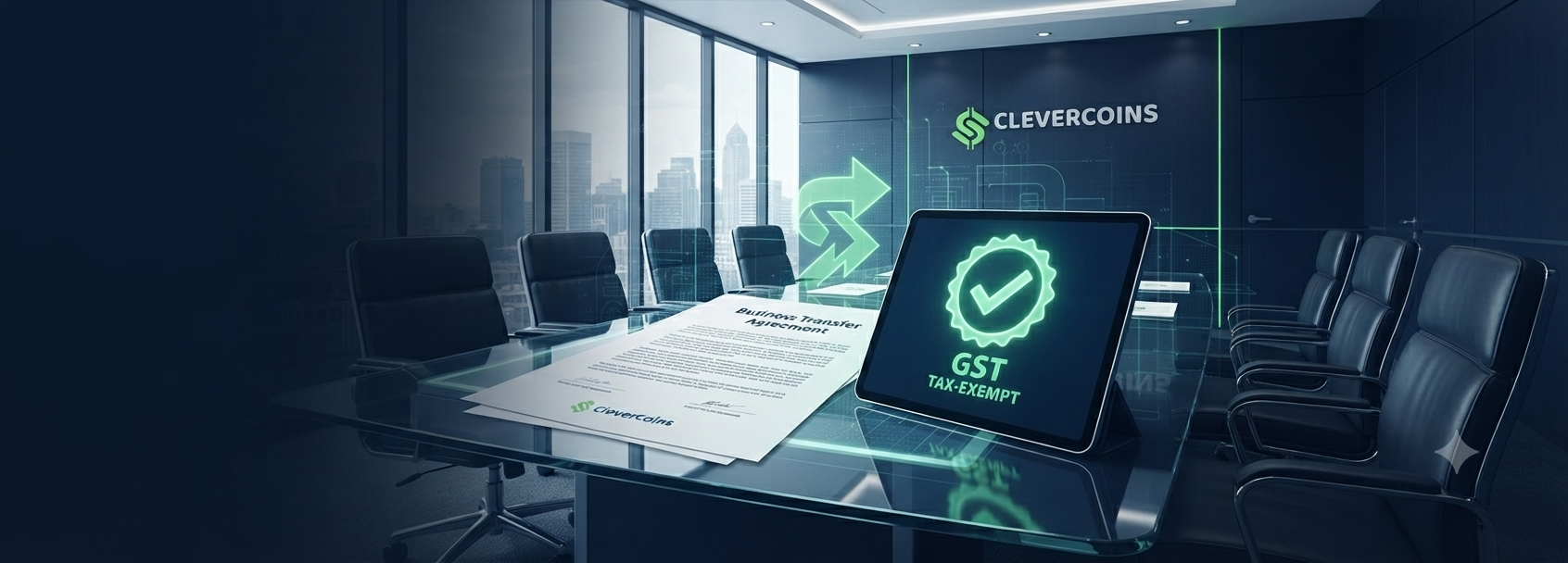
The 0% Exemption Notification: Under Notification No. 02/2017-Central Tax (Rate) dated June 28, 2017, the central government explicitly exempted the supply of all forms of electrical energy (thermal, solar, hydro, nuclear, etc.) from GST.
Distribution Utility Exemption: Furthermore, under Notification No. 12/2017-Central Tax (Rate), services provided by transmission and distribution utilities (such as state electricity boards or government-authorized discoms) relating to transmission or distribution of electricity are also fully exempt.
The Bottom Line: If you receive your monthly power bill from a government-authorized electricity board or state distribution utility, there is 0% GST charged on the core consumption of electricity.
2. Exceptions to the Rule: When Does GST Apply to Electricity?
While power supplied by state utilities is tax-free, specific business setups, commercial arrangements, and private supply models do attract GST. Recognizing these exceptions prevents unexpected tax demands during an audit.
A. Private Power Generation and Third-Party Supply
If electricity is generated and supplied by an entity other than a government-authorized transmission or distribution utility (such as private captive power plants, diesel generator [DG] set rentals, or independent private microgrids), an 18% GST rate typically applies to the supply service.
B. Ancillary Services and Additional Utility Charges
Even though the actual power units consumed on a standard utility bill are exempt, utility providers frequently levy additional fees. Understanding how these are treated is vital:
Meter Rent and Maintenance Charges: Often bundled or itemized separately on commercial bills.
Application/Connection Fees: Charges for processing new industrial connections or upgrading sanctioned loads.
Delayed Payment Surcharges (DPS): Penalties for late bill clearance.
Depending on how state discoms structure these lines, regulatory authorities may view certain non-energy services as distinct taxable supplies attracting standard rates (usually 18%).
3. Commercial Real Estate and Bundled Electricity Charges
A common friction point for office renters, retail outlets, and co-working spaces is how landlords bill electricity consumption. Two distinct scenarios govern this space:
Pure Agent Model: If your landlord charges you strictly for actual electricity consumed based on a sub-meter reading—passing through the exact discom bill amount without adding any markup or profit margin—the landlord acts as a pure agent. In this case, no GST is applicable on the reimbursed electricity charges.
Composite Supply (Fixed/Inclusive Rents): If a commercial lease agreement quotes a flat rental fee that inherently includes electricity and maintenance charges without sub-meter segregation, the entire layout may be treated as a composite supply. Here, the primary service is renting commercial immovable property, which attracts 18% GST. Consequently, the bundled electricity component takes on the tax character of the primary service, meaning GST will apply to the cumulative amount.
4. Input Tax Credit (ITC) Dilemma: Can Businesses Claim GST on Power?
For corporate entities and factories, electricity represents a massive chunk of operational overhead. Naturally, businesses want to know if they can claim Input Tax Credit (ITC) on these outlays.
The Catch-22: Under Section 16(1) of the CGST Act, a registered taxable person is entitled to claim ITC on goods or services used in the course or furtherance of business. However, a foundational rule of GST dictates that ITC cannot be claimed on exempt supplies.
Impact on Electricity Bills: Because utility-supplied electricity is a 0% exempt supply, businesses cannot claim any ITC on their primary electricity consumption bills. You cannot offset output tax liabilities using a tax credit that never existed on the core power bill.
Where Can You Claim ITC in the Power Ecosystem?
While you cannot claim credits on the electricity unit costs, businesses can claim ITC on related goods and infrastructure required to manage power, provided they hold valid tax invoices:
Electrical Equipment & Wiring: Purchasing cables, insulated wires, distribution panels, and switchgear (attracting 18% GST) allows for valid ITC claims if used for business operations.
Inverters, UPS Systems, and Batteries: Capital investments into backup power solutions carry an 18% GST rate, which is eligible for ITC for registered entities.
Installation and Repair Services: Hiring certified electrical contractors for factory setup, wiring maintenance, or equipment servicing attracts an 18% GST on services, on which full ITC can be claimed.
5. Tax Rates on Electrical Items and Appliances
While electricity itself escapes the tax net, the hardware required to consume, distribute, or conserve it is heavily integrated into the GST rate slabs. Reviewing the updated tax architecture reveals important budgeting considerations for corporate infrastructure:
| Electrical Category / Item | Applicable HSN Code | Current GST Rate |
| Insulated PVC / Copper Wires & Cables | HSN 8544 | 18% |
| Electrical Switches, Sockets & Plugs | HSN 8536 | 18% |
| LED Lamps, Lights, and Fixtures | HSN 8539 / 9405 | 18% |
| Control Panels and Distribution Boards | HSN 8537 | 18% |
| Inverters and UPS Systems | HSN 8504 | 18% |
| Lithium-ion & Industrial Batteries | HSN 8507 | 18% |
| Air Conditioners (Commercial/Residential) | HSN 8415 | 18% |
| Ceiling & Exhaust Fans | HSN 8414 | 18% |
6. Historical Context: Electricity Taxes Pre-GST vs. Present
Before July 2017, the taxation of power was governed by state-level frameworks.
The Pre-GST Era: States levied Electricity Duty directly on the consumption or sale of electricity under the State List (Seventh Schedule of the Constitution). Simultaneously, Value Added Tax (VAT) applied to goods, and Service Tax applied to select works.
The Current Dual System: Under the current constitutional layout, Electricity Duty continues to be levied independently by individual state governments. This duty is not subsumed under GST. Therefore, when you look at your industrial or residential electricity bill, you will often find state-specific electricity duties, cess charges, and municipal taxes coexisting alongside a clean 0% GST line for the power component itself.
7. Strategic Tax Planning with Clever Coins
Navigating multi-state compliance, optimizing commercial lease structures, and maximizing legitimate ITC claims on electrical infrastructure requires deep domain expertise. Mismanaging billing agreements—such as failing to establish a true “pure agent” layout with a commercial landlord—can expose your business to unexpected tax liabilities and interest penalties.
At Clever Coins, our core mission is turning regulatory complexity into your bottom-line advantage. Whether you are setting up a new manufacturing plant, reviewing vendor contracts, or optimizing corporate tax structures across PAN India, our seasoned consultants ensure your enterprise stays fully compliant while minimizing financial leakages.
Stop letting tax confusion drain your resources. Partner with Clever Coins today and make every coin count!
Frequently Asked Questions (FAQs)
1. Is there any GST on domestic household electricity bills?
No. Residential electricity consumption supplied by authorized state distribution companies is completely exempt from GST (0% rate).
2. Can commercial businesses claim Input Tax Credit on electricity bills?
No. Because the supply of electricity itself is an exempt supply under the GST law, businesses cannot claim ITC on the power consumption charges listed on utility bills. However, you can claim ITC on electrical machinery, wires, and repair services used for business operations.
3. Does private solar power generation attract GST?
Power generated from captive solar setups for personal use is generally exempt. However, power supplied commercially by independent private power producers or third-party entities may attract an 18% GST rate.
4. Are electricity duties replaced by GST?
No. State-level electricity duties and municipal taxes are governed by the State List of the Indian Constitution and are levied independently alongside the GST framework.
- Phone: +91 77389 59862
- Email: client@clevercoins.org
- Address: Ideal Market, Mumbra, Thane-400612