B2B Sales Process vs Outsourcing: What to Choose for Scalable Revenue Growth
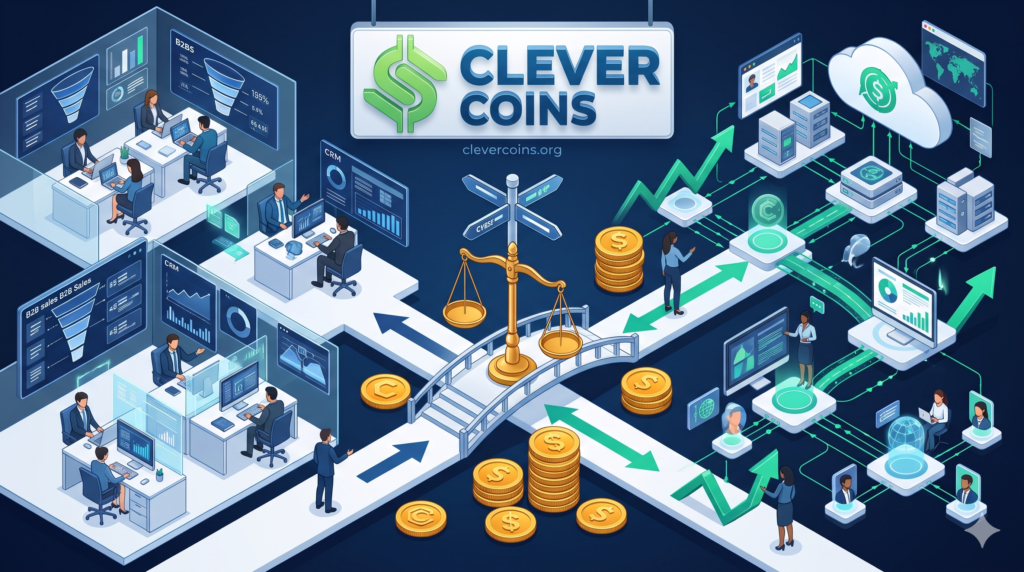
Every ambitious B2B company eventually hits an inflection point where founder-led sales no longer scale. Your calendar is packed with discovery calls, product development slows down because executives are busy writing follow-up emails, and revenue growth plateaus into unpredictable peaks and valleys. At this critical juncture, leadership faces one of the most consequential commercial decisions in the lifecycle of a business: should you build an internal B2B sales process from the ground up, or outsource your sales functions to a specialized external partner?
Choosing between an in-house B2B sales process vs outsourcing is far more than a simple line-item budget comparison. It is a strategic architectural choice that dictates your customer acquisition cost (CAC), speed to market, brand equity, intellectual property retention, and long-term enterprise valuation. Build internally too early with an unproven value proposition, and you risk burning hundreds of thousands of dollars on unmotivated reps and bloated software stacks before closing a single meaningful deal. Outsource the wrong stage of a complex, consultative sale, and you risk alienating high-value enterprise buyers with generic scripts and disconnected handoffs.
In this comprehensive guide, we dissect every dimension of the in-house B2B sales process versus sales outsourcing. You will examine real-world unit economics, ramp-up timelines, operational control mechanisms, risk profiles, and the increasingly popular hybrid model that combines the best of both worlds.
Understanding the Two Core Models
Before evaluating costs and conversion metrics, it is essential to establish clear operational definitions. Many organizations confuse sales staffing, lead lists, and full-cycle sales outsourcing, leading to misaligned expectations from day one.
What is an In-House B2B Sales Process?
An in-house B2B sales process is a proprietary, internally owned revenue engine built, managed, and executed by full-time employees on your company’s payroll. In this model, your organization retains total ownership over every stage of the customer journey—from Ideal Customer Profile (ICP) definition and outbound prospecting to discovery, technical demonstrations, proposal negotiation, closing, and account expansion.
Building an internal process requires establishing:
Dedicated Personnel: Sales Development Representatives (SDRs), Business Development Representatives (BDRs), Account Executives (AEs), Sales Engineers, and Revenue Operations (RevOps) specialists.