comprehensive Blog Content: Debt-to-Equity Ratio Explained
Introduction: Decoding Corporate Leverage
When analyzing the health, stability, and growth trajectory of a business, fundamental analysts and smart investors look past top-line revenue. They dig deep into the balance sheet. At the heart of this financial dissection lies a critical metric: the Debt-to-Equity (D/E) Ratio.
Whether you are scaling a startup, evaluating an investment portfolio, or managing corporate compliance, understanding how a company finances its operations is essential. Is a business fueling its expansion through smart borrowing, or is it walking a tightrope of excessive financial leverage? The debt-to-equity ratio provides the answer.
What is the Debt-to-Equity Ratio?
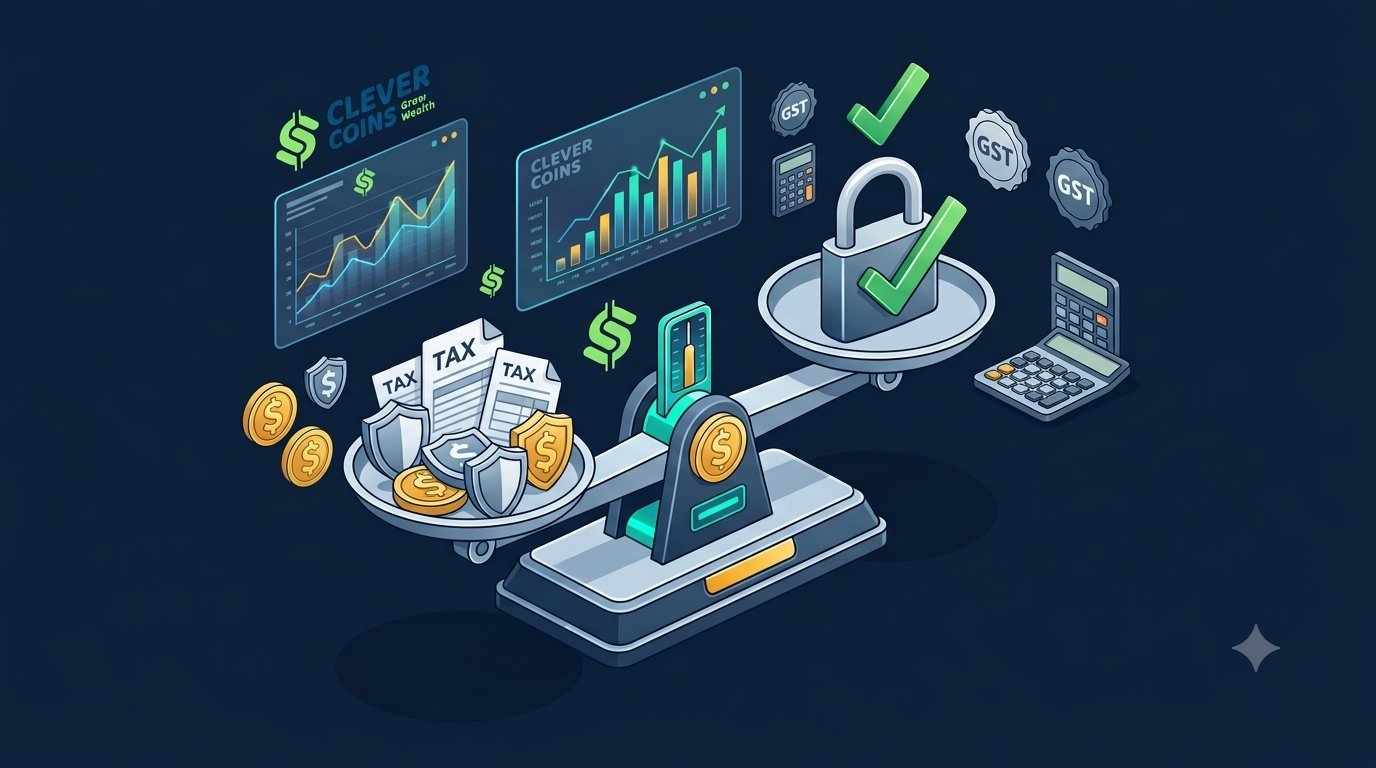
The debt-to-equity ratio is a core solvency metric used to evaluate a company’s financial leverage. It compares a company’s total liabilities (its debts) to its shareholder equity (the net worth belonging to its owners or shareholders).
In simple terms, for every dollar of business financing provided by shareholders, how many dollars are being provided by creditors and lenders?
-
Total Liabilities: Everything the business owes, including short-term loans, accounts payable, long-term bonds, and mortgages.
-
Shareholder Equity: The residual interest in the assets of the entity after deducting liabilities, comprising common stock, retained earnings, and additional paid-in capital.
The Debt-to-Equity Formula
Calculating the D/E ratio is straightforward. The mathematical representation is:
$$\text{Debt-to-Equity Ratio} = \frac{\text{Total Liabilities}}{\text{Total Shareholder Equity}}$$
Step-by-Step Calculation Example:
Imagine CleverCorp, a mid-sized enterprise, reviews its latest balance sheet:
-
Total Liabilities: $2,500,000 (comprising $500,000 in short-term debt and $2,000,000 in long-term bonds)
-
Total Shareholder Equity: $2,000,000
Applying the formula:
$$\text{D/E Ratio} = \frac{\$2,500,000}{\$2,000,000} = 1.25$$
This means that for every $1.00 of equity put up by owners, CleverCorp utilizes $1.25 of debt financing.
Why the D/E Ratio Matters for Stakeholders
Different stakeholders view the debt-to-equity ratio through different lenses:
-
Investors & Shareholders: High leverage can magnify returns during economic booms (financial leverage amplification). However, it drastically increases bankruptcy risk during economic downturns.
-
Creditors & Lenders: Banks look for a lower D/E ratio because it implies a safety buffer. If the company hits hard times, existing assets can easily cover liabilities.
-
Executive Management: Strategic leaders use the ratio to optimize their Weighted Average Cost of Capital (WACC). Debt is often cheaper than equity because interest payments are tax-deductible, but too much debt creates toxic financial risk.
What is a “Good” vs. “Bad” Debt-to-Equity Ratio?
There is no universal “magic number” for a healthy D/E ratio because capital structures vary wildly by industry sector.
-
Capital-Intensive Industries (Utilities, Telecom, Manufacturing): These sectors require massive upfront capital investments in infrastructure, plants, and machinery. A normal D/E ratio here often ranges between 1.5 to 2.5 or higher.
-
Technology & Software Startups: Tech firms rely on intellectual property rather than heavy physical assets. They typically maintain low D/E ratios, often under 0.5, or near zero if they are entirely venture-funded via equity.
General Benchmarks:
-
Under 1.0: Generally considered conservative, indicating that the company finances more of its operations through equity than debt.
-
1.0 to 2.0: Considered moderate and typical for stable, growing businesses.
-
Above 2.0: High leverage. This signals that the company is aggressively borrowing, which can become dangerous if interest rates rise or revenues dip.
Limitations of the Debt-to-Equity Ratio
While powerful, the D/E ratio should never be used in isolation. Smart analysts keep its limitations in mind:
-
Accounting Policy Variations: Different depreciation methods or asset valuations can distort equity figures.
-
Intangible Assets: Companies with massive brand value or patents might show skewed equity values unless adjusted.
-
Timing and Seasonality: Balance sheets capture a single snapshot in time. A company might take on massive seasonal debt right before its peak revenue cycle, making its D/E ratio look temporarily inflated.
Conclusion
Mastering the debt-to-equity ratio unlocks profound insights into a company’s financial stability. By balancing debt safely against equity, businesses can fund high-ROI projects without risking insolvency. Just as proactive tax and financial structuring protects a company’s bottom line, monitoring leverage ensures long-term corporate survival and in
- Email: client@clevercoins.org
- Phone: +91 77389 59862
- Address: Ideal Market, Mumbra, Thane-400612