
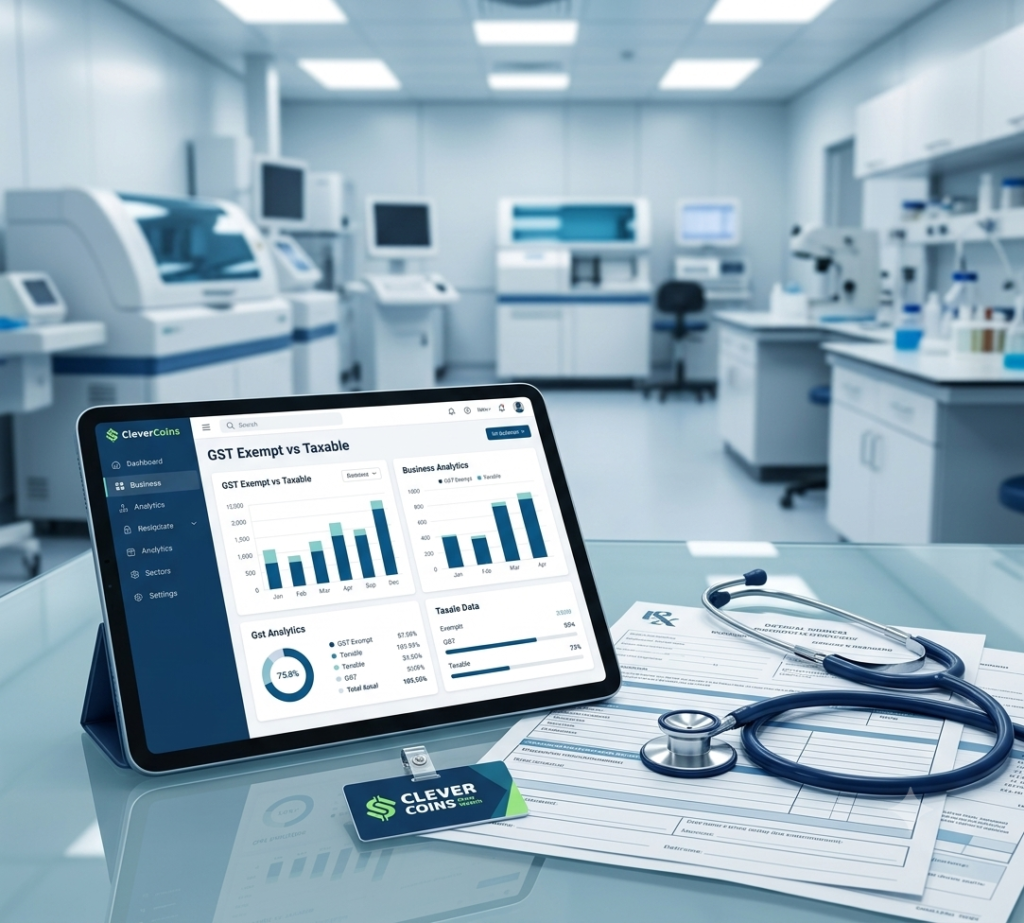
Healthcare and Diagnostic Services: What Is Exempt and What Is Taxable Under GST?
2. Comprehensive Blog Content (3000+ Words)
Introduction: The Intersection of Healthcare and Taxation
The healthcare and diagnostic sector forms the cornerstone of public welfare and economic stability in India. With rapid medical advancements, expanding corporate wellness models, and complex supply chains, understanding the tax implications governing this sector has never been more vital. Under the Goods and Services Tax (GST) regime—rolled out on July 1, 2017—the overarching principle governing medical and diagnostic services is rooted in social welfare: essential healthcare services should remain affordable and accessible to the common citizen.
However, the distinction between what is exempt and what is taxable is not always black-and-white. While clinical treatments, core diagnostics, and authorized medical consultations are shielded from tax, ancillary commercial operations, cosmetic procedures, sale of pharmaceutical drugs over the counter, and certain corporate medical packages often attract varying slabs of GST.
Navigating these nuances requires deep familiarity with Notification No. 12/2017-Central Tax (Rate), relevant judicial precedents, and Circulars issued by the Central Board of Indirect Taxes and Customs (CBIC). This exhaustive guide breaks down every facet of GST applicability on healthcare and diagnostic services, providing clarity for healthcare providers, diagnostic laboratories, corporate wellness managers, and tax professionals.
Part I: Legislative Framework and Core Definitions
To understand how GST applies to healthcare, one must first examine the legal terminology defined under the Central Goods and Services Tax (CGST) Act and corresponding rate notifications.
1. What Constitutes “Healthcare Services”?
Under Entry 74 of Notification No. 12/2017-Central Tax (Rate), “health care services” are defined as:
“Any service by way of diagnosis or treatment or care for illness, injury, deformity, abnormality or pregnancy in any recognized system of medicines in India and includes services by way of transportation of a patient in an ambulance, other than those specified in (a) above.”
Crucially, this definition restricts exemptions to recognized systems of medicine in India, legally recognized under the National Commission for Indian System of Medicine Act, National Commission for Allied and Healthcare Professions, or similar statutory bodies. These include Allopathy, Ayurveda, Yoga and Naturopathy, Unani, Siddha, and Homeopathy (AYUSH). Treatments outside these recognized frameworks can trigger tax implications.
2. Defining a “Clinical Establishment”
An entity must qualify as a clinical establishment to pass on the tax exemption benefits tied to healthcare and diagnostic services. A clinical establishment is defined as:
-
A hospital, nursing home, clinic, sanatorium, or any institution by whatever name called that offers services or facilities requiring diagnosis, treatment, or care for illness, injury, deformity, abnormality, or pregnancy.
-
Managed or owned by the Government, a trust (public or private), a society, a local authority, or even an individual practitioner.
Part II: What Is Exempt Under GST? (The Safe Harbors)
The bedrock of GST exemption in the medical sector is aimed at reducing the out-of-pocket medical expenditure of citizens. The following categories are entirely exempt from GST (Nil Rated / SAC Code 9993):
1. Core Diagnostic Services
Diagnostic centers operating independently or as part of a hospital are viewed as clinical establishments. Therefore:
-
Pathological Lab Tests: Blood tests, urine analysis, biopsies, stool tests, and molecular assays ordered for diagnosis or treatment are exempt.
-
Radiological & Imaging Investigations: X-rays, MRIs, CT scans, Ultrasounds, and ECGs performed to diagnose an injury, illness, or abnormality fall under the exemption umbrella.
2. Consultations and Professional Fees
-
Doctor Consultations: Fees charged by authorized medical practitioners, whether general practitioners, specialists, or surgeons, are exempt.
-
Parametric and Nursing Care: Services rendered by nurses, physiotherapists, technicians, and other paramedics employed or contracted within a clinical framework are exempt.
-
Senior Doctors/Consultants in Hospitals: Clarified via CBIC Circular No. 32/06/2018-GST, hospitals often engage senior doctors or consultants on a revenue-sharing or retainer basis. Even if these consultants are not direct “employees” (meaning no TDS under Section 192, but rather professional fees under Section 194J), the services provided by them to patients through the hospital are considered part of composite healthcare services and remain exempt from GST.
3. In-Patient Hospitalization and Accommodation
-
Room Rent for Patients: Room charges, ICU beds, high dependency unit (HDU) charges, and nursing care billed directly by a hospital to an admitted patient are treated as part of health care services and are exempt.
-
Hospital Retention Money: Portions of patient fees retained by hospitals while passing on shares to visiting surgeons or consultants are exempt as they cover fundamental infrastructure, emergency support, and nursing care.
4. Ambulance Services
Transportation of patients in an ambulance—whether managed by a private hospital, a trust, or an independent provider—is completely exempt from GST under Service Accounting Code (SAC) 9993.
Part III: What Is Taxable Under GST? (The Commercial Boundaries)
Not everything that happens inside a hospital or diagnostic facility is exempt. When services cross into aesthetics, wellness without underlying illness, or commercial B2B supplies, GST kicks in.
1. Cosmetic and Plastic Surgery (Aesthetic Procedures)
The legal definition of healthcare explicitly covers treatment for illness, injury, deformity, abnormality, or pregnancy.
-
Taxable: Purely cosmetic procedures—such as elective rhinoplasty, liposuction, hair transplants, or anti-aging botox treatments done solely for aesthetic enhancement without correcting a functional deformity, scar, or congenital anomaly—are taxable at 18% GST.
-
Exempt: Reconstructive surgery following an accident, burn injury, or congenital defect (like cleft palate correction) remains exempt.
2. Pharmaceuticals and Over-the-Counter (OTC) Medicines
-
In-Patient Pharmacy: Medicines, implants, and consumables administered to patients during the course of treatment/hospitalization are part of a composite supply of healthcare and are exempt.
-
Out-Patient Pharmacy Sales: Medicines sold through an independent pharmacy or a hospital pharmacy counter to out-patients (walk-in customers who are not admitted) are taxable based on the specific HSN code of the drug (varying from 5%, 12%, to 18%).
3. Food and Beverages Supplied to Visitors and Out-Patients
-
In-Patient Meals: Food supplied directly by the hospital kitchen as part of the prescribed diet for in-patients is exempt as part of composite healthcare.
-
Taxable F&B: Food supplied to out-patients, attendants, or visitors in hospital canteens or cafeterias, whether outsourced or managed in-house, is taxable (typically at 5% without Input Tax Credit, or 18% with ITC depending on the restaurant service classification).
4. Corporate Wellness Programs and Health Check-Up Camps
Many diagnostic labs and hospitals enter into B2B contracts with corporate entities to conduct annual health check-ups (EHCs) for employees.
-
Taxability: If a corporate body purchases a package where the service is billed directly to the company (B2B transaction) rather than individual patients receiving medical treatment for a diagnosed illness, this is treated as a taxable business service. It generally attracts 18% GST.
-
Note: If individual employees walk into a clinical establishment for a routine preventive check-up billed in the patient’s name, it is often viewed under the broad umbrella of preventive diagnosis under healthcare, but corporate-mandated B2B contracts face strict scrutiny.
5. Room Rent Limits for High-End Hospitalization
A critical watch-out for hospitals involves luxury rooms. Under historical and current tax adjustments, if a hospital charges room rent exceeding specific limits per day (historically monitored around INR 5,000 per day, excluding ICUs), the service could lose its exempt status, triggering GST on the room and associated services. Providers must closely audit room tariffs to avoid misclassification.
Part IV: Complex Gray Areas and Special Scenarios
1. Medico-Legal Cases and Insurance Third-Party Administrators (TPAs)
When diagnostic centers or hospitals perform tests requested by insurance companies, courts, or police authorities for legal or insurance verification (rather than direct treatment of a patient’s illness):
-
These are treated as commercial verification services rather than healthcare.
-
GST at 18% applies to medico-legal certificates, corporate pre-employment medical checks, and insurance-driven diagnostic evaluations.
2. Clinical Trials and Pharmaceutical Research
Diagnostic centers frequently partner with Contract Research Organizations (CROs) and pharmaceutical giants to conduct Phase I–IV clinical trials, bioequivalence studies, and diagnostic data processing.
-
These activities do not constitute direct healthcare provided to patients for treating an illness.
-
Consequently, clinical trial and research services rendered by diagnostic labs are taxable at 18% GST.
3. Input Tax Credit (ITC) Entitlement Dilemma
A major operational challenge for hospitals and diagnostic labs dealing primarily in exempt healthcare services is the restriction on Input Tax Credit (ITC).
-
Because healthcare services are exempt (Nil rated), providers cannot claim ITC on purchases of medical equipment, reagents, chemicals, power backup, or housekeeping services used exclusively for providing exempt services.
-
This results in a “tax cost” embedded in the operational overheads of healthcare institutions, which is often indirectly passed on to consumers.
-
If a hospital or lab engages in taxable supplies (such as clinical trials, out-of-house pharmacy sales, or corporate wellness contracts), proportional (apportioned) ITC can be claimed under Section 17(2) of the CGST Act, subject to strict record-keeping.
Part V: Compliance Best Practices for Healthcare Providers
To avoid notices from the GST intelligence wing, hospitals, clinics, and diagnostic chains must implement robust compliance workflows:
-
Maintain Clear Billing Separation: Separate out-patient pharmacy bills, aesthetic elective procedures, and corporate wellness contracts from core clinical and diagnostic bills. Mixing taxable and exempt items under a single composite code incorrectly can lead to severe tax shortfalls, interest, and penalties.
-
Verify SAC and HSN Codes: Ensure that diagnostic test reports and medical invoices explicitly quote SAC 9993 for exempt health services and accurate HSN codes for any taxable goods sold.
-
Review Contractor and Consultant Agreements: Document retainerships and fee-sharing arrangements with visiting doctors and consultants carefully to establish that they function within the clinical establishment framework, reinforcing the tax exemption.
-
Partner with Expert Tax Consultants: Tax codes surrounding healthcare continue to evolve through frequent GST Council clarifications. Partnering with specialized consultancy firms like CleverCoins ensures your practice stays ahead of compliance updates, optimizes legal structuring, and mitigates litigation risks.
Conclusion
The regulatory framework of GST on healthcare and diagnostic services is designed to safeguard the common man from burdensome medical taxes. Core diagnostics, clinical treatments, authorized consultations, and in-patient care remain proudly exempt. However, commercial diversification—ranging from cosmetic surgeries and out-patient retail pharmacy to corporate health packages and clinical trials—falls squarely into the taxable bracket (typically 18%).
For healthcare providers and diagnostic laboratories, drawing a clear operational line between clinical necessity and commercial service is essential. By maintaining meticulous billing practices and seeking professional guidance, organizations can ensure seamless compliance while fulfilling their ultimate mission: delivering accessible, high-quality care.





