
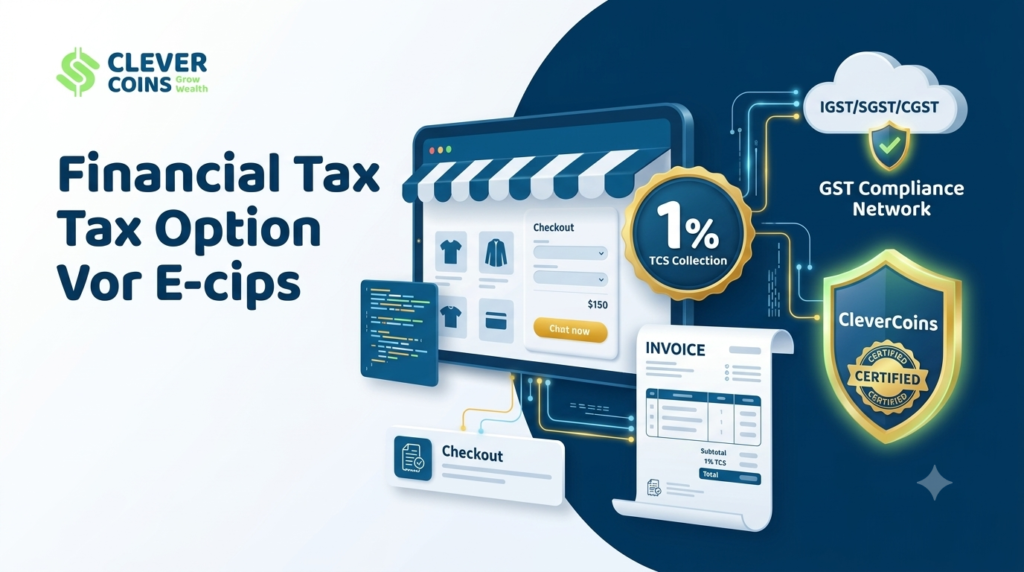
GST Rules for E-commerce Platforms: TCS Deductions, Invoicing, and Mandatory Registration
The digital commerce revolution in India has transformed how business is done, scaling local storefronts into nationwide digital powerhouses overnight. However, with massive digital expansion comes stringent regulatory accountability. For online marketplace owners, aggregators, and digital vendors alike, navigating the Goods and Services Tax (GST) framework is essential for survival.
Unlike traditional offline retail, electronic commerce introduces unique multi-party dynamics, automated transaction settlements, and strict intermediary obligations. This comprehensive guide breaks down the core pillars of GST rules for e-commerce platforms, dissecting Tax Collected at Source (TCS), mandatory registration mandates, e-invoicing workflows, and compliance best practices to safeguard your business from penalties.
1. Understanding E-Commerce Under the GST Act
To comply with tax laws, you must first understand how the law categorizes digital market participants. Under Section 2(44) of the CGST Act, 2017, electronic commerce means the supply of goods or services (including digital products) over a digital or electronic network.
Furthermore, Section 2(45) defines an Electronic Commerce Operator (ECO) as any person who owns, operates, or manages a digital or electronic facility or platform for electronic commerce. Examples range from massive inventory-led and marketplace models like Amazon and Flipkart to specialized service aggregators like Zomato, Swiggy, Uber, and urban service platforms.
The GST framework segregates participants into two primary entities:
-
The E-Commerce Operator (ECO): The digital host facilitating the transaction.
-
The E-Commerce Participant (Vendor/Supplier): The independent seller listing and supplying goods or services through the ECO’s platform.
2. Mandatory GST Registration Rules for E-Commerce Participants
Under standard offline business rules, suppliers enjoy a threshold exemption (typically ₹20 lakh or ₹40 lakh aggregate turnover, depending on the state and nature of supply) before GST registration becomes mandatory. However, the rules change drastically for e-commerce ecosystems.
A. For Suppliers and Vendors Selling Through ECOs
As per Section 24(ix) of the CGST Act, any person supplying goods or services through an electronic commerce operator is required to obtain mandatory GST registration, irrespective of their turnover threshold.
-
Even if a small handicraft artisan sells only ₹50,000 worth of goods annually via an online marketplace, they are technically mandated to acquire a GSTIN.
-
Note on Services: A crucial exception exists for service providers supplying services through an ECO where the ECO is liable to pay tax under Section 9(5) (e.g., passenger transport or restaurant aggregation). For those specific notified services, the underlying individual service providers are entitled to threshold exemptions.
B. For E-Commerce Operators (ECOs) Themselves
An electronic commerce operator must obtain mandatory GST registration from day one. There is no threshold limit available for platforms hosting third-party vendors. ECOs must register separately as a Tax Collector at Source (TCS) in every State or Union Territory where they operate or where their suppliers are domiciled, ensuring a localized compliance footprint.
3. Tax Collected at Source (TCS) Mechanism Explained
One of the most defining financial controls introduced for online marketplaces is Tax Collected at Source (TCS) under Section 52 of the CGST Act.
How TCS Works
When a customer purchases a product from a third-party vendor via an online platform, the ECO collects the payment on behalf of the vendor. Before releasing the net payout to the vendor, the ECO is legally obligated to deduct a small percentage as TCS and deposit it directly with the government.
TCS Rate Breakdown
The total TCS rate is 1% of the net value of taxable supplies made through the platform:
-
0.5% Central GST (CGST) + 0.5% State/Union Territory GST (SGST/UTGST) for intra-state supplies.
-
1% Integrated GST (IGST) for inter-state supplies.
Calculation of Net Taxable Supplies
TCS is not levied on the gross marketplace turnover blindly. It is calculated on the net value of taxable supplies:
Practical Example:
Suppose Vendor A sells goods worth ₹2,00,000 on an e-commerce platform during the month. Due to sizing and preference issues, customers return goods worth ₹40,000 within the same month.
-
Gross Supplies: ₹2,00,000
-
Returns Adjusted: ₹40,000
-
Net Taxable Supplies: ₹1,60,000
-
TCS Deduction @ 1%: ₹1,600
The platform will deduct ₹1,600 and transfer the remaining balance to Vendor A, remitting the ₹1,600 to the government under the platform’s electronic cash ledger.
Exemptions from TCS
TCS is not applicable under specific scenarios:
-
Supplies where the ECO is liable to pay tax under Section 9(5).
-
B2C or B2B transactions where the marketplace does not handle the consideration collection flow.
-
Exempt supplies and zero-rated exports handled strictly outside standard marketplace deduction frameworks.
4. Invoicing Protocols and E-Invoicing for E-Commerce
Accurate documentation forms the backbone of GST compliance. In an e-commerce setup, invoices can originate from two places: the seller directly or the e-commerce platform on behalf of the seller (self-billing agreements).
Key Elements of an E-Commerce Tax Invoice
Every B2B and applicable B2C invoice generated within digital commerce channels must capture:
-
Name, address, and GSTIN of the supplier and the buyer.
-
A consecutive unique invoice serial number (up to 16 characters).
-
Date of issue and HSN code for goods or SAC code for services.
-
Description, quantity, unit price, and taxable value.
-
Applicable tax rates (CGST, SGST, IGST) and exact tax amounts charged.
-
Place of supply and address of delivery.
The Role of E-Invoicing (IRN Generation)
For businesses crossing the notified government turnover thresholds, e-invoicing is compulsory. Invoices must be uploaded to the Invoice Registration Portal (IRP) to obtain a unique Invoice Reference Number (IRP/IRN) and a cryptographically embedded QR code. E-commerce sellers must seamlessly integrate their shopping cart software (Shopify, WooCommerce, Magento) with certified Enterprise Resource Planning (ERP) tools to push real-time IRNs to buyers.
5. Compliance Calendar and Return Filings
Managing compliance requires tracking specialized returns that bridge the gap between platforms and individual sellers.
-
Form GSTR-8 (Filed by ECOs): E-commerce operators must file GSTR-8 monthly by the 10th of the succeeding month. This return details all supplies made through the platform, details of individual suppliers, total TCS collected, and modifications.
-
Form GSTR-3B & GSTR-1 (Filed by Suppliers): Sellers report their outward taxable supplies and claim the credit for TCS deducted by platforms. The TCS amount deposited by the ECO reflects automatically in the seller’s electronic cash ledger / GSTR-2A/2B portal, allowing them to offset their final tax liability.
-
Form GSTR-9B (Annual Return by ECOs): An annual summary statement filed by e-commerce operators summarizing all monthly GSTR-8 filings, due by December 31st following the end of the financial year.
6. Cross-Border E-Commerce and OIDAR Complexities
With global digital trade expanding, cross-border transactions introduce complex regulations:
-
OIDAR (Online Information Database Access and Retrieval) Services: Foreign entities providing digital services (software downloads, cloud hosting, streaming, e-books) to non-taxable online recipients in India must register under a simplified OIDAR registration framework and discharge IGST.
-
Export of Goods via E-Commerce: E-commerce exports must comply with LUT (Letter of Undertaking) or payment of integrated tax norms, coupled with proper shipping bill-to-buyer alignments on ICEGATE and GST portals.
7. Common Compliance Pitfalls and How to Avoid Them
Even tech-forward businesses stumble when managing multi-state operations. Watch out for these common traps:
-
Multi-State Registration Omissions: If an ECO or seller stores inventory in fulfillment centers across multiple states (e.g., Maharashtra, Karnataka, Haryana), they must hold active GST registrations in each respective state.
-
GSTR-8 and GSTR-2A Reconciliation Mismatches: Discrepancies between what an ECO reports in GSTR-8 and what a vendor reports lead to frozen Input Tax Credit (ITC) claims and departmental notices. Automated reconciliation software is non-negotiable.
-
Delayed TCS Remittance: Failing to deposit collected TCS funds by the 10th invites heavy interest penalties at 18% per annum alongside late fees.
8. Conclusion and Strategic Takeaways
GST rules for e-commerce platforms are designed to bring absolute transparency to the digital economy. While mandatory registrations, 1% TCS deductions, and rigorous invoice matching add administrative overhead, they also establish a secure, verified foundation for high-growth businesses.
By automating your reconciliation pipelines, maintaining clean e-invoicing audit trails, and partnering with seasoned tax consultants like CleverCoins, your e-commerce enterprise can eliminate regulatory friction, safeguard working capital, and scale fearlessly across India’s digital marketplace.





