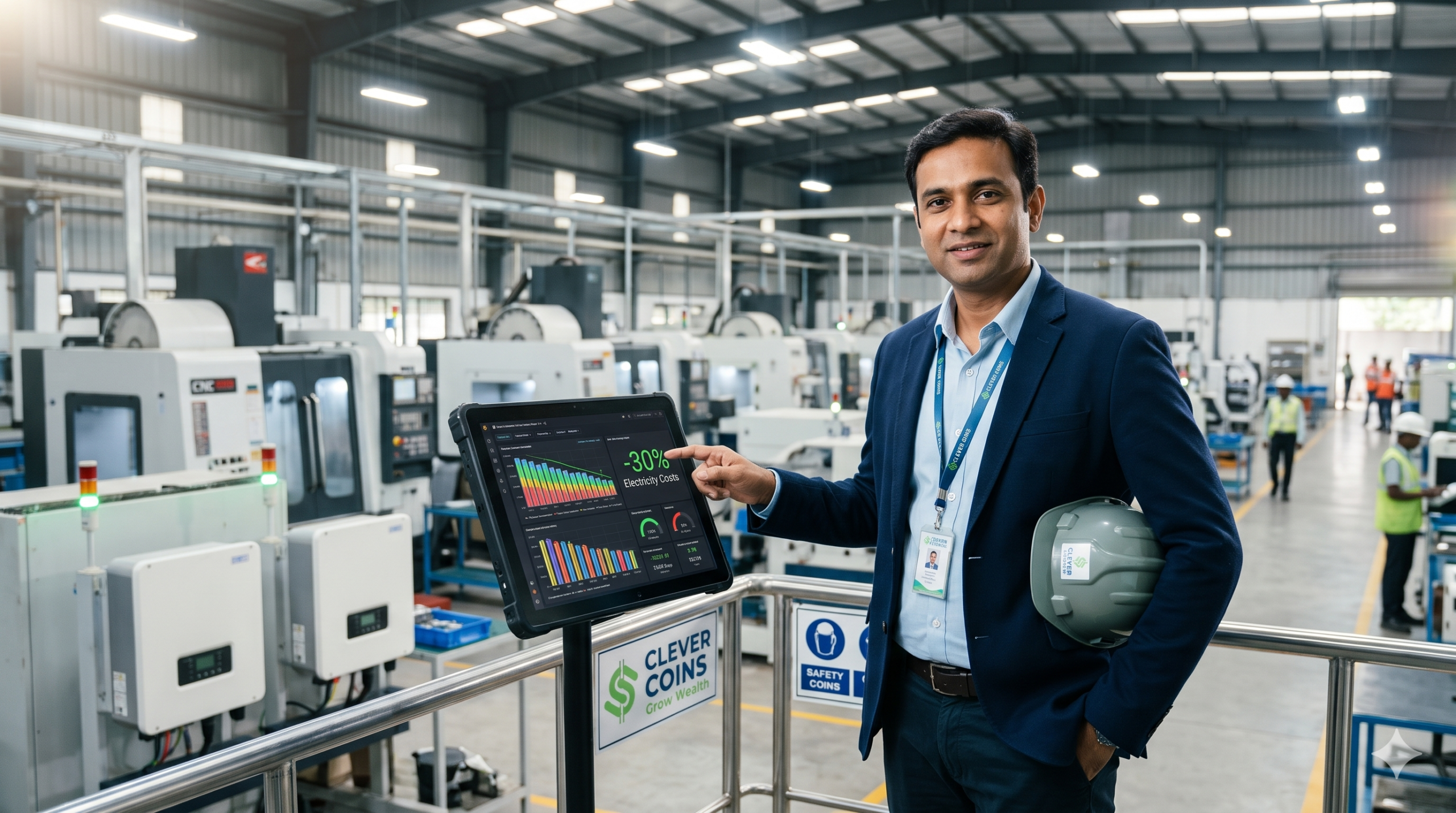
Energy Efficiency Scheme for MSMEs: How to Reduce Electricity Bill by 30%
For small and medium enterprises (MSMEs) across India, operating costs can make or break profit margins. Among all operational expenses, electricity and power bills represent a staggering chunk of monthly overhead—often second only to raw materials and labor. Whether you run a precision CNC machining unit in Peenya, a textile weaving loom in Surat, a food processing plant in Indore, or an engineering workshop in Mumbra, escalating utility tariffs eat directly into your bottom line.
Fortunately, the government and various financial bodies have introduced robust frameworks known as Energy Efficiency Schemes for MSMEs. These initiatives are meticulously designed to help manufacturing and service units upgrade machinery, optimize power consumption, conduct energy audits, and ultimately slash electricity bills by up to 30%.
This ultimate guide explores everything you need to know about energy efficiency schemes, how to qualify, practical steps to optimize plant power, and how green compliance drives long-term business growth.
Why Energy Costs Threaten MSME Profitability
In industrial and commercial setups, power quality and consumption efficiency dictate operational survival. Common pain points include:
Low Power Factor Penalties: Inductive loads from motors and transformers pulling lagging reactive power, leading to hefty utility surcharges.
Aging Machinery: Legacy equipment operating at subpar efficiencies, drawing excessive current for minimal output.
Poor Lighting and Thermal Insulation: Outdated high-bay metal halide lighting and uninsulated heating or cooling zones causing massive thermal losses.
Lack of Real-Time Monitoring: Flying blind without sub-metering makes it impossible to trace where power is actually leaking.
Addressing these issues manually requires capital expenditure (CapEx), which is why government intervention through targeted schemes is a game-changer.
Core Government Schemes & Financial Support for Energy Efficiency
Several central and state-level initiatives provide capital subsidies, soft loans, and technical assistance specifically geared toward green technology adoption:
1. Credit Linked Capital Subsidy and Technology Upgradation Scheme (CLCS-TUS)
While primarily aimed at technology upgrades, CLCS-TUS facilitates capital subsidies for micro and small enterprises adopting approved clean and energy-efficient technologies.
Subsidy Structure: Up to 15% capital subsidy (capped at ₹15 Lakhs) for procurement of plant and machinery with state-of-the-art energy-saving specs.
2. PCRA (Petroleum Conservation Research Association) Energy Audits
For MSMEs relying on thermal energy, diesel generators, or furnaces alongside electricity, PCRA conducts subsidized or sponsored energy audits. Their certified auditors inspect combustion efficiency, steam traps, and electrical distribution networks, providing an actionable roadmap to cut fuel and power waste by 15% to 30%.
3. SIDBI’s End-to-End Energy Efficiency Programs
Small Industries Development Bank of India (SIDBI) offers specialized low-interest green loans and financial assistance frameworks:
Partial Risk Sharing Facility for Energy Efficiency (PRSF): Helps guarantee loans for energy efficiency retrofits.
SIDBI Tejasvini and Green Climate Fund (GCF) Initiatives: Designed to fund rooftop solar installations and energy-saving motor replacements with minimal collateral.
Step-by-Step Blueprint: How to Reduce Your MSME Electricity Bill by 30%
Achieving a 30% reduction in electricity consumption requires a multi-pronged engineering and administrative strategy. Here is how you can systematically overhaul your facility’s energy footprint:
Step 1: Conduct a Comprehensive Energy Audit
You cannot manage what you do not measure. Partner with a Bureau of Energy Efficiency (BEE) certified Energy Auditor or utilize state-sponsored schemes to map your energy consumption.
Identify Energy Hogs: Pinpoint which specific machines or shifts consume disproportionate power per unit of production.
Analyze Tariff Slabs: Evaluate whether shifting high-load manufacturing processes to off-peak night hours (where utilities offer time-of-day [ToD] tariff discounts) can instantly lower your billing tier.
Step 2: Upgrade to IE3 or IE4 Premium Efficiency Motors
Electric motors drive pumps, compressors, fans, and conveyors in almost every MSME unit. Standard older motors operate at 80-85% efficiency, wasting the rest as heat.
The Upgrade: Transition to International Efficiency class IE3 or IE4 motors.
The ROI: While premium motors carry a higher upfront cost, they reduce motor energy losses by 20-50%, paying for themselves within 12 to 18 months.
Step 3: Install Automatic Power Factor Correction (APFC) Panels
If your facility incurs monthly power factor penalties from your electricity board (typically charged when power factor drops below 0.95), an APFC panel is mandatory.
How it Works: Capacitors automatically switch in and out of the circuit to neutralize lagging reactive power caused by inductive loads.
Immediate Saving: Eliminates power factor penalties and reduces line current, thereby lowering copper losses in your internal wiring.
Step 4: Retrofit LED Industrial Lighting
Old-fashioned mercury vapor, sodium, or fluorescent high-bay fixtures draw immense wattage and generate severe radiant heat.
The Upgrade: Retrofit your entire shop floor, warehouse, and office with industrial-grade LED high-bays and smart motion sensors.
Bonus Benefit: LEDs emit minimal heat, reducing the load on your ventilation or cooling systems.
Step 5: Implement Variable Frequency Drives (VFDs)
Many pumps and fans run at constant full speed even when process demands fluctuate, wasting power via throttling valves or dampers.
The Solution: Install VFDs on centrifugal pumps, blowers, and compressors to match motor speed precisely to operational demand. According to energy studies, slowing a fan speed by 20% through a VFD can cut its power consumption by nearly 50%.
Integrating Renewable Energy: Rooftop Solar PV Systems
No discussion on MSME energy efficiency is complete without examining solar power. Under various central and state net-metering policies, installing a grid-tied rooftop solar photovoltaic system is one of the most lucrative investments an enterprise can make.
Accelerated Depreciation: Businesses can claim accelerated depreciation benefits under the Income Tax Act (often up to 40% in the first year), drastically lowering taxable income.
Peak Load Shifting: Running daytime manufacturing loads entirely on self-generated solar power shields your business from surging commercial peak-hour electricity tariffs.
Government Subsidies: Check state-specific MSME policies that offer capital subsidies ranging from 20% to 40% for solar installations up to 500 kW.
Financial Analysis: Cost vs. Savings Breakdown
To put things into perspective, let’s look at a typical mid-sized engineering unit with a monthly electricity bill of ₹2,50,000.
| Intervention | Estimated CapEx | Monthly Savings | Payback Period |
| APFC Panel Installation | ₹60,000 | ₹18,000 (Penalty removal + loss reduction) | 3.3 Months |
| LED Shop Floor Retrofit | ₹45,000 | ₹12,000 | 3.7 Months |
| IE3 Motor Replacement (3 Units) | ₹1,20,000 | ₹25,000 | 4.8 Months |
| 50 kW Rooftop Solar System | ₹22,00,000 | ₹65,000 | ~2.8 Years |
| Total Combined Impact | ₹24,25,000 | ₹1,20,000+ | ~20 Months |
Note: Actual savings vary depending on regional tariff rates, industrial load profiles, and existing equipment condition.
Compliance, Documentation, and Professional Advisory
Accessing government energy schemes, subsidies, and green financing requires meticulous documentation. MSME owners must maintain up-to-date compliance records, including:
Active Udyam Registration Certificate
GST registration and recent GSTR-3B filings
Detailed project reports (DPR) certified by a chartered engineer or accredited energy auditor
KYC and bank sanction letters for green credit lines
Navigating these regulatory frameworks while managing core production can be daunting. Partnering with seasoned financial and business consultants ensures your plant meets all compliance criteria while maximizing available government subsidies and tax benefits.
Conclusion: Transform Cost Centers into Competitive Advantages
Energy efficiency is no longer merely an environmental buzzword—it is a critical financial survival strategy for modern MSMEs. By auditing your facility, leveraging government schemes, upgrading motors and lighting, and integrating solar power, you can comfortably trim your electricity bills by 30% or more.
Take control of your operating expenses, enhance your profit margins, and future-proof your business against rising utility tariffs today.
Frequently Asked Questions (FAQs)
Q1: Which government body oversees energy efficiency schemes for Indian MSMEs?
A: The Bureau of Energy Efficiency (BEE) under the Ministry of Power, alongside the Ministry of MSME and SIDBI, spearheads these initiatives.
Q2: Are there direct cash subsidies available for installing energy-efficient machinery?
A: Yes, schemes like the CLCS-TUS and various state industrial promotional policies offer capital subsidies ranging from 15% to 25% for approved green tech upgrades.
Q3: How long does it take to conduct an official energy audit for an MSME plant?
A: Depending on the scale of the facility, a comprehensive walk-through and detailed energy audit typically takes between 3 to 7 working days.