How Stock Exchanges Work – A Comprehensive Guide to BSE & NSE
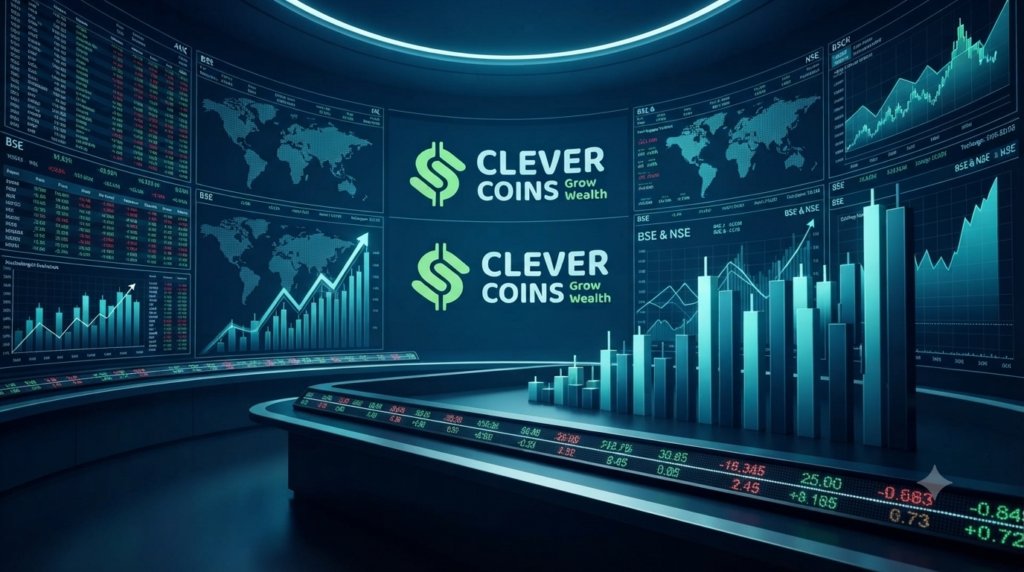
Understanding how stock exchanges work is the foundational step for anyone looking to build long-term wealth through equity markets. For decades, stock markets have been perceived as complex, high-risk gambling dens reserved only for Wall Street elites or financial wizards. However, in reality, stock exchanges are structured, highly regulated, and transparent economic marketplaces designed to facilitate seamless capital allocation.
In this comprehensive guide, we will break down the mechanics of stock exchanges, explore the vital backbone of India’s financial ecosystem—the Bombay Stock Exchange (BSE) and the National Stock Exchange (NSE)—and trace the journey of a single share from a buyer’s click to final settlement.
1. What is a Stock Exchange?
At its core, a stock exchange is an organized, regulated marketplace where buyers and sellers come together to trade shares of publicly held companies. Think of it as a massive, high-tech farmer’s market, but instead of trading agricultural produce, participants trade ownership stakes (stocks or equities), bonds, derivatives, and other financial instruments.
Key Functions of a Stock Exchange:
Fair Price Discovery: Through continuous interaction between buyers and sellers based on supply and demand, exchanges determine the fair market value of a company at any given second.
Liquidity and Marketability: Investors can easily convert their shares into cash (or vice versa) because exchanges provide a continuous, liquid market with millions of active participants.
Economic Barometer: Major stock indices act as economic thermometers, reflecting the overall health, sentiment, and trajectory of a nation’s economy.
Safety and Regulation: Operating under strict regulatory frameworks (such as SEBI in India), exchanges enforce transparency, disclosure norms, and corporate governance to protect retail and institutional investors alike.
2. The Indian Stock Market Ecosystem: An Overview
India boasts one of the oldest, most technologically advanced, and fastest-settling financial ecosystems in the world. While several regional exchanges existed historically, the modern Indian secondary market is anchored primarily by two monolithic powerhouses: The Bombay Stock Exchange (BSE) and The National Stock Exchange (NSE).
3. Deep Dive: Bombay Stock Exchange (BSE)
History and Legacy
Established in 1855 (and officially recognized under the Securities Contracts Regulation Act in 1957), the Bombay Stock Exchange (BSE) is Asia’s first stock exchange. Operating out of Dalal Street in Mumbai, India, the BSE has witnessed the evolution of Indian commerce from colonial trade to a modern digital economy.
Key Characteristics of BSE:
Global Speed: BSE features one of the fastest electronic trading platforms globally, executing trades in microseconds through its BOLT (BSE On-Line Trading) system.
Scale of Listings: It hosts thousands of companies, making it one of the largest exchanges globally by sheer volume of listed firms.
The Flagship Index – SENSEX: The SENSEX (Sensitive Index), launched in 1986, is India’s oldest stock market index. It tracks the performance of 30 financially sound, well-established companies across key sectors listed on the BSE.
4. Deep Dive: National Stock Exchange (NSE)
History and Genesis
Founded in 1992 following the recommendations of the Pherwani Committee, the National Stock Exchange (NSE) was promoted by leading financial institutions at the behest of the Indian government to bring transparency to the Indian capital markets. It commenced operations in 1994, introducing fully automated, screen-based electronic trading to India.
Key Characteristics of NSE:
Volume Leader: The NSE is India’s largest stock exchange in terms of total and average daily turnover for equity shares.
Technological Pioneer: It pioneered fully automated electronic trading, eliminating the archaic open-outcry system and bridging geographic barriers for investors across remote towns and cities.
The Flagship Index – NIFTY 50: The NIFTY 50, launched in 1996, tracks the weighted average of 50 of the largest, most liquid Indian companies spanning 13 sectors. It is widely utilized by domestic and international institutional investors as a benchmark for Indian equity portfolios.
5. BSE vs. NSE: Key Differences
While both exchanges perform the same fundamental function—facilitating the trade of securities—they differ in structure, indices, and ownership concentration:
Feature | Bombay Stock Exchange (BSE) | National Stock Exchange (NSE) |
|---|---|---|
Year of Establishment | 1855 | 1992 |
Flagship Index | SENSEX (30 Stocks) | NIFTY 50 (50 Stocks) |
Trading Platform | BOLT PLUS | NEAT (National Exchange for Automated Trading) |
Market Share (Equity Cash) | Lower compared to NSE | Dominant market share in equity cash and derivatives |
Global Recognition | Asia’s oldest exchange | Among the top derivatives exchanges globally |
6. How Trades Happen: Step-by-Step Mechanics
Ever wondered what happens behind the scenes after you hit the “Buy” button on your mobile trading app? The entire lifecycle of a trade occurs in milliseconds. Let’s trace the journey:
Step 1: Placing the Order
An investor opens a brokerage account, deposits funds, and places a Market Order or Limit Order through a broker (e.g., Zerodha, Groww, Angel One). The broker routes this order through their Order Management System (OMS) directly to the stock exchange’s central matching engine.
Step 2: Order Matching Engine
The exchange’s computer algorithm operates on a Price-Time Priority principle:
Price Priority: The lowest sell price matches with the highest buy price.
Time Priority: If two orders share the same price, the order placed first gets executed first.
Step 3: Trade Confirmation
Once a match occurs, a trade is executed. A confirmation notification is instantly sent back down the pipeline to the investor’s trading application, showing the exact execution price and quantity.
7. The Role of Clearing Corporations and Depositories
A trade execution is only half the battle. The transaction must be successfully settled—meaning the money must reach the seller, and the shares must reach the buyer. This is handled safely by backend financial institutions.
Clearing Corporations (ICC & NCL)
Organizations like the Indian Clearing Corporation Limited (ICCL) for BSE and NSE Clearing Limited (NCL) act as legal counterparties to all trades. They guarantee the settlement of trades, eliminating counterparty credit risk.
Depositories (NSDL & CDSL)
Gone are the days of paper share certificates that could be lost, stolen, or forged. Today, shares exist in electronic form via India’s two depositories:
NSDL (National Securities Depository Limited)
CDSL (Central Depository Services Limited)
Your stock broker acts as an intermediary, but your shares are safely stored in your personal Demat (Dematerialized) account managed by NSDL or CDSL.
8. Understanding Settlement Cycles (T+1 System)
In financial terminology, settlement refers to the final transfer of funds and securities. India is a global pacesetter in settlement speed, having transitioned completely to a T+1 (Trade plus 1 Day) rolling settlement cycle for all equities.
What does T+1 mean? If you buy shares on Monday (Trade Day), the shares will be credited to your Demat account, and money will be debited from your account by Tuesday evening (T+1).
SEBI is also actively exploring instant settlement (T+0) mechanisms to further reduce risk and maximize market efficiency.
9. Market Participants: Who Drives the Exchange?
The liquidity and depth of BSE and NSE are sustained by diverse market participants:
Retail Investors: Individual everyday citizens investing their personal savings.
Domestic Institutional Investors (DIIs): Large Indian entities like Mutual Funds (SBI MF, HDFC MF), Insurance Corporations (LIC), and banks pooling public money.
Foreign Institutional Investors (FIIs) / Foreign Portfolio Investors (FPIs): Global funds, sovereign wealth funds, and international institutions investing in Indian capital markets.
Market Makers and Arbitrageurs: Specialized traders who inject continuous liquidity by quoting simultaneous buy and sell prices, smoothing out temporary price discrepancies.
10. Conclusion: Why Stock Exchanges Matter for Economic Growth
Stock exchanges are far more than digital casinos or speculative hubs. They are the financial engine rooms of modern market economies. By channeling idle public savings into productive corporate ventures, BSE and NSE enable businesses to expand, build factories, innovate technologies, and generate millions of jobs.
Whether you are tracking the SENSEX during morning coffee or executing a long-term investment via the NIFTY 50, understanding the mechanics behind these institutions empowers you to navigate the financial world with confidence, clarity, and strategic insight.
Secure Your Customs and Trade Compliance with CleverCoins
Navigating complex customs broker regulations, maintaining flawless port documentation, and defending your business against aggressive departmental scrutiny requires specialized expertise. Don’t let regulatory oversights jeopardize your international shipments.
At CleverCoins, we transform intricate indirect tax and customs frameworks into streamlined, risk-free compliance strategies for modern enterprises.
Phone: +91 77389 59862
Email: client@clevercoins.org
Address: Ideal Market, Mumbra, Thane-400612
Website: https://clevercoins.org/
Days
Hours
Minutes
Seconds
Related posts:
PCB Consent to Establish (CTE): The Ultimate Compliance Blueprint for Industrial & Commercial En...
GST
GST Valuation Rules – Explained with Cases
GST
Invoice Discounting: How It Works, Benefits, and Why Your Business Needs It
GST
GST e-Invoice System
GST
Section 80D – Health Insurance Tax Deduction
GST
Demystifying GST on Del-Credere Agent (DCA) Services: A Complete Comprehensive Guide
GST
Comprehensive Blog Content: How to Analyse a Balance Sheet
GST
Comprehensive Guide: GST on Transfer of Business and Slump Sale (SLMP)
GST
Comprehensive SEO & Marketing Package: GSTIN Suspension – Reasons & Revival
GST
GeM Portal – How to Sell to Government: The Ultimate Step-by-Step Vendor Onboarding Guide
GST