PLI Scheme 2026: Sector-Wise List and Benefits for MSME Vendors
Introduction: The New Industrial Architecture of Indian Manufacturing
The economic landscape of India is undergoing a structural paradigm shift. As global supply chains decouple from traditional manufacturing hubs and seek resilient, diversified alternatives, India has positioned itself at the epicenter of international industrial production. At the heart of this transformation is the Production Linked Incentive (PLI) Scheme, a cornerstone policy initiative launched under the Atmanirbhar Bharat (Self-Reliant India) and Make in India frameworks.
With a massive financial outlay of approximately ₹1.97 lakh crore spanning 14 critical industrial sectors, the PLI scheme was originally perceived as a playground exclusively for multinational corporations and large domestic conglomerates. However, as the policy matures in 2026, the narrative has radically evolved. Large-scale assemblers and global enterprises cannot scale locally without a hyper-efficient, technologically agile, and compliant secondary and tertiary supplier network. Micro, Small, and Medium Enterprises (MSMEs) are no longer just peripheral players; they are the essential engine room driving the PLI ecosystem.
For MSME business owners, founders, and manufacturing entrepreneurs, understanding the PLI scheme is no longer optional—it is a strategic necessity. Whether you supply raw components, specialized sub-assemblies, precision tools, or packaging inputs to a primary PLI beneficiary, knowing how to align your production capabilities with these mega-incentives can unlock unprecedented growth, gross margin expansion, and global market integration.
What is the PLI Scheme and How Does It Work?
The Production Linked Incentive scheme is fundamentally designed to reward manufacturing output, domestic value addition, and incremental sales. Unlike traditional government subsidies that offer upfront capital grants or land acquisition sops—which often get bogged down in bureaucratic red tape—the PLI scheme operates on a performance-linked payout mechanism.
The Core Mechanics:
-
The Base Year Benchmark: For most sectors, the baseline is set against fiscal performance metrics from a designated base year (predominantly FY 2019–20).
-
Incremental Sales Growth: Participating manufacturers receive a direct cash incentive—ranging between 4% to 18% depending on the specific sector—calculated directly on the incremental sales of manufactured goods produced in India over the base year.
-
Tenure and Windows: The financial support is typically disbursed annually over a fixed duration of 5 to 6 years, giving businesses a predictable financial runway to amortize capital investments and scale production.
-
Domestic Value Addition (DVA): To prevent superficial assembly or “import-and-rebadge” operations, each sector enforces strict minimum DVA thresholds. Companies must locally source or process a high percentage of raw materials and components to qualify for the payouts.
The 14 Strategic Sectors Under the PLI Scheme
To fully leverage the opportunities available for MSMEs, one must look closely at the 14 approved sectors receiving governmental backing. While mega-corporations lead the primary tier of applications, hundreds of MSMEs operate as Tier-1, Tier-2, and Tier-3 vendors within these verticals.
| Sector Category | Specific Industry Focus | Key Opportunities for MSMEs |
| Electronics & Technology | Mobile manufacturing, electronic components, IT hardware | PCBA (Printed Circuit Board Assemblies), connectors, packaging, casing, sub-parts. |
| Healthcare & Life Sciences | Pharmaceuticals (Bulk Drugs, APIs) & Medical Devices | Key Starting Materials (KSMs), chemical intermediates, specialized surgical component machining. |
| Automotive & Mobility | Automobiles, Auto Components, Advanced Chemistry Cell (ACC) Batteries | EV wiring harnesses, precision-machined metal parts, battery casing, sensors, thermal management parts. |
| Green Energy & Sustainability | Solar PV Modules, Drones and Drone Components | Junction boxes, aluminum frames, composite propeller blades, flight controller sub-assemblies. |
| Core Manufacturing & Exports | Specialty Steel, Textiles & Apparel (MMF & Technical Textiles), Food Processing | Specialized fasteners, technical fabric weaving, agro-processing, cold-chain components, automated packaging. |
| Telecommunications | Telecom & Networking Products (4G/5G, routers, switches) | Enclosures, passive infrastructure components, fiber optic connectors, power supply units. |
| White Goods | Air Conditioners and LED Lights | Copper tubing, heat exchangers, electronic drivers, injection-molded plastic diffusers. |
Direct vs. Indirect Participation: How MSMEs Fit In
A common misconception among small business owners is: “My factory’s turnover or capital investment is too small to apply directly for a multi-crore PLI scheme, so this doesn’t apply to me.” This perspective leaves substantial financial upside on the table.
Participation in the PLI ecosystem happens across two distinct vectors:
1. Direct MSME Beneficiaries
Certain sub-sectors within the PLI architecture have deliberately lowered investment thresholds and tailored guidelines to accommodate MSMEs. For instance, in Bulk Drugs, Medical Devices, Drones, and Food Processing, specialized quotas and lower global revenue/investment entry barriers have successfully brought hundreds of registered MSMEs into the direct beneficiary fold. These enterprises receive direct cash disbursements straight to their corporate bank accounts upon meeting audited annual incremental targets.
2. The Vendor Value-Chain (The Indirect Boom)
Even if your enterprise does not hold a direct PLI agreement with a nodal ministry, the massive expansion of primary tier-1 beneficiaries creates an unprecedented trickle-down demand.
-
Localization Mandates: Primary PLI winners (such as global electronics giants, EV manufacturers, and telecom majors) are heavily incentivized to maximize local sourcing to meet DVA criteria.
-
Reliable Sub-Contracting: Major players actively scout certified MSME vendors who can deliver zero-defect components on tight, just-in-time (JIT) schedules.
-
Margin Expansion: Becoming an approved vendor to a high-growth PLI beneficiary allows MSMEs to secure long-term purchase contracts, predictable cash flows, and higher operational capacity utilization.
Key Financial and Operational Benefits for MSMEs
Aligning your manufacturing operations with the PLI ecosystem yields multi-dimensional benefits that extend far beyond immediate cash subsidies:
-
Direct Cash Inflow (4% to 18% Margins): For sectors operating on tight traditional margins, securing a 4% to 8% performance incentive on incremental turnover transforms bottom-line profitability.
-
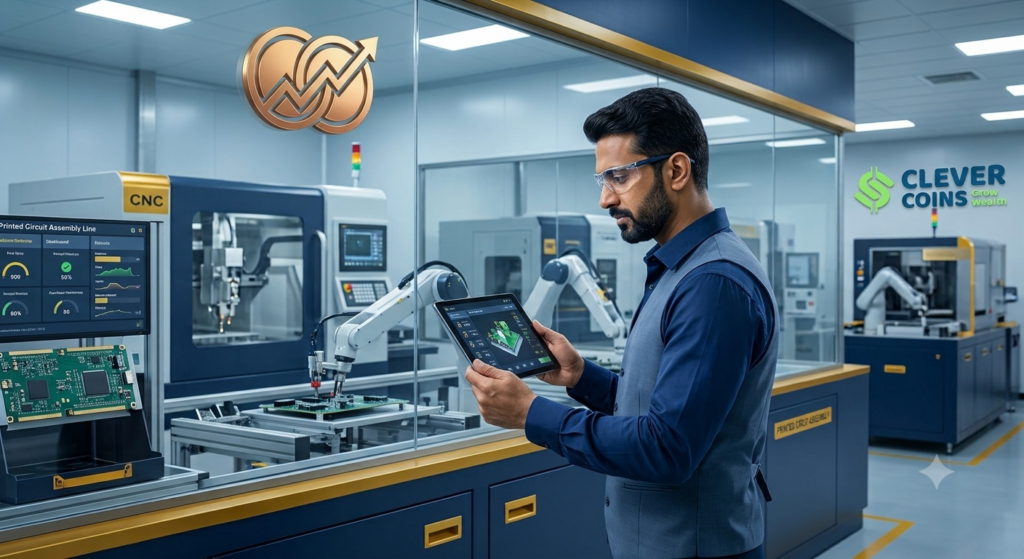
Technology Modernization and Automation: To qualify for stringent quality audits required by primary manufacturers and government overseers, MSMEs are prompted to upgrade their shop floors with IoT-enabled monitoring, CNC machining, and automated quality control.
-
Global Quality Benchmarking: Adhering to the rigorous compliance, BIS certifications, and environmental standards mandated by PLI supply chains elevates an MSME from a local unorganized player to an export-ready global vendor.
-
Enhanced Access to Institutional Credit: Financial institutions and banks look favorably upon MSMEs that secure vendor contracts with PLI-backed conglomerates, resulting in faster loan sanctions, lower interest rates, and relaxed collateral demands under schemes like CGTMSE.
Step-by-Step Blueprint: How MSMEs Can Capitalize on PLI in 2026
If you are an MSME owner looking to harness the momentum of the PLI framework, follow this structured execution roadmap:
-
Evaluate Your Sector Alignment: Review your current product catalog against the 14 approved PLI sectors. Identify whether your components feed directly into high-growth areas like EV mobility, electronics, solar PV, or food processing.
-
Audit Your Financial and Technical Readiness: Check your balance sheet, historical turnover, and past 3 years of audited financial statements. Ensure your manufacturing facility meets statutory compliances, GST registrations, and labor regulations.
-
Invest in Quality Infrastructure: Obtain necessary certifications (ISO, BIS, CE). Prime beneficiaries will not risk their own PLI compliance by sourcing from unverified, low-standard suppliers.
-
Build a Detailed Project Report (DPR): If applying directly under MSME-friendly windows (such as medical devices or drones), prepare a robust DPR outlining capital expenditure, projected capacity expansion, and direct employment generation.
-
Target Tier-1 and Tier-2 OEMs: If direct application thresholds are outside your current capital reach, pitch your manufacturing unit directly to primary PLI winners as an import-substitution vendor. Highlight how sourcing locally helps them meet their mandatory Domestic Value Addition (DVA) quotas.
Conclusion: Transforming Policy into Profit
The PLI Scheme 2026 is much more than a macro-economic policy tool—it is a generational wealth and industrial expansion vehicle for Indian manufacturing. By bridging the gap between large-scale enterprise ambition and agile MSME execution, the scheme ensures that economic growth is distributed right down to the grassroots vendor level.
Whether you choose to pursue direct incentive applications or position your enterprise as an indispensable supplier to mega-beneficiaries, the time to audit your capacities, upgrade your quality controls, and integrate into the PLI value chain is now. Align your production strategy today to secure a dominant market position in India’s golden decade of manufacturing.
Related posts:
A Complete Guide to the ASPIRE Scheme for Rural and Agro-Based MSMEs
Pradhan Mantri Formalisation of Micro Food Processing Enterprises (PMFME) Scheme Guide
RAMP Scheme 2026: The Ultimate World Bank Funded Guide for MSME Competitiveness
CGTMSE vs CGSS: The Ultimate Guide to Collateral-Free Business Loans in India
PMEGP Loan Scheme 2026: How to Get 35% Subsidy for New Business
Section 43B(h) 45-Day MSME Payment Rule: Impact on Purchases, Deductions, and Working Capital
Atal Innovation Mission (AIM): Grants for Startups and MSMEs in 2026
Stand-Up India Scheme for SC/ST and Women Entrepreneurs: Full Guide
Credit Linked Capital Subsidy Scheme (CLCSS) Upgraded to MSME Champions (TECH): The Ultimate Strateg...
CGTMSE Scheme Explained: Getting Collateral-Free Bank Loans Up to ₹5 Crore for MSMEs
Related posts:
 Udyam Registration Benefits: Top 10 Subsidies, Collateral-Free Loans, and Concessions
 The Ultimate Guide to MIDC Land Allotment and Industrial Incentives: Package Scheme of Incentives (PSI)
 CGTMSE vs CGSS: The Ultimate Guide to Collateral-Free Business Loans in India
 Atal Innovation Mission (AIM): Grants for Startups and MSMEs in 2026