SFURTI Scheme: How Artisan Clusters Get Upto 5 Crore Govt Funding
India’s cultural heritage is deeply rooted in its traditional industries and artisans. However, these grassroots creators often face immense challenges, including lack of capital, outdated technology, and limited market access. To bridge this gap and transform traditional industries into profitable, sustainable enterprises, the Ministry of Micro, Small and Medium Enterprises (MSME) launched the Scheme of Fund for Regeneration of Traditional Industries (SFURTI).
This comprehensive guide explores how the SFURTI scheme operates, who is eligible, and how artisan clusters can secure up to ₹5 Crore in government funding to scale their operations.
What is the SFURTI Scheme?
The Scheme of Fund for Regeneration of Traditional Industries (SFURTI) is a highly strategic initiative by the Government of India. Its primary goal is to organize traditional industries and artisans into clusters to make them competitive and provide them with long-term sustainability and economies of scale.
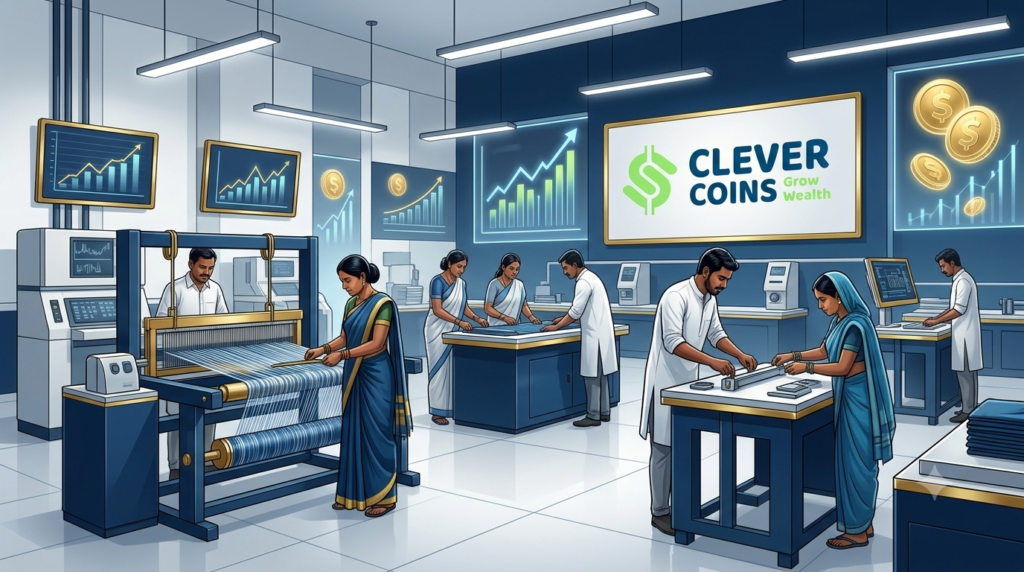
Rather than funding individual artisans, SFURTI focuses on the “Cluster Development” approach. By grouping artisans from a specific geographic area who produce similar products, the government can efficiently deploy heavy machinery, training, and marketing resources that benefit the entire community.
Core Objectives of the SFURTI Scheme
The Ministry of MSME designed SFURTI with specific, measurable goals aimed at rural economic upliftment:
Organize Traditional Industries: Group isolated artisans into clusters to enhance production capacity and establish strong supply chains.
Generate Employment: Create sustained, profitable employment for rural entrepreneurs and traditional artisans.
Enhance Marketability: Upgrade product designs, packaging, and marketing strategies to meet modern domestic and international consumer demands.
Provide Advanced Equipment: Replace obsolete tools with modern machinery and establish Common Facility Centers (CFCs) that all cluster members can utilize.
Skill Development: Train artisans in modern production techniques, digital literacy, and business management.
Financial Assistance: How the ₹5 Crore is Allocated
The government categorizes artisan clusters based on their size and scope. Funding is disbursed strictly as a grant (meaning it does not need to be repaid, provided the funds are utilized correctly for the approved project).
| Cluster Type | Number of Artisans | Maximum Financial Assistance |
|---|---|---|
| Regular Cluster | Up to 500 Artisans | Up to ₹2.50 Crore |
| Major Cluster | More than 500 Artisans | Up to ₹5.00 Crore |
Note: The funding covers various interventions, but the cost of land must be borne by the applicant or the State Government. The SFURTI grant does not cover land acquisition.
Breakdown of Fundable Interventions
The SFURTI scheme categorizes its funding into three primary interventions to ensure holistic development.
1. Soft Interventions (Up to 10% of total project cost, maximum ₹25 Lakhs) Soft interventions focus on human capital and capacity building.
General awareness, counseling, and motivation programs.
Skill development and capacity building for artisans.
Institution development and exposure visits.
Market promotion initiatives, including design and product development.
Participation in domestic and international exhibitions.
2. Hard Interventions (Up to 75% of total project cost) Hard interventions require the most capital and focus on physical infrastructure.
Creation of Common Facility Centers (CFCs).
Raw material banks (RMB).
Upgradation of production infrastructure.
Tools and technological upgrades for artisan training.
Warehousing and packaging facilities.
3. Thematic Interventions These are broader initiatives that impact multiple clusters within a sector.
National-level brand building and advertising campaigns.
E-commerce initiatives and digital marketplace integration.
Research and development (R&D) for sector-specific innovations.
Developing new packaging materials tailored to traditional goods.
Who is Eligible to Apply for SFURTI Funding?
Unlike standard MSME business loans, individual businesses or solo artisans cannot directly apply for SFURTI grants. The applicant must be an organization capable of managing and developing a cluster. Eligible entities include:
Non-Governmental Organizations (NGOs)
Institutions of the Central and State Governments
Semi-Government Institutions
Panchayati Raj Institutions (PRIs)
Private Sector entities by forming Special Purpose Vehicles (SPVs)
Corporate Social Responsibility (CSR) foundations
These organizations act as the Implementing Agency (IA) and take responsibility for executing the project, establishing the Special Purpose Vehicle (SPV), and ensuring the artisans receive the intended benefits.
The SFURTI Operating Framework: Key Stakeholders
The successful execution of a SFURTI project relies on a structured hierarchy of agencies:
Scheme Steering Committee (SSC): The apex body at the Ministry of MSME that approves projects and oversees overall implementation.
Nodal Agencies (NAs): Organizations like the Khadi and Village Industries Commission (KVIC), Coir Board, and other specialized government bodies that appraise projects and monitor progress.
Technical Agencies (TAs): Expert institutions that provide on-ground technical support, help draft the Detailed Project Report (DPR), and guide the Implementing Agency.
Implementing Agencies (IAs): The NGOs or institutions on the ground that organize the artisans and execute the day-to-day operations of the cluster.
Special Purpose Vehicle (SPV): A registered corporate entity (often a Section 8 Company, Trust, or Society) formed specifically for the cluster. The SPV owns the Common Facility Center and ensures the project’s self-sustainability after the government funding period ends.
Step-by-Step Application Process for SFURTI
Securing up to ₹5 Crore in government grants requires meticulous planning, precise documentation, and strict adherence to protocol.
Step 1: Conceptualization and Artisan Identification The prospective Implementing Agency must identify a geographic area with a high concentration of traditional artisans (minimum 500 for a major cluster). They must conduct a baseline survey to understand the artisans’ current socio-economic status, product types, and technological gaps.
Step 2: Selection of a Technical Agency (TA) The IA must partner with a recognized Technical Agency. The TA brings engineering, marketing, and project management expertise to the table, ensuring the proposed interventions are viable.
Step 3: Drafting the Detailed Project Report (DPR) This is the most critical phase. The DPR is a comprehensive business plan that outlines:
The current state of the artisans.
The proposed hard and soft interventions.
Detailed machinery and infrastructure costs.
Financial projections and sustainability models.
Market analysis and sales strategies.
Step 4: Submission to the Nodal Agency The DPR is submitted to the relevant Nodal Agency (e.g., KVIC). The Nodal Agency conducts a rigorous appraisal, verifying the costs, technical feasibility, and the IA’s track record.
Step 5: Approval by the Scheme Steering Committee (SSC) If the Nodal Agency approves the DPR, it is forwarded to the SSC at the Ministry of MSME. The SSC has the final authority to sanction the project and release the grant funds.
Step 6: Formation of the SPV and Project Execution Upon approval, the IA must form the Special Purpose Vehicle (SPV). The government releases funds in tranches based on project milestones (e.g., completion of the CFC building, installation of machinery). The IA and TA must execute the project within the stipulated timeframe, usually 12 to 18 months.
Why Professional Consultation is Crucial for SFURTI Success
The SFURTI scheme offers unparalleled financial support, but the bureaucratic and technical requirements are stringent. A rejected DPR or a mismanaged SPV can delay funding by years or result in project cancellation.
Navigating the complexities of forming a Section 8 company for the SPV, drafting a compliant and financially sound Detailed Project Report, and ensuring all GST and MCA compliances are met requires expert intervention. Partnering with experienced tax and corporate consultants ensures that the legal and financial frameworks of your cluster are unshakeable, allowing you to focus on empowering the artisans.
Conclusion
The SFURTI scheme is more than just a funding mechanism; it is a lifeline for India’s rich heritage of traditional craftsmanship. By providing up to ₹5 Crore in grants for infrastructure, skill development, and market access, the Ministry of MSME is ensuring that rural artisans can compete on a global scale.
If your organization works with rural communities or traditional industries, exploring the SFURTI scheme could be the catalyst that transforms local talent into a self-sustaining, highly profitable enterprise.
Related posts:
A Complete Guide to the ASPIRE Scheme for Rural and Agro-Based MSMEs
PMEGP Loan Scheme: How to Secure Up to 35% Government Subsidy on New Business Projects
PLI Scheme 2026: Sector-Wise List and Benefits for MSME Vendors
Udyam Registration Benefits: Top 10 Subsidies, Collateral-Free Loans, and Concessions
Credit Linked Capital Subsidy Scheme (CLCSS) Upgraded to MSME Champions (TECH): The Ultimate Strateg...
Section 43B(h) 45-Day MSME Payment Rule: Impact on Purchases, Deductions, and Working Capital
The Complete Guide to the Maharashtra Stamp Act: 2026 Duty Rates on Agreements, Leases, and Business...
Stand-Up India Scheme: Bank Loans for Women and SC/ST Entrepreneurs Explained
PM Vishwakarma Yojana 2026: Complete Guide to Benefits, Eligibility, and Online Application for MSME...
RAMP Scheme 2026: The Ultimate World Bank Funded Guide for MSME Competitiveness
Related posts:
 Udyam Registration Benefits: Top 10 Subsidies, Collateral-Free Loans, and Concessions
 The Ultimate Guide to MIDC Land Allotment and Industrial Incentives: Package Scheme of Incentives (PSI)
 CGTMSE vs CGSS: The Ultimate Guide to Collateral-Free Business Loans in India
 Atal Innovation Mission (AIM): Grants for Startups and MSMEs in 2026