Startup Funding Stages Explained: A Complete Founder’s Guide
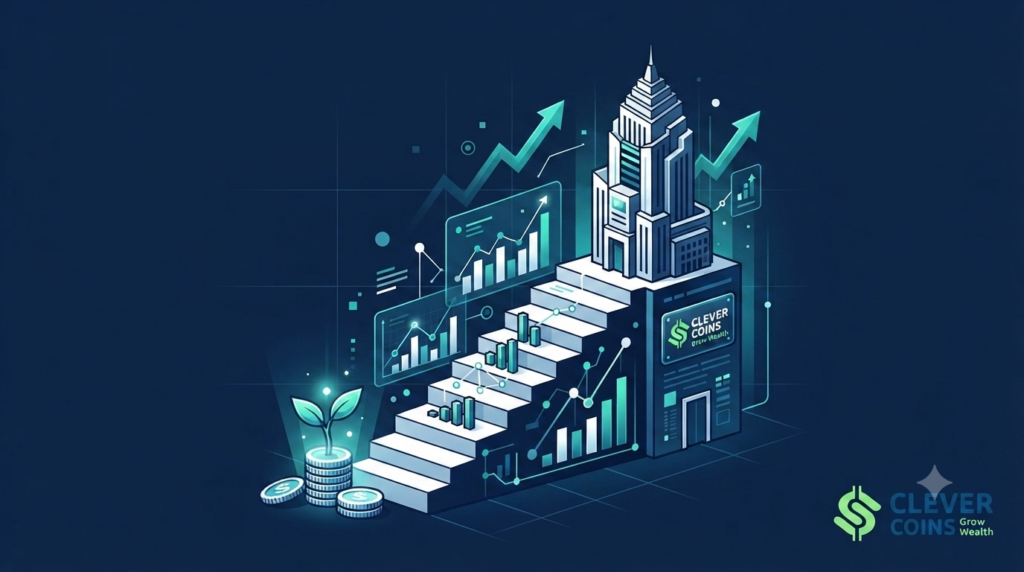
Navigating the financial ecosystem as an entrepreneur can feel like trying to cross an ocean on a raft you are building while out at sea. Every startup has a unique origin story, but almost all successful high-growth companies share a common financial trajectory. Understanding startup funding stages is vital not just for securing capital, but for preserving equity, managing dilution, and scaling sustainably.Whether you are bootstrapping out of a garage or preparing for a multi-million-dollar Series C expansion, this comprehensive guide breaks down every tier of the startup funding lifecycle, offering strategic advice on valuation, investor expectations, and preparation.Table of Contents
- Introduction to the Startup Funding Lifecycle
- Stage 0: Bootstrapping and Pre-Seed Funding
- Stage 1: Seed Funding – Planting the Roots
- Stage 2: Series A – Proving the Business Model
- Stage 3: Series B – Scaling Operations and Expansion
- Stage 4: Series C and Beyond – Dominating the Market
- Mezzanine Financing and Bridge Rounds
- The Ultimate Exit: IPO, Acquisition, or Private Equity
- Key Metrics Investors Look For Across All Stages
- Conclusion: Choosing the Right Path for Your Startup
1. Introduction to the Startup Funding Lifecycle
At its core, startup funding is the process of raising capital to finance product development, market research, team expansion, and operational runway. Capital infusion allows companies to accelerate growth far beyond what organic revenue streams can achieve in the early days.However, money is rarely free. In exchange for capital, founders trade equity (ownership percentage) or take on debt. Moving through funding rounds requires hitting specific business milestones. Approaching investors prematurely or raising too little money are two of the primary reasons startups fail.2. Stage 0: Bootstrapping and Pre-Seed Funding
Bootstrapping: Funding Your Own Vision
Before raising external capital, many founders choose bootstrapping. This means funding the business using personal savings, credit cards, or early revenues from freelance services or MVP (Minimum Viable Product) sales.- Pros: You retain 100% equity and absolute control.
- Cons: Growth is constrained by personal financial limits; higher personal risk.
Pre-Seed Funding: The Idea Phase
Pre-seed is the earliest stage of external funding. At this point, the startup usually consists of little more than a founding team, a PowerPoint deck, a rough prototype, or initial market research.- Typical Capital Raised: USD 50,000 to USD 500,000
- Primary Sources: Friends and family, angel investors, pre-seed micro-VCs, and startup incubators.
- Valuation: Usually ranges between USD 1 million to USD 3 million, often structured via Convertible Notes or SAFEs (Simple Agreements for Future Equity).
- Goal: Validate the core concept, build a working prototype, and conduct initial customer discovery.
3. Stage 1: Seed Funding – Planting the Roots
Seed funding is the first official equity funding stage. By this time, the product has typically been launched to the market, and the startup has gathered initial user feedback, proving that there is a genuine demand for the solution.- Typical Capital Raised: USD 500,000 to USD 2 million
- Primary Sources: Angel investor networks, seed-stage venture capital (VC) firms, and corporate venture funds.
- Valuation: Typically USD 4 million to USD 10 million.
- Key Milestones Required:
- A functional MVP with early active users.
- Initial signs of product-market fit (PMF).
- A dedicated, complementary co-founding team.
- Early metrics showing user retention or initial transactional revenue.
4. Stage 2: Series A – Proving the Business Model
Once a startup has survived its seed stage and proven that people want its product, it enters the Series A round. At this juncture, investors are no longer betting purely on potential; they are evaluating a predictable, repeatable business engine.- Typical Capital Raised: USD 2 million to USD 15 million
- Primary Sources: Institutional venture capital firms (often acting as the “lead investor”).
- Valuation: Generally USD 10 million to USD 30 million+.
- Key Milestones Required:
- A proven business model with consistent revenue generation (often looking for ARR—Annual Recurring Revenue—surpassing USD 1 million for SaaS startups).
- Clear customer acquisition cost (CAC) and lifetime value (LTV) metrics.
- A scalable marketing and sales playbook ready for expansion.
5. Stage 3: Series B – Scaling Operations and Expansion
If Series A is about proving the business model, Series B is about scaling it aggressively. The company is no longer a startup finding its footing; it is a growing enterprise looking to capture significant market share, scale its team across departments, and expand into new geographical regions.- Typical Capital Raised: USD 15 million to USD 50 million+
- Primary Sources: Later-stage venture capital funds, private equity firms, and growth equity investors.
- Valuation: USD 30 million to USD 100 million+.
- Key Milestones Required:
- Dominance within the initial target market.
- A fully built executive management team (C-suite executives like COO, CMO, CFO).
- Robust, multi-channel revenue streams and optimized unit economics.
6. Stage 4: Series C and Beyond – Dominating the Market
Companies entering Series C and subsequent rounds (Series D, E, etc.) are typically well-established industry leaders. They raise capital not to survive, but to scale rapidly, optimize market dominance, develop brand-new product lines, or prepare for strategic acquisitions.- Typical Capital Raised: USD 50 million to USD 100 million+
- Primary Sources: Late-stage VC funds, hedge funds, private equity giants, and investment banks.
- Valuation: USD 100 million to USD 1 billion+ (often reaching “Unicorn” status).
- Key Milestones Required:
- Market leadership or clear positioning as a top-two competitor in the sector.
- International market penetration or diversification of core product offerings.
- Optionality for profitability or clear pathways toward an initial public offering (IPO).
7. Mezzanine Financing and Bridge Rounds
Between major equity rounds, startups occasionally encounter cash flow crunches or require short-term funding to complete a strategic acquisition or bridge the gap before an IPO. This is where bridge rounds and mezzanine financing come into play.- Bridge Rounds: Short-term debt or convertible instruments used to “bridge” a company to its next major funding round.
- Mezzanine Financing: A hybrid of debt and equity financing that gives the lender the right to convert to an equity interest in the company in case of default, sitting higher than common equity but below senior debt.
8. The Ultimate Exit: IPO, Acquisition, or Private Equity
The ultimate destination of the startup funding journey is liquidity for founders, employees, and early investors. There are three primary exit routes:- Initial Public Offering (IPO): Offering shares of the company to the public on a stock exchange. This unlocks massive capital pools but introduces intense regulatory scrutiny and public market pressures.
- Mergers and Acquisitions (M&A): Selling the company to a larger corporation looking to integrate your technology, team, or market footprint.
- Private Equity Buyout: A private equity firm acquires a controlling stake to restructure the company for long-term private profitability.
9. Key Metrics Investors Look For Across All Stages
No matter which funding stage you are targeting, investors evaluate businesses through rigid financial and operational lenses. Keeping these metrics healthy will streamline your fundraising journey:- Burn Rate: How fast your company spends its cash reserve each month.
- Runway: How many months your startup can survive before running out of capital based on current burn rates.
- Customer Lifetime Value (LTV) vs. Customer Acquisition Cost (CAC): A healthy ratio is typically 3:1 or higher.
- Churn Rate: The percentage of customers who cancel or stop using your product over a given period.
- Gross Margins: The percentage of total sales revenue that the company retains after incurring the direct costs associated with producing its goods or services.
10. Conclusion: Choosing the Right Path for Your Startup
Understanding startup funding stages transforms fundraising from a guessing game into a structured, strategic process. Every round—from pre-seed bootstrapping to a massive Series C expansion—demands precise preparation, realistic valuation targets, and alignment with the right investors who bring more than just money to the table.Build your metrics, know your market, and protect your vision as you scale your enterprise toward sustainable success.Is your startup looking to streamline tax compliance, maximize government grants, or structure strategic finances for your upcoming funding round? Reach out to our expert team at clevercoins.org today to turn complex financial frameworks into your competitive advantage!clevercoins.org
- Phone: +91 77389 59862
- Email: client@clevercoins.org
- Address: Ideal Market, Mumbra, Thane-400612
- Website: https://clevercoins.org/
Days
Hours
Minutes
Seconds
Related posts:
The 180-Day Payment Rule: Reversal of ITC for Unpaid Invoices under Section 16(2)
GST
Comprehensive Blog Content: GST on Alcohol & Tobacco: The Definitive 2026 Compliance & Regul...
GST
Demystifying GST on Del-Credere Agent (DCA) Services: A Complete Comprehensive Guide
GST
Shareholder Agreement Key Clauses: The Definitive Blueprint for Business Protection
GST
Healthcare and Diagnostic Services: What Is Exempt and What Is Taxable Under GST?
GST
Director Remuneration Under GST: Executive vs. Non-Executive Director Tax Treatment
GST
Comprehensive Guide to GST Audit by Tax Authorities: Process, Documentation, and Compliance Strategy
GST
How to File ITR Yourself – 2026 Complete Step-by-Step Guide
GST
Shop & Establishment License
GST
SENSEX vs NIFTY What's the Difference?
GST